 Economy


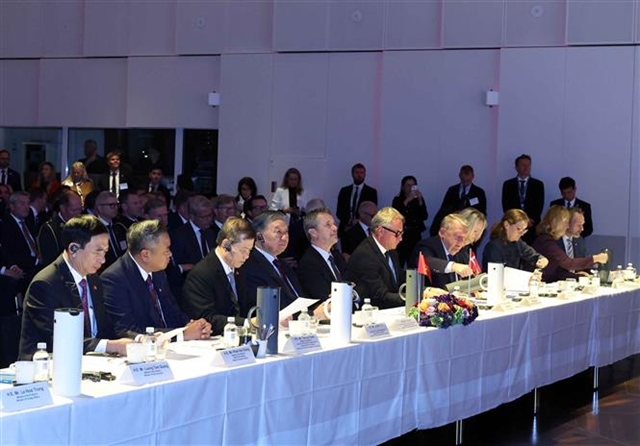
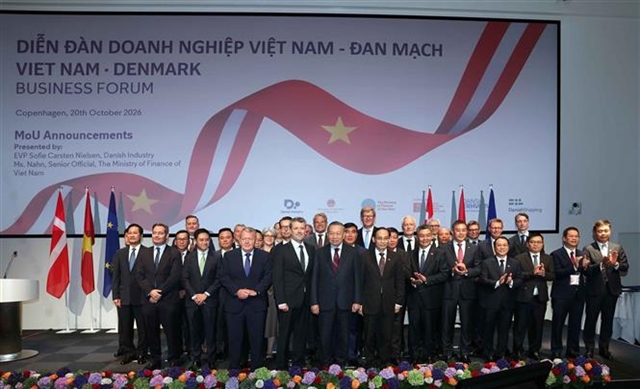
General Secretary and President Tô Lâm witnesses exchange of Việt Nam-Denmark cooperation agreements
1.
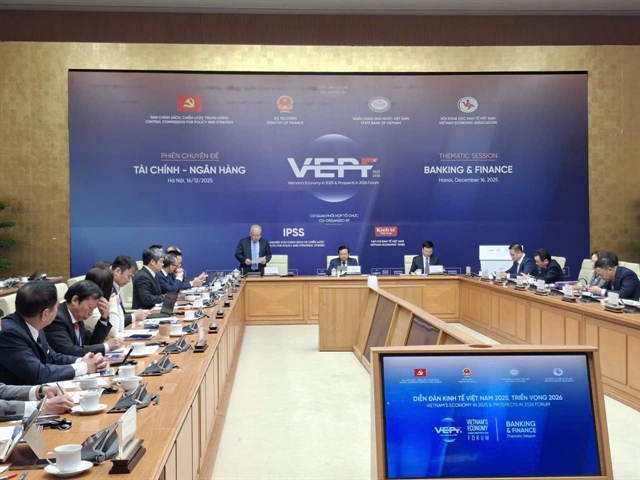 |
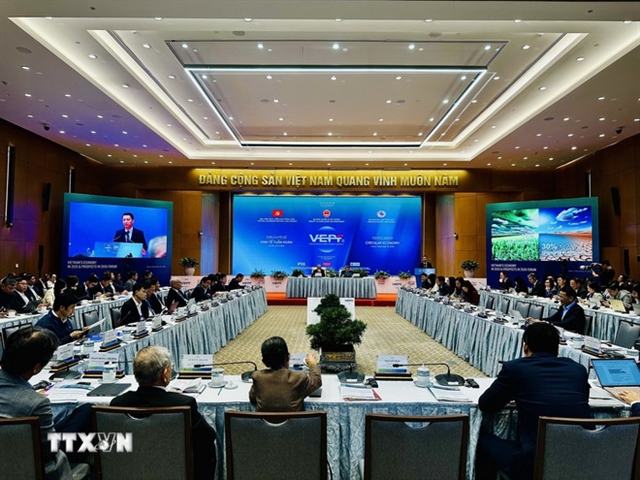
| Việt Nam Economic Forum 2025 serves as a platform for gathering expertise and practical proposals. — Photo laodong.vn |
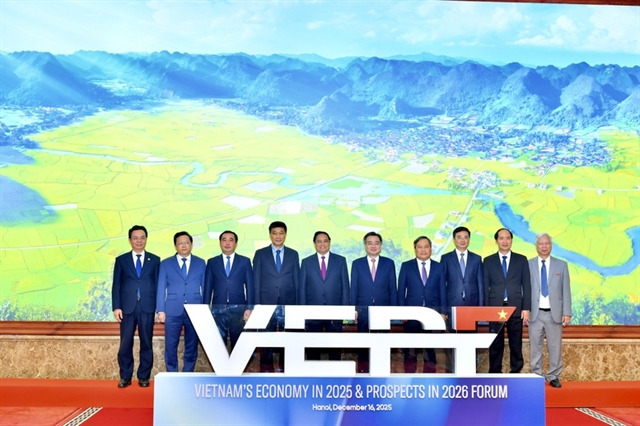
HÀ NỘI — Mobilising and using financial resources effectively has been identified as a decisive factor in achieving Việt Nam’s ambition of double-digit economic growth in the 2026–30 period, according to policymakers and experts at the Việt Nam Economic Forum 2025, Outlook for 2026 (VEPF), held in Hà Nội on December 16 under the theme Fast and sustainable development and green transition in the digital era.
The forum, jointly chaired by the Party Central Policy and Strategy Committee and the Government, featured discussions on solutions to unlock and deploy financial resources more efficiently to support economic growth in the next development phase.
Opening the specialised session on finance and banking, Phạm Thanh Hà, Deputy Governor of the State Bank of Vietnam, said the country faces an urgent need to accelerate growth in the coming years. The Government has set a target of at least 8 per cent economic growth in 2025 and aims for double-digit growth during 2026–30.
“This is an important foundation for Việt Nam to move into the group of upper-middle-income countries by 2030 and towards becoming a high-income economy by 2045,” Hà said.
However, he stressed that reaching these milestones requires more than maintaining a high growth rate over an extended period.
“Growth must go hand in hand with stability and sustainability,” he added.
Against this backdrop, since early 2025 the Party and the State have issued a series of important resolutions regarded as strategic pillars for the new development stage. These include orientations on developing science and technology, innovation and digital transformation; promoting international integration; improving legal and institutional frameworks; and fostering the private economic sector.
Hà said these directions are generating new momentum and mobilising the concerted participation of the political system, the business community, the public and the intellectual community.
“One of the most decisive challenges in achieving high growth is ensuring that the economy has sufficient capital and that this capital is used effectively to promote a growth model based on science, technology and innovation,” he said.
Sharing the same view, Deputy Minister of Finance Đỗ Thành Trung said it is necessary to frankly acknowledge that the growth model relying heavily on capital accumulation, low-cost labour and processing-based exports is gradually reaching its limits.
At the same time, the global environment is changing rapidly, marked by intensifying strategic competition, trade fragmentation and the emergence of new standards such as the global minimum tax, carbon border adjustment mechanisms and requirements for green and sustainable development.
“These factors require Việt Nam not only to grow faster, but also to grow with higher quality and greater sustainability,” Trung said.
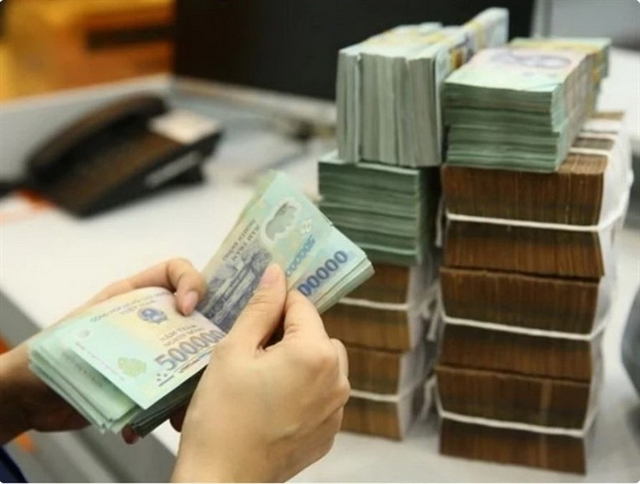 |
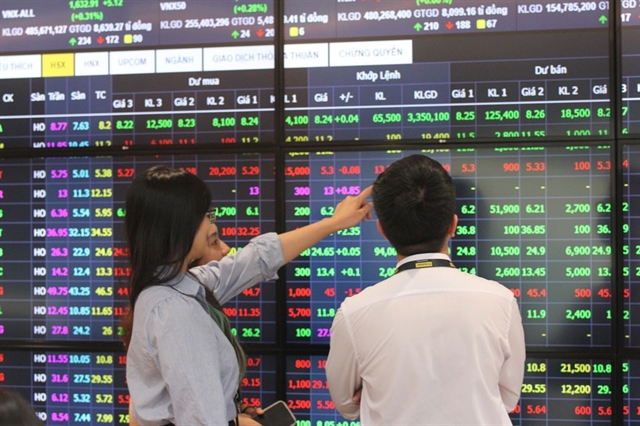
| The capital market needs to be further strengthened and developed into a key channel for mobilising medium- and long-term resources for the economy. — VNA/VNS Photo |
From a fiscal and budgetary management perspective, he noted that the target of double-digit growth for 2026–30 reflects strong political determination by the Party and the State and calls for fundamental changes in mindset, action and the way resources are mobilised, allocated and utilised.
“With the principle that internal resources are the long-term strategy while external resources are important, regular and potentially breakthrough factors, mobilising sufficient capital is a major task,” Trung said. “However, allocating capital to the right priorities and using it transparently and effectively to generate high value added is even more important.”
Accordingly, fiscal policy should continue to play a role in creating long-term growth, be managed proactively and sustainably, and focus on key priorities, with State budget spending structured to prioritise development investment and social security.
In parallel, the capital market needs to be further strengthened and developed into a key channel for mobilising medium- and long-term resources for the economy, gradually easing pressure on the banking credit system while improving market transparency and safety.
Beyond financial and monetary solutions, improving the efficiency of State-owned enterprises and creating a more favourable environment for the private sector were also identified as important drivers of growth. The investment and business environment, participants said, must continue to improve so that the private economy can truly become the most important engine of growth and innovation.
Participants also underscored the importance of closer coordination between fiscal and monetary policies to ensure macroeconomic stability, control inflation and support high growth amid rising risks.
In particular, institutional reform and the development of a transparent and stable legal environment were seen as fundamental and decisive solutions to retain financial resources and attract businesses, especially long-term strategic investors.
“Harnessing and using financial resources effectively for double-digit growth is a shared task of the entire economy,” Trung said. “It requires the concerted efforts of ministries, sectors, localities, businesses and society as a whole.”
He expressed confidence that the Việt Nam Economic Forum 2025 would serve as a platform for gathering expertise and practical proposals, contributing to policy refinement and helping realise the country’s aspiration for fast and sustainable development in the coming period.
Experts highlighted that ensuring sufficient capital is essential for the economy to operate under a new growth model based on science, technology and innovation.
Cấn Văn Lực, a senior economist, noted that in 2025 capital is expected to account for more than 44 per cent of growth contributions, while labour contributes less than 9 per cent and total factor productivity around 47 per cent.
This, he said, means that alongside expanding capital supply, improving labour productivity is critical for sustaining high growth.
Experts proposed accelerating institutional reforms in the financial system, developing legal frameworks for emerging areas such as green finance, digital currencies, international financial centres and carbon markets, and strengthening capital markets to reduce reliance on bank credit.
Other recommendations included improving macroeconomic stability, boosting investor confidence, reducing administrative interventions in favour of market-based mechanisms, enhancing financial supervision, resolving long-standing project bottlenecks and establishing dedicated funds to support green transition, innovation and digital transformation.
Together, these measures were seen as essential to unlocking resources and supporting Việt Nam’s transition towards a higher-quality, more sustainable growth trajectory in the decade ahead. — VNS
Economy
 Economy
 Economy
 Economy
 Economy
 Economy
 Economy
 Economy
 Economy
 Economy
 Economy
 Economy
 Economy
 Economy
 Economy