 Sci-Tech

Lotte, Phát Đạt combine strengths in Thu Thiem project
1.
 |
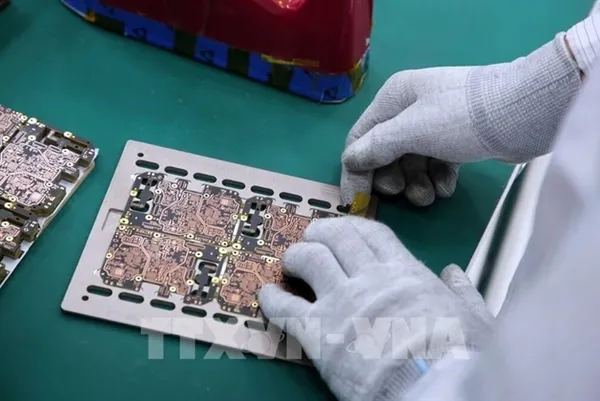
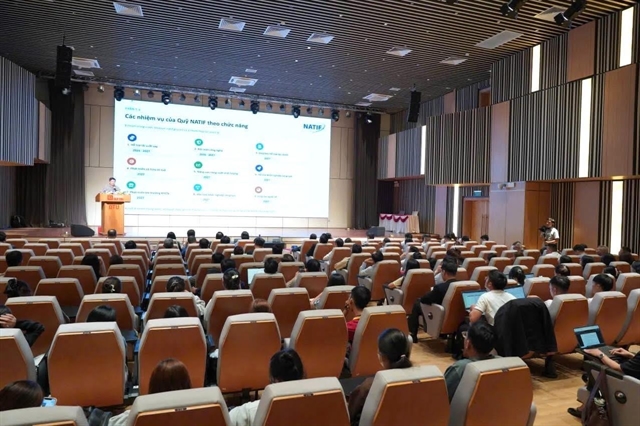
| The confirmation of sandbox participation is valid only within the scope of the trial. VNA/VNS illustration photo |
HÀ NỘI — The sandbox mechanism allows organisations and individuals to test AI systems within an authorised scope, but does not automatically grant them the right to officially deploy the systems after the testing period ends.
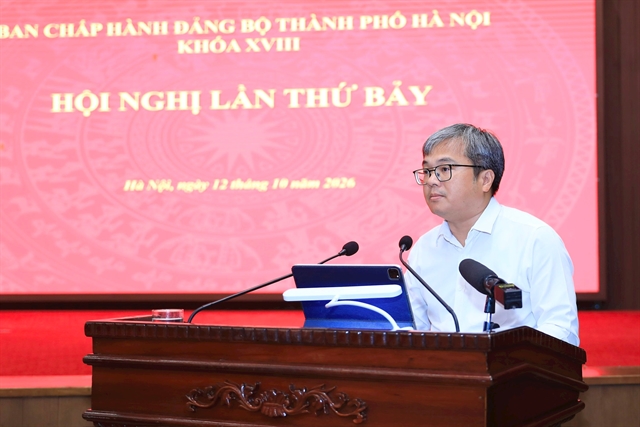
Trần Anh Tú, deputy director of the Department of Digital Technology and Artificial Intelligence of the Ministry of Science and Technology said in a press conference providing information regarding the licensing process and legal risk protection mechanisms for AI models tested within the sandbox framework.
The licensing process and legal risk protection mechanism for artificial intelligence (AI) models undergoing testing under the sandbox mechanism has been regulated in a Government decree, Tú said.
Regarding establishing a framework for domestic businesses to test generative AI models, Tú said two issues needed to be clarified, namely the licensing process and legal protection for AI models undergoing testing under the sandbox mechanism.
He said the Law on Artificial Intelligence, which took effect on March 1, 2026, provides for controlled testing of artificial intelligence systems under Articles 21 and 22.
“Subsequently, Decree 142/2026/NĐ-CP, which took effect on May 1, 2026, provides detailed regulations in Chapter IV on testing principles, levels of testing, authority and procedures for approval, and conditions and dossiers for domestic generative AI models to participate in testing, as well as monitoring and reporting during controlled testing,” Tú said.
Regarding licensing procedures, organisations and individuals meeting the conditions specified in Clause 1, Article 24 of Decree No. 142/2026/NĐ-CP must submit dossiers in accordance with Clause 2 of the same article.
Tú added that, the competent authority responsible for receiving and appraising dossiers and issuing certificates confirming participation in controlled testing may be a provincial-level People's Committee, a ministry or ministry-level agency, or the Ministry of Public Security, depending on the specific case.
The time limit for appraising valid dossiers and issuing certificates or notices of refusal is stipulated in Article 23 of the decree.
In addition to the licensing procedure, the contents of the certificate confirming participation in controlled testing are also specified in detail.
The certificate must define the scope, geographical area and duration of testing, as well as the scale and limits of the testing, technical requirements, and requirements on safety, security, data protection and risk management.
The certificate must also specify reporting responsibilities, monitoring mechanisms, circumstances under which testing may be suspended or terminated, and provisions on exemptions from, reductions in or adjustments to compliance with applicable legal requirements within the testing scope.
Therefore, AI testing is not conducted in a completely open legal space, but rather within specific parameters, conditions and limits established from the time approval is granted.
Sandbox certificate does not confer official deployment rights
A key issue of interest is the mechanism for providing legal protection against risks faced by organisations and individuals when putting AI systems into testing.
According to the authority the decree stipulates that exemptions from, exclusion of and determination of civil, criminal and administrative liability arising during the testing process shall be carried out in accordance with Articles 22 and 23 of the Law on Science, Technology and Innovation.
However, participation in the sandbox does not mean that organisations and individuals are exempt from all liability. Participants must still comply with the approved testing scope and conditions, as well as the risk-management measures specified in their testing approval.
“Participating organisations and individuals must strictly comply with the testing scope and conditions and the risk-management measures that have been identified and authorised in the testing licence,” Tú said.
Based on the current regulations, the Authority of Digital Technology and Artificial Intelligence said the legal framework had basically established procedures for consideration, as well as specific limits and safeguards for individual testing cases.
Therefore, if a Vietnamese generative AI system meets all the required conditions, it can participate in testing within a defined legal framework and benefit from legal protection during the testing process.
An important limitation of the mechanism concerns the validity of the certificate confirming participation in controlled testing.
The certificate is valid only within the scope of the testing and does not create any right to officially deploy the artificial intelligence system beyond that scope.
“The certificate is valid only within the scope of the testing and does not create any rights to officially deploy the tested system beyond that scope,” Tú said, stressing that testing and official deployment are separate activities.
Activities permitted under the sandbox must remain within the scope specified in the certificate and comply with the accompanying conditions. Once the testing period ends, the system is not automatically permitted to be officially deployed beyond the authorised scope.
Thus, Việt Nam’s current sandbox mechanism for AI rests on two main pillars: enabling eligible systems to undergo testing within a predetermined scope, while establishing requirements for safety, security, data protection, risk management, monitoring and accountability throughout the testing process. VNS
Sci-Tech
 Sci-Tech
 Sci-Tech
 Sci-Tech
 Sci-Tech
 Sci-Tech
 Sci-Tech
 Sci-Tech
 Sci-Tech
 Sci-Tech
 Sci-Tech
 Sci-Tech
 Sci-Tech
 Sci-Tech
 Sci-Tech