 Sci-Tech

Việt Nam fosters comprehensive cooperation with Uruguay
1.
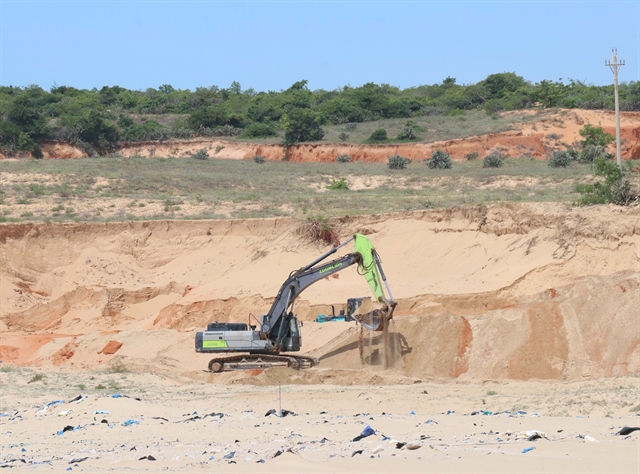 |
| Site levelling for the resettlement project serving the Ninh Thuận 1 Nuclear Power Plant project in Phước Dinh Commune, Khánh Hòa Province. — VNA/VNS Photo Công Thử |
HÀ NỘI — Although Việt Nam has built up a nuclear power staffing foundation through years of research, training, application and management, the existing workforce still needs to be expanded in terms of numbers, structure and specialised expertise to meet long-term demands.
Việt Nam Atomic Energy Institute Director Dr Trần Chí Thành said workers needed for atomic energy span a wide range of fields, including State management, nuclear safety and security regulatory agencies, research and development, technical support, training, nuclear medicine, radiation technology, radioactive waste management, emergency response and environmental monitoring, as well as applications in healthcare, agriculture, industry and the environment.
“Currently, personnel in the atomic energy sector remain very limited. Those needed for Việt Nam’s nuclear power development are in severe shortage,” he said.
To realise the goals for the development of atomic energy and nuclear power by 2035, Việt Nam will need tens of thousands of direct and indirect personnel to ensure the safe and efficient operation of the national nuclear power development programme, he said.
He estimated that the Ninh Thuận 1 and Ninh Thuận 2 nuclear power plants will require around 4,000 personnel for direct operations by 2030, including about 700 who will need advanced training overseas.
Trần Quang Tuấn, deputy director of the Việt Nam Agency for Radiation and Nuclear Safety under the Ministry of Science and Technology, said workforce development is a key factor in ensuring the progress of Việt Nam’s nuclear power programme in the future.
Under the Strategy for the Development and Application of Atomic Energy for Peaceful Purposes through 2035, Việt Nam aims to build a workforce of 2,000 personnel for the sector by 2030, increasing to 2,500 by 2035. The workforce will include personnel in State management, research and development, technical support and nuclear power plant operations.
Tuấn said that nuclear power is a large field in which Việt Nam has limited experience, adding that expanding international cooperation is the shortest path to building the necessary expertise.
The agency sent a number of officials to Russia for training ahead of a recent visit made by a high-level delegation of the Party and the State, he said.
He highlighted the need to improving the quantity, structure and specialised expertise of the workforce to meet future nuclear development demands.
Independence in training
Thành described labour as a top challenge for the nuclear power sector, citing that nuclear power requires a large workforce with each nuclear power plant in need of 600-700 personnel if Western technology is used, or nearly 1,000 personnel with Russian technology.
Việt Nam cannot rely entirely on sending personnel abroad, but needs to develop domestic training capacity.
He said any training that can be handled domestically should be done at home.
"Only when we face highly challenging technical problems, should we send personnel to work at the world's leading research institutes, where they can hone their skills and become leading experts," Thành said.
In the near future, the country should consider establishing one or two nuclear technology faculties at leading technical universities in Hà Nội and HCM City, with internationally accredited training programmes, he added. — VNS
Sci-Tech
 Sci-Tech
 Sci-Tech
 Sci-Tech
 Sci-Tech
 Sci-Tech
 Sci-Tech
 Sci-Tech
 Sci-Tech
 Sci-Tech
 Sci-Tech
 Sci-Tech
 Sci-Tech
 Sci-Tech
 Sci-Tech