 World
World
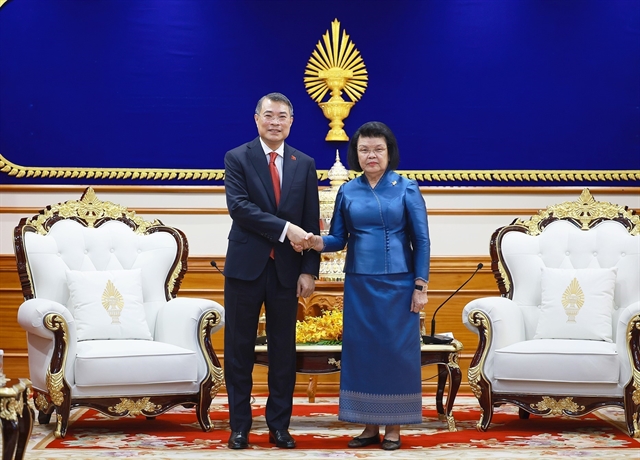
Vietnamese Prime Minister meets Cambodian National Assembly President
1.
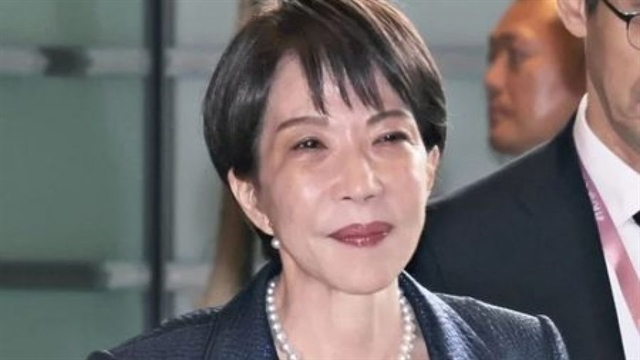 |
| Prime Minister Sanae Takaichi. — The Yomiuri Shimbun/ANN Photo |
TOKYO — Japan will provide a total of US$10 billion (about ¥1.6 trillion) to help maintain the supply systems of Southeast Asian countries that produce medical supplies and other essential goods, Prime Minister Sanae Takaichi announced Wednesday at an online summit with nations from that region.
Amid the ongoing tensions in the Middle East, the aim is to shore up crude oil procurement in Asia and prevent a situation in which the supply of essential goods to Japan is disrupted.
A meeting related to the “Asia Zero Emission Community,” which discusses energy issues in Asia, was held on Wednesday. Takaichi was in attendance, as were leaders from Thailand, Việt Nam, Malaysia, the Philippines and elsewhere.
Takaichi outlined Japan’s support measures under the banner of a “partnership for strengthening Asia’s energy and resource supply resilience,” dividing the measures into emergency responses to the energy crisis and structural measures such as crude oil stockpiling.
Following the summit, Takaichi told reporters that a chair’s statement had been issued based on the discussions held during the meeting on Wednesday. She emphasized the importance of financial support, stating that supporting the supply chains of Asian countries “directly contributes to strengthening the Japanese economy.”
Oil reserves in Southeast Asia nations are smaller than those in Japan, and the supply and demand balance for crude oil and naphtha, a petroleum product that is a raw material for plastics, is becoming increasingly strained.
Production activities in the region are at risk – some petrochemical plants have been shut down. Therefore, a sense of urgency is spreading in Japan’s medical sector, which relies on essential petroleum-derived supplies produced in Asia, including containers, tubes and gloves.
Legal constraints and other factors prevent Japan from supplying its own crude oil reserves to other countries, so the Japanese government will support Southeast Asia’s efforts to secure crude oil.
“Disruption in Asia’s supply chains would also affect Japan’s economic and social activities,” a government source familiar with the issue said.
The main pillar of this assistance from Japan will be financial cooperation to help Asian companies procure crude oil from sources outside the Middle East, including the United States.
Among other steps, loans will be utilized from the government-affiliated Japan Bank for International Cooperation and loan guarantees from Nippon Export and Investment Insurance.
To address structural issues, the government will provide support for the construction of storage tanks and other measures to increase the crude oil reserves within the Asian region. It will also promote the adoption of power generation facilities using liquefied natural gas and biofuels to diversify energy sources.
Through this cooperation framework, Takaichi intends to strengthen cooperative relationships with Southeast Asian nations and others, thereby advancing the Free and open Indo-Pacific vision outlined in Japan’s foreign policy.
For Asian countries, the challenge is whether they will be able to secure new sources of crude oil, such as from the United States. Developing storage tanks and other infrastructure takes time, so challenges remain in addressing immediate crises. — The Yomiuri Shimbun/ANN
World
 World
World
 World
World
 World
World
 World
World
 World
World
 World
World
 World
World
 World
World
 World
World
 World
World
 World
World
 World
World
 World
World
 World
World