 World
World
VN-Index ends lower despite liquidity hit over $1 billion
1.
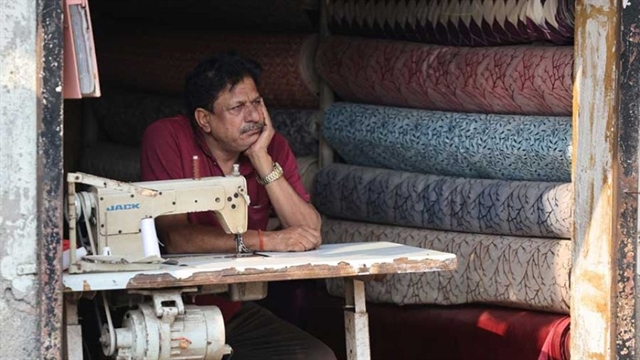 |
| A tailor looks on as he waits for customers at his shop in Mumbai on February 16, 2026. — ANN/AFP Photo |
NEW DELHI — The World Bank has projected India’s growth at 6.6 per cent in the Financial Year 2026-27. India’s growth is skewed to the downside, even as ample foreign exchange buffers and a well-capitalised banking system help manage risks, the World Bank said.
It noted that growth is estimated to have accelerated from 7.1 per cent in FY25 to 7.6 per cent in FY26, owing to strong domestic demand and export resilience.
It said that retail inflation in India is projected at 4.9 per cent for the current fiscal year, reflecting higher food and energy prices and exchange depreciation pressures.
In its report, the World Bank said that although reductions in GST rates should continue to support consumer demand in the first half of Financial Year 27, elevated global energy prices are expected to put upward pressure on prices and constrain households’ disposable income.
World Bank Vice President for South Asia, Johannes Zutt, said that despite a challenging global environment, South Asia’s growth prospects remain strong.
The report said inflation could rise due to strong demand, even as the reduction in GST rates should continue to support consumer demand in the first half of FY27.
Moody’s Ratings has also cut down India’s economic growth estimates for the current fiscal to 6 per cent from 6.8 per cetn earlier.
Domestic rating agency ICRA expects the growth to moderate to 6.5 per cent in FY27, owing to the adverse impact of elevated energy prices and concerns around energy availability amid the West Asia conflict.
The updated forecast comes at a time of heightened uncertainty in South Asia. Escalating geopolitical tensions involving the US and Iran, along with ongoing disruptions in global energy markets, have created a difficult environment for many economies in the region.
While announcing the Monetary Policy Committee (MPC) decision, Reserve Bank of India (RBI) Governor Sanjay Malhotra had said that the West Asia conflict will “adversely impact” India’s growth.
He said that higher input costs associated with increases in energy prices and international freight and insurance costs, along with supply-chain disruptions, could constrain the availability of key inputs for downstream sectors, thereby impairing growth.
However, he said the government has taken several measures targeted at supporting exports and protecting supply chains, which should help mitigate the adverse impact of the conflict. — THE STATESMAN
World
 World
World
 World
World
 World
World
 World
World
 World
World
 World
World
 World
World
 World
World
 World
World
 World
World
 World
World
 World
World
 World
World
 World
World