 World
World

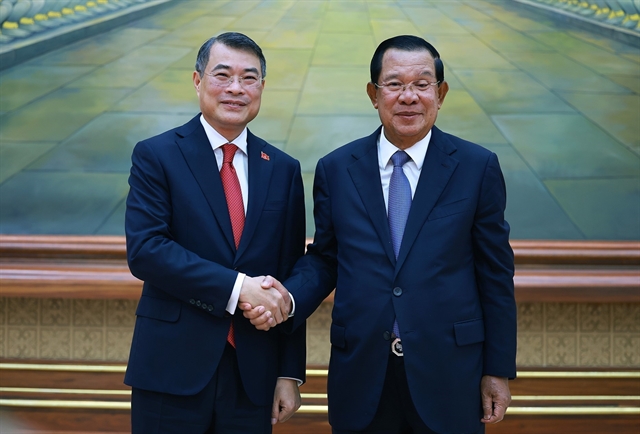
Vietnamese Prime Minister meets Cambodian National Assembly President
1.
 |
| Children play by a fountain in Seoul, South Korea. —YONHAP/VNA Photo |
SEOUL — The number of children and adolescents prescribed antidepressants in South Korea more than doubled in the past five years, data showed on Tuesday.
Last year, 24.4 million Koreans were prescribed antidepressants, up 36.7 per cent from 17.85 million in 2020, according to Health Insurance Review and Assessment Service data released by Representative Kim Mi-ae of the main opposition People Power Party.
The figure has continued to rise each year, surpassing 20 million in 2022.
The rise was especially pronounced among children and adolescents.
The number of children aged 9 and under who were prescribed antidepressants last year reached 113,000, marking a 156.8 per cent jump from 44,000 in 2020.
Among those aged 10 to 19, prescriptions climbed 127.4 per cent, from 565,000 to 1.28 million.
Prescriptions also rose sharply among those in their 20s and 30s, increasing by 55.9 per cent and 74.7 per cent, respectively, amid growing stress related to academics, employment and economic activity, officials said.
Antidepressant prescriptions among those aged 60 and older surged 21.3 per cent, from 8.69 million to 10.5 million.
Among the top 20 primary diagnoses tied to antidepressant prescriptions last year, “hyperkinetic disorders,” including attention deficit hyperactivity disorder, or ADHD, saw the steepest increase over the past five years, growing more than fivefold from 157,000 to 838,000.
Prescriptions also increased for several other conditions, including reactions to severe stress and adjustment disorders, sleep disorders, and obsessive compulsive disorder, rising by 80.4 per cent, 77.6 per cent and 59.3 per cent, respectively.
“The sharp growth in antidepressant prescriptions over a short period is not merely a reflection of increased use of medical services, but a sign that a broader mental health crisis is deepening across our society,” Representative Kim said.
“Seeing how quickly cases are rising among young people, it’s clear we need stronger preventive policies and better counseling and treatment support.” — THE KOREA HERALD/ANN
World
 World
World
 World
World
 World
World
 World
World
 World
World
 World
World
 World
World
 World
World
 World
World
 World
World
 World
World
 World
World
 World
World
 World
World