 World
World

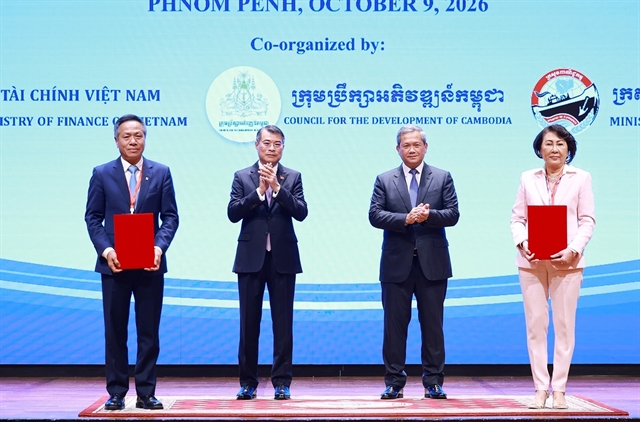
Vietnamese Prime Minister meets Cambodian National Assembly President
1.
|
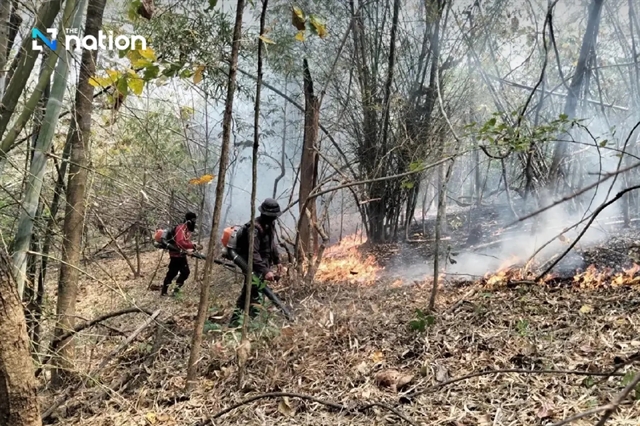
| The primary causes have been identified as seasonal agricultural burning, forest fires and unfavourable weather conditions, contributing to a recurring pollution season across parts of Southeast Asia. — The Nation/ANN Photo |
HÀ NỘI — Air pollution across northern Thailand continues to deteriorate, posing serious risks to public health and adversely affecting economic and tourism activities in the region.
According to global air quality monitoring platform IQAir, the city of Chiang Mai, the country’s second-largest urban centre, has consistently ranked among the most polluted cities in the world in recent days. In the tourist town of Pai, pollution levels have reached hazardous levels.
Data from monitoring stations indicate that concentrations of fine particulate matter (PM2.5) have at times exceeded 900 micrograms per cubic metre, approximately 60 times higher than the 24-hour average guideline set by the World Health Organisation. These microscopic particles can penetrate deep into the lungs, enter the bloodstream and significantly increase the risk of cardiovascular and respiratory diseases, as well as cancer.
The primary causes have been identified as seasonal agricultural burning, forest fires and unfavourable weather conditions, contributing to a recurring pollution season across parts of Southeast Asia. The mountainous terrain of Chiang Mai and Pai further traps smoke and haze, complicating firefighting efforts.
The worsening air quality has also become a significant impediment to tourism, with visitor numbers declining noticeably during what is typically a peak travel period.
Earlier figures from Thailand’s Ministry of Public Health showed PM2.5 levels had reached red alert status in nine provinces, while a further 28 provinces recorded orange-level warnings, with concentrations ranging from 38 to 75 micrograms per cubic metre.
Authorities have advised residents to limit outdoor activities, wear protective masks and take proactive health precautions as air quality is forecast to remain poor in the coming days. — VNA/VNS
World
 World
World
 World
World
 World
World
 World
World
 World
World
 World
World
 World
World
 World
World
 World
World
 World
World
 World
World
 World
World
 World
World
 World
World