 Travel

Atlantis Studio's Two-Player Horror Game Beyond the Dark: Nightwatch to Be Published by Q-Games!
1.
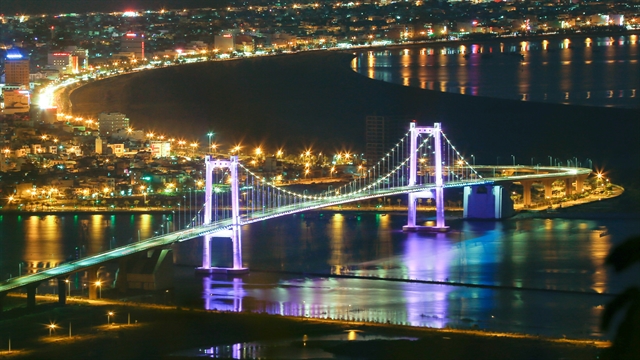 |
| Thuận Phước Bridge spans over the Hàn River as an art of lighting demonstration at night in Đà Nẵng City. The central hub plans to develop its cultural industries as a strong ecomomic sector in 2030. — Photo courtesy of Lê Lâm |
ĐÀ NẴNG — The central city should develop as a leading regional cultural centre in art creativity, cinema, traditional crafts, events, Meetings, Incentives, Conferences and Exhibitions (MICE) and heritage, building on the core zones of the current downtown, the beach area, and the world heritage site of Hội An Ancient Town.
Nguyễn Thị Thu Phương, an expert from the Institute of Culture, Sports and Tourism, recommended at a conference on the development of Đà Nẵng City’s cultural industries in 2030 that the sector aims for a 13 per cent share of the city’s Gross Regional Domestic Product.
Phương said the city, after merging with Quảng Nam province, has expanded its development space to Hội An and Chu Lai as a key economic hub and multi-creative-heritage centre in the coastal central region.
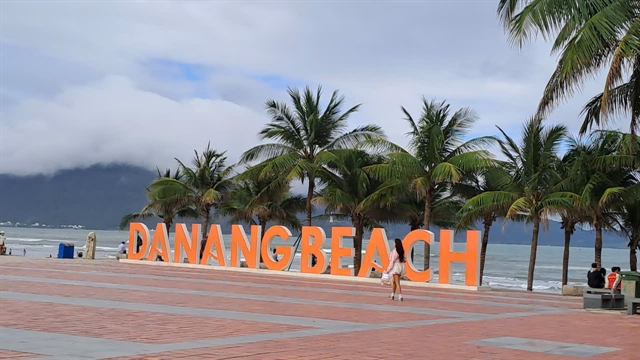 |
| The beach zone of Mỹ Khê and Sơn Trà is designed as a tourism rendezvous of arts performance, lifestyle experience and beach-fun festival in day and night. — VNS Photo Công Thành |
“The current downtown zone of Hải Châu and the coastal areas of Sơn Trà and An Thượng have been driving growth in cultural industries including advertising, music, festivals, MICE and tourism services. Meanwhile, Hội An Ancient Town will be developed as a world heritage zone, encompassing the Old Quarter, traditional crafts, the architecture preservation centre, and surrounding areas in Điện Bàn and Chu Lai,” Phương said.
“Đà Nẵng will transform into an extended downtown space following integration with Quảng Nam Province, creating a larger zone for art creativity, innovation, digital growth and new tourism experiences built on the foundation of world heritage.”
The city has been recognised for its exceptional value and potential in cultural industries in central Việt Nam and is on track to become a global centre for culture, tourism and innovation, she noted.
Vice Director of Đà Nẵng City’s Culture, Sports and Tourism Department Hà Vỹ stressed that the tourism hub has achieved significant growth, contributing an average of 4.71 per cent to GRDP between 2017 and 2023, and successfully raising its international profile through events such as the International Fireworks Festival and the Asia Film Festival.
The department has proposed a master plan for cultural industry growth in the coming decades, focusing on advertising, cinema, arts and entertainment, and service sectors, Vỹ said.
He added that the city aims to build a brand as a cultural and innovation hub, drawing on its unique indigenous culture and lifestyle while integrating digital technologies.
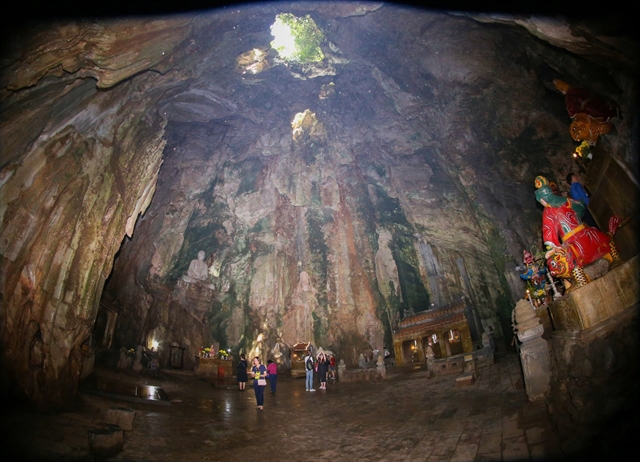 |
| Tourists explore a cave in Ngũ Hành Sơn (Marble Mountain), a favourite destination in Đà Nẵng City. The site can be turned into a mapping and demonstration of digital art performance in caves. — Photo courtesy of Lê Lâm |
Hồ Xuân Tịnh, a cultural researcher, suggested that Đà Nẵng has enormous potential to leverage its world heritage and cultural assets for tourism growth. These include Hội An Ancient Town, Mỹ Sơn Sanctuary, Hải Vân Gate, Điện Hải Citadel, Ngũ Hành Sơn (Marble Mountain), the bài chòi folk singing tradition – recognised by UNESCO as an Intangible Cultural Heritage of Humanity – Tuồng (Classical Drama), and the traditional crafts of Hội An.
The city has also expanded the range of hand-made products, including timber, rattan, silk and brocade weaving from ethnic groups in the mountainous areas of the former Quảng Nam Province, alongside fishery lifestyles in coastal communities along its 130km coastline.
Kang Hyun-jong, a Korean professor from Yuhan University, shared Bucheon City’s success in developing cultural industries as a key economic sector. She noted that over 28 years, the city had cultivated world-recognised cultural brands, including its designation as a UNESCO Creative City of Literature, the International Fantastic Film Festival, the International Animation Festival and the International Comic Festival.
Kang Hyun-jong suggested that Đà Nẵng could similarly develop its cultural industries using the city’s natural and historical assets. She proposed a living ocean canvas on the 1-km pristine Mỹ Khê Beach, featuring 3D art mapping on sand, a sculpture garden inspired by the former Champa Kingdom, drone storytelling, illumination shows, and AI-driven Vietnamese folk animation.
“Ngũ Hành Sơn (Marble Mountain) could serve as an immersive experience space with 360-degree projections on cliffs and in caves, hologram films, and performances combining traditional martial arts with digital art,” she said.
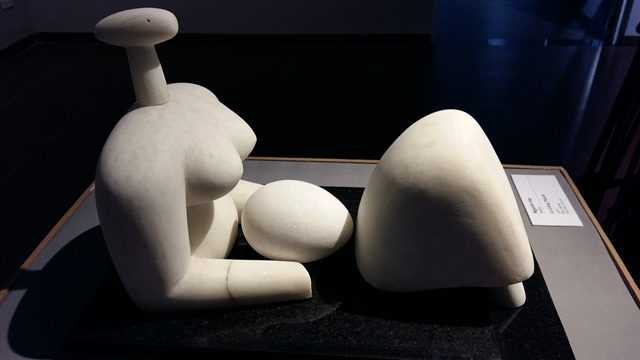 |
| A stone sculpture piece created by a local artist in Đà Nẵng City. The hub has preserved 400-year stone sculpture craft in Ngũ Hành Sơn destination as an attraction to tourists. — VNS Photo Công Thành |
“Đà Nẵng could co-operate on projects producing AI-driven video animation to promote the city’s tourism and culture. The city can advance a joint education plan with Yuhan University for AI education and develop a co-platform to establish an AI creative hub through joint operations with the university,” she said.
Đà Nẵng and Bucheon can also exchange experiences from the Bucheon International Fantastic Film Festival and the Bucheon International Comic Festival to enhance the annual Đà Nẵng Asia Film Festival, she added.
Xuân Hạ, an independent cultural researcher, suggested that Đà Nẵng preserve the war-era Nước Mặn Airbase as an open-air arts space for tourists. She said the airbase provides a living historical experience, illustrating the city’s journey from war to peace, and would help visitors gain a deeper, unforgettable understanding of Đà Nẵng.
The city of Đà Nẵng and the former Quảng Nam Province officially merged to form a new, larger Đà Nẵng City, covering 11,867 sq.km and with an economic scale of VNĐ280 trillion (US$11.2 billion), making it one of Việt Nam's six centrally-governed cities.
The city welcomes five million tourists annually and possesses vast resources and opportunities to drive economic growth, serving as a key engine for both the region and the nation.
Đà Nẵng is home to two UNESCO-recognised world heritage sites – Hội An Ancient Town and Mỹ Sơn Sanctuary – as well as the Chàm Islands-Hội An World Biosphere Reserve. The UNESCO Memory of the World programme has also recognised the Ma Nhai Collection on Ngũ Hành Sơn (Marble Mountains), the city’s Culture, Sports and Tourism Department reported.
The city is entering a new era of development with Việt Nam's first-ever designed projects, including a Free Trade Zone, an International Financial Centre, and an international logistics hub supported by a well-invested infrastructure network of airports and seaports.
The new Đà Nẵng has been designated a trailblazer in modernisation, a national hub for innovation, high-tech and startups, and a leader in digital, circular, green and marine economies. It is poised to become a global destination for tourism, culture and international exchange, the department said. — VNS
Travel
 Travel
 Travel
 Travel
 Travel
 Travel
 Travel
 Travel
 Travel
 Travel
 Travel
 Travel
 Travel
 Travel
 Travel