 Society

Young people’s mental health: We need to listen – and act
1.
|
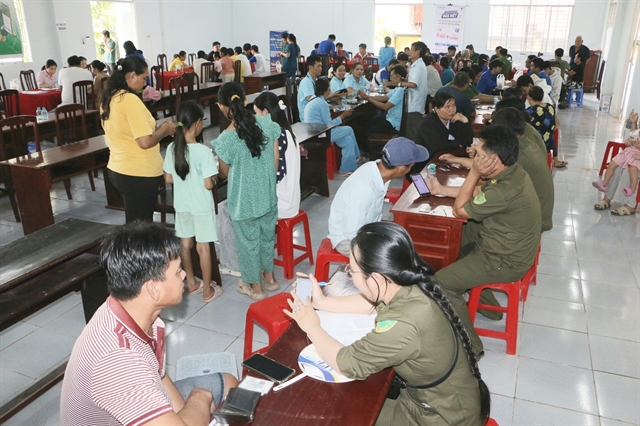
| Residents of Tân Hòa Commune, Cần Thơ City, learn to use digital services at the Sáu Ngàn Hamlet Cultural House during the Digital Transformation Day on September 27. — VNA/VNS Photo |
CẦN THƠ — When he learned that officials would help residents link health insurance cards into VNeID, the national digital identity application, at the Sáu Ngàn Hamlet Cultural House on September 27, 70-year-old Lê Văn Tư of Tân Hòa Commune arrived early.
He said: “I am old and my eyesight is poor. I am not familiar with using a phone, so I was afraid of making mistakes. But the officials here were very patient and guided me through each step. It was done in no time.
“From now on, when I go to a hospital, I only need my phone. I no longer have to worry about losing or damaging my paper health insurance card. It is extremely convenient.”
Tư’s experience shows how digital transformation can become meaningful when technology is accessible and meets people’s practical needs.
In Tân Hòa Commune, authorities have shifted from door-to-door visits to organising Digital Transformation Days at hamlet cultural houses.
Residents can receive assistance with VNeID, online public services, health insurance, banking, telecommunications, taxation, and digital healthcare in one place.
This is particularly useful for older people, who can resolve technology-related problems without having to travel far.
Trần Văn Dũng of Hamlet 8 in Tân Hòa is one such older person.
A damaged SIM card meant he could not use his phone or access public services. After learning that a telecom provider was offering direct support in the hamlet, he took his phone to the event and had the SIM card checked and replaced within minutes.
He said: “People are very happy to have programmes like this at the hamlet cultural house. It is quick, handled by the right professionals, and saves us from travelling to the centre.”
|
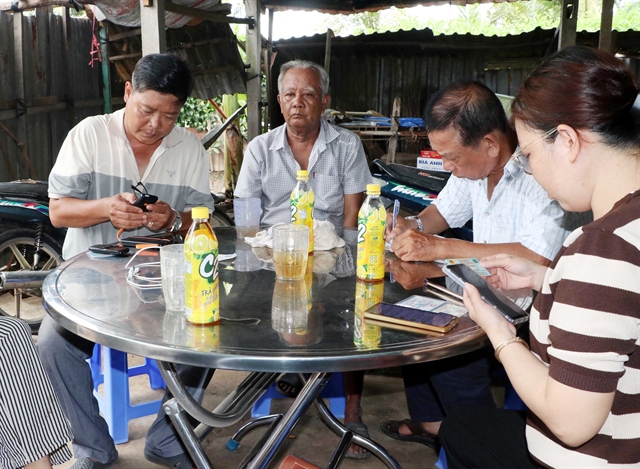
| A community digital technology team in Cần Thơ helps some ethnic minority people activate and integrate information in Level 2 VNeID. — VNA/VNS Photo |
Digital transformation is also changing transactions for small businesses.
The Vietnam Bank for Social Policies has helped shops create QR payment codes, making transactions more convenient while gradually reducing reliance on cash.
Bùi Công Mến, deputy chairman of Tân Hòa People’s Committee, said the commune has proactively allocated funds and invested in technology equipment for hamlet cultural houses since early 2026, while issuing a detailed plan and roadmap.
The commune aims to meet all criteria for the pilot “smart hamlet” model to be implemented in Nhơn Phú and Sáu Ngàn hamlets this year.
Under the “smart, modern hamlet” model, locals are taught how to use VNeID, electronic health records, online public services, and cashless payments.
Farmers and co-operatives are assisted with selling their products through e-commerce platforms using QR codes for traceability and reaching wider markets.
Similar models are being implemented elsewhere in the Cửu Long (Mekong) Delta city.
In Mỹ Hương Commune, the “smart hamlet” model helps people use online public services and cashless payments, sell products online and receive information from local authorities through digital platforms.
The efforts support the implementation of the Politburo’s Resolution No. 57 on breakthroughs in science, technology, innovation and national digital transformation, issued in December 2024.
|
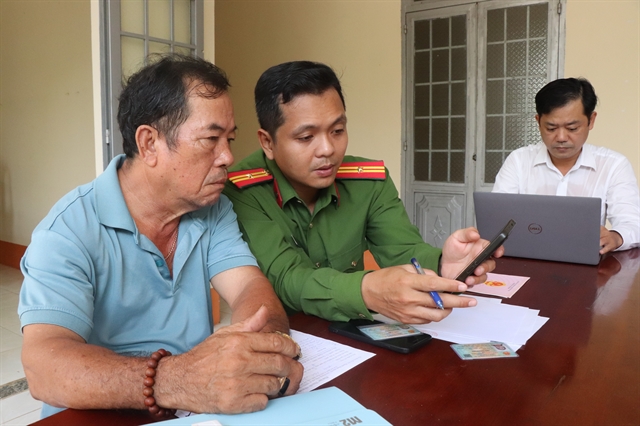
| A Cờ Đỏ Commune police officer helps Trương Minh Thắng of Thới Hòa B Hamlet submit household registration documents via VNeID. — VNA/VNS Photo |
Important results
After more than a year of implementing Resolution No. 57, Cần Thơ has achieved significant outcomes, meeting or exceeding most central Government targets.
The city has invested in digital infrastructure, promoted the use of technology in management and services, supported business innovation, and expanded digital transformation in agriculture, healthcare, education, and public administration.
With 1,227 community digital technology teams fanning across 103 communes and wards, the city has personnel visiting people at home, helping overcome their technology hesitancy, and spreading digital governance and society even to rural areas.
However, despite these achievements, the city still faces a number of difficulties and challenges, according to its Department of Science and Technology.
Its technology infrastructure remains inconsistent, while the availability of highly skilled human resources is still limited.
Many public administrative service centres still use outdated equipment, which affects the efficiency of administrative procedure processing and online public services.
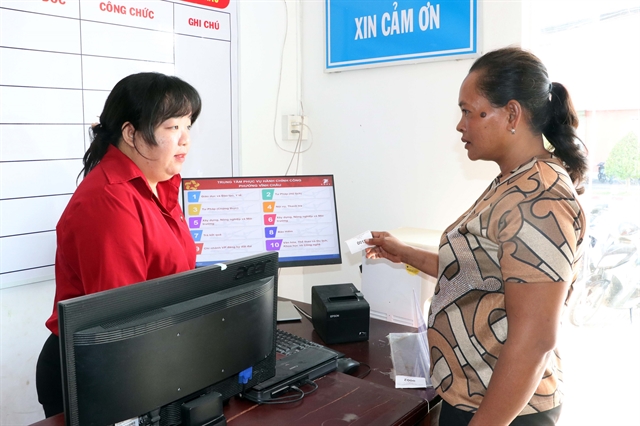
Up to 23 per cent of communes and wards lack automated queue-number machines, while 18 per cent do not have number display screens and 6 per cent have yet to install equipment for looking up information on administrative procedures.
|
| Digitalisation of public services in Vĩnh Châu Ward makes it easier for its ethnic minority residents to complete administrative procedures. — VNA/VNS Photo |
To address these bottlenecks, the city People’s Committee has instructed the Department of Science and Technology to equip offices in 103 communes, wards, and public administrative service centres with IT and video conferencing systems, strengthening digital infrastructure to support future development.
From September 21 to 29, the department organised digital skills training for members of community digital technology teams across the city.
To encourage the teams to continue their work, the city is providing each with VNĐ1.5 million (US$57) in monthly support to cover members’ petrol and telecom costs from July 10 to December 31.
It will launch a 60-day campaign under which community digital technology teams will visit every alley and household and provide residents with hands-on guidance on digital skills and the use of digital services.
The campaign will begin on October 10 and continue through December 8.
Nguyễn Hữu Thanh Bình, deputy director of the Department of Science and Technology, said the campaign aims to bring digital transformation to the grassroots level, helping residents understand, feel confident about, and actively use essential digital products and services.
“Priority support will be given to older people and people with disabilities, disadvantaged households, rural residents, people living far from urban centres, and those with limited access to technology.”
For Tư, Dũng and many others, digital transformation is no longer something distant or difficult; it is becoming part of everyday life.
As digital services reach more hamlets and become easier to use, technology is making essential public services more accessible and bringing them closer to the people. — VNS
Society
 Society
 Society
 Society
 Society
 Society
 Society
 Society
 Society
 Society
 Society
 Society
 Society
 Society
 Society