 Society

LANDMARK Launches ‘Destination CENTRAL’: A District-Wide Invitation to Explore the Dynamism, Luxury, and Soul of Central
1.
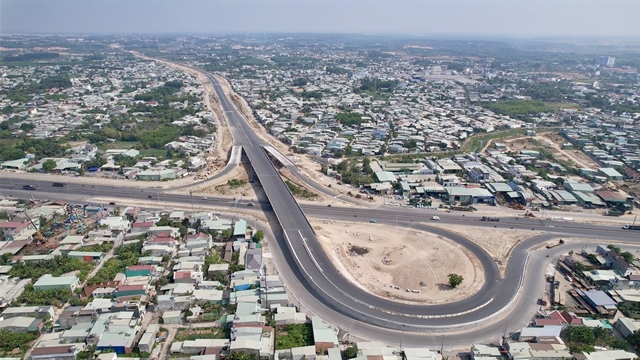 |
| A view of the Biên Hòa–Vũng Tàu Expressway. — VNA/VNS Photo |
HÀ NỘI — Việt Nam has opened or technically cleared for traffic more than 3,800km of key expressways nationwide, while another 38 projects covering over 2,100km are currently under development, according to the Ministry of Construction.
In a recent report, the ministry said around 3,803km of expressways have so far been put into operation or technically opened to traffic, including approximately 3,345km of main routes and 458km of interchanges and access roads.
The expansion marks a major step in Việt Nam's efforts to modernise its transport infrastructure network and improve regional connectivity amid rising demand for freight and passenger transport.
Road transport remains the backbone of the country’s logistics and mobility system, accounting for roughly 70-75 per cent of domestic freight transport and around 91 per cent of passenger transport, the ministry said.
The construction ministry currently directly manages key national highways and inter-regional routes totalling around 4,875km, equivalent to about 20 per cent of the national highway system, while more than 70 per cent of national highways – around 17,520km – have been decentralised to local authorities for management and maintenance.
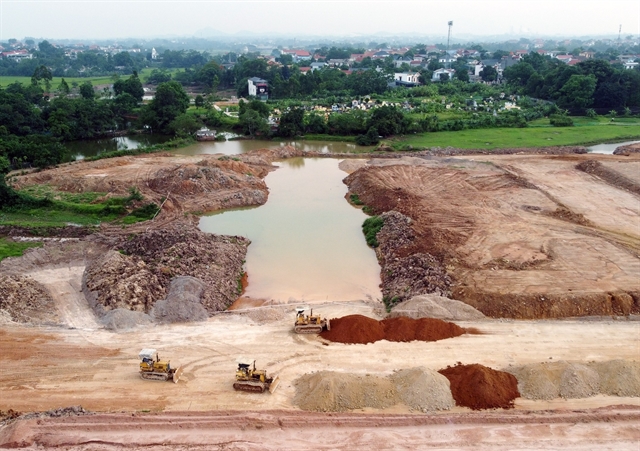
At present, authorities are implementing 38 expressways and road infrastructure projects spanning about 2,111km nationwide.
Of these, the construction ministry is overseeing eight projects with a combined length of 284km, while local governments are implementing 29 projects totalling 1,797km. The State-owned Việt Nam Expressway Corporation (VEC) is developing an additional 30km project.
One of the projects nearing completion is Component Project 1 of the Biên Hòa–Vũng Tàu Expressway in southern Việt Nam, where the main route has largely been completed and is expected to open to traffic around May 19.
Other than road transport, the ministry said Việt Nam is accelerating investment across maritime, inland waterway, aviation and railway infrastructure, in a bid to strengthen national connectivity and sustain economic growth.
In the maritime sector, the country’s port infrastructure has expanded significantly in recent years, with cargo throughput increasing from 706.1 million tonnes in 2021 to 955.5 million tonnes in 2025, according to the report.
Việt Nam currently has 309 seaports with a combined wharf length of around 107km, as well as 14 offshore oil and gas ports. The ministry said maritime infrastructure, shipping channels and navigation systems have been upgraded in a relatively synchronised manner, helping meet both domestic and international transport demand.
Authorities are also reviewing and refining planning frameworks to better integrate maritime and inland waterway transport systems.
Priority is being given to several major gateway port projects, including Gemalink Port Phase 2, Cái Mép Hạ Port, Liên Chiểu Port, terminals at Lạch Huyện Port and Hòn Khoai Port.
Meanwhile, the inland waterway network now includes more than 25,100km of navigable routes, though the ministry acknowledged that the sector had long suffered from insufficient investment despite its importance in connecting key economic regions.
In the aviation sector, authorities are speeding up implementation of several strategic projects, most notably Phase 1 of Long Thành International Airport, one of Việt Nam's largest infrastructure efforts in history.
Other ongoing projects include upgrades and expansion works at Cà Mau Airport, runway renovation projects at Vinh and Liên Khương international airports, and expansion plans for Phú Quốc International Airport in preparation for the 2027 APEC Summit.
The ministry said efforts are also underway to modernise airport planning, expand international flight networks, strengthen aviation logistics and promote digital and green transformation across the aviation industry.
In the railway sector, authorities are expediting procedures related to several major projects, including the Lào Cai–Hà Nội–Hải Phòng railway, the Hà Nội–Lạng Sơn line and the Hải Phòng–Hạ Long–Móng Cái route. Local authorities are also coordinating on land clearance, compensation and resettlement work.
The construction ministry said it is finalising a report for the Government Party Committee regarding the selection of partners to provide and transfer technology for the planned North–South high-speed railway project, one of the country’s most ambitious long-term transport plans.
Looking ahead, the ministry said it would continue monitoring developments related to conflicts in the Middle East and assess potential impacts on supply chains, transport services and construction material prices to avoid disruptions to infrastructure development.
The government is aiming to maintain stable construction progress while supporting a national GDP growth target of more than 10 per cent in 2026, the report said. — VNS
Society
 Society
 Society
 Society
 Society
 Society
 Society
 Society
 Society
 Society
 Society
 Society
 Society
 Society
 Society