 Society

Lacquer painting exhibition brings 62 works to HCM City
1.
|
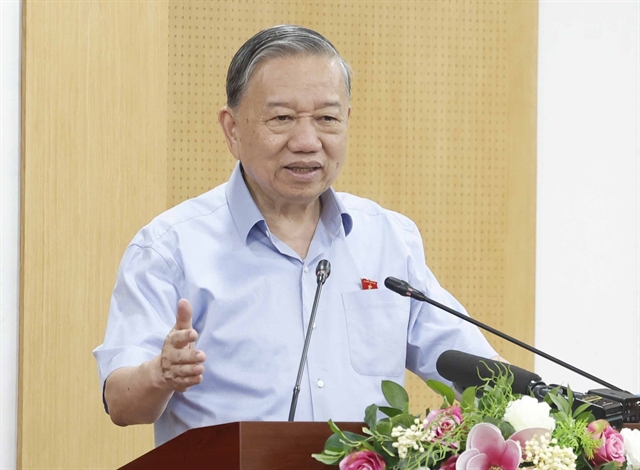
| Party General Secretary and State President Tô Lâm addresses concerns of voters in Hà Nội on Monday. — VNA/VNS Photo Thống Nhất |
HÀ NỘI — Hà Nội must shift from policy planning to effective implementation, Party General Secretary and State President Tô Lâm said as he spoke to voters in Hà Nội on Monday.
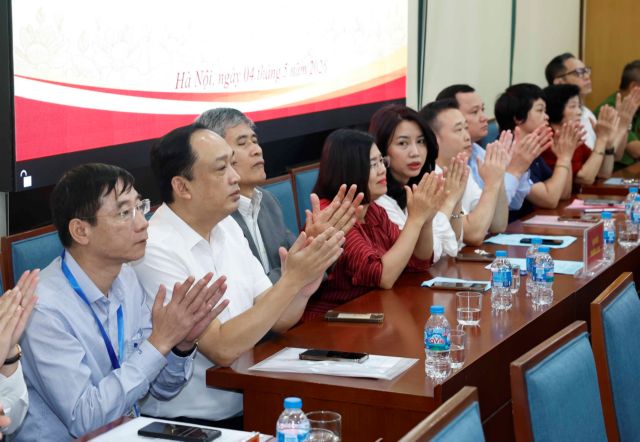
The meeting was held at the headquarters of Ô Chợ Dừa Ward People’s Council and People’s Committee to report on the outcomes of the first session of the 16th National Assembly (NA), and collect voters’ opinions and recommendations.
Hà Nội citizens present at the event expressed satisfaction and confidence in the success of the recent general elections and the first session of the newly elected NA, which appointed key leadership positions of the country.
They also praised the adoption of the revised Capital Law, which is expected to drive positive changes, enhance Hà Nội’s modern outlook and reinforce the city’s standing. Voters emphasised the need for effective enforcement through coordinated planning aligned with national and regional frameworks.
Speaking on pressing issues, they raised concerns about food safety, particularly the use of banned substances and excessive chemical preservatives in livestock farming, as well as the widespread sale of counterfeit and substandard products.
Their recommendations include stricter penalties to ensure deterrence, tighter regulation of business registration on digital platforms and clearer accountability among ministries and local authorities.
To make the Politburo’s resolution on public health protection and improvement more effective, voters proposed clear guidelines and frameworks for free basic health check-ups and budget allocations for grassroots health models, such as family doctors and home-based nursing.
On administrative reforms, Hà Nội voters acknowledged initial positive changes under the two-tier local government model, but highlighted the need to better link authorities, businesses and training institutions, support job creation, improve vocational training aligned with market demand, and enhance labour market data connectivity nationwide.
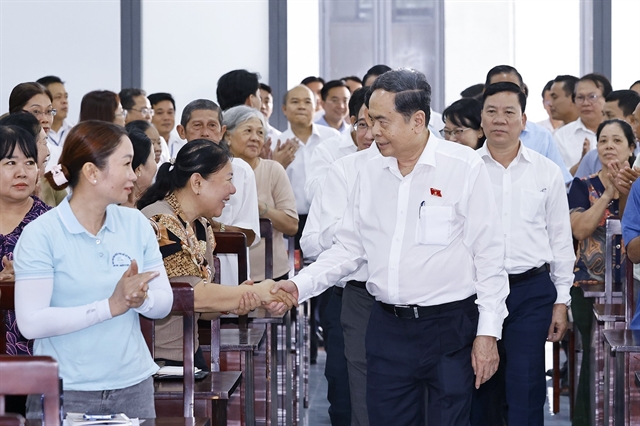
|
| The meeting was held to report on the outcomes of the first session of the 16th National Assembly and gather voters’ opinions and recommendations. — VNA/VNS Photo Thống Nhất |
Speaking at the meeting, Lâm said voters’ candid and responsible feedback provided valuable insights into real-life challenges.
While spanning multiple sectors, their concerns shared a common demand for a more responsive administrative system, more practical policies, clearer accountability and tangible results, he said.
Addressing voters’ concerns, the top leader underscored the importance of strengthening local health care, improving food safety management, clarifying responsibilities among relevant agencies and strictly handling violations.
He also called for faster urban infrastructure upgrades as well as the renovation of old apartment blocks to improve living conditions and support urban restructuring.
The top leader highlighted the revised Capital Law and the 100-year master plan for Hà Nội, which provides a foundation for the city to design policies, mobilise resources and remove bottlenecks.
Acknowledging the city’s determination and reform aspirations, he noted that current challenges are significant but also present major opportunities for Hà Nội to achieve growth breakthroughs in the new era.
He also outlined key directions, including aligning the Capital Law with urban planning, ensuring each special mechanism is tied to clear goals, responsibilities and measurable outcomes.
Special mechanisms are not meant to create privilege, but to address issues where general mechanisms fall short, he stressed. Priority must be given to urgent issues such as traffic congestion, environmental pollution, urban flooding, infrastructure renovation, housing, land management, slow-moving projects, food safety, local health care and public service quality.
He noted that Hà Nội’s growth must move beyond traditional models based on increasing investment, land expansion and population growth, and instead rely on institutional quality, productivity, science and technology, innovation, digital transformation, knowledge-based economies, the private sector, cultural industries and a skilled workforce.
The top leader also emphasised that economic development must go hand in hand with cultural and human development, with Hà Nội’s rich heritage serving as a driver of growth. Effective resource management is crucial to avoid waste and maintain public trust.
The city should also modernise governance using data, technology, increase accountability and generate concrete outcomes, and measure success by the satisfaction of citizens and businesses.
With public consensus, the efforts of the political system and the responsibility of NA deputies, he expressed confidence that Hà Nội will continue to overcome challenges and develop into a more modern and liveable capital. — VNS
Society
 Society
 Society
 Society
 Society
 Society
 Society
 Society
 Society
 Society
 Society
 Society
 Society
 Society
 Society