 Society

Viên dives again to popularise swimming passion
1.
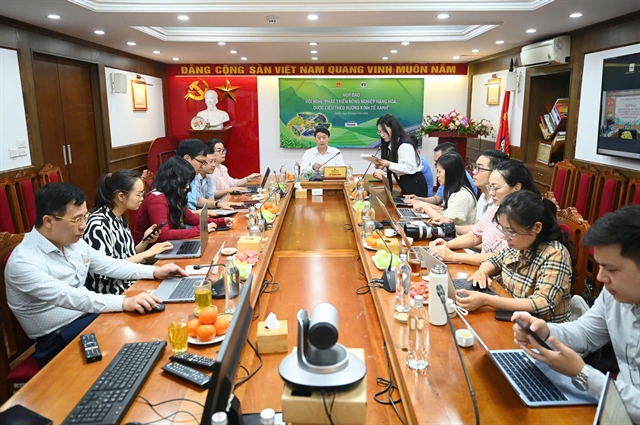 |
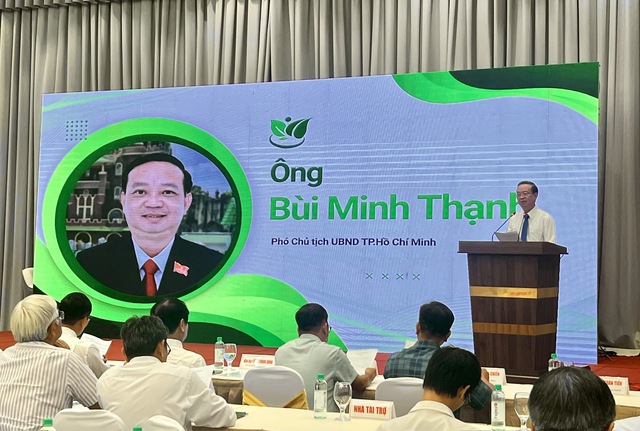
| Scene of the press conference in Hà Nội on April 16. VNS Photo the Agriculture and Environment newspaper |
Trần Như
LAI CHÂU — Lai Châu Province will host a conference on "Developing commodity agriculture and medicinal plants towards a green economy" on April 23–24, 2026, serving as a platform to connect producers, enterprises and markets while promoting the distinctive agricultural products of the north-western region.
Details were announced at a press conference in Hà Nội on the afternoon of April 16, organised by the Agriculture and Environment newspaper in coordination with the provincial departments of Agriculture and Environment and Culture, Sports and Tourism.
Speaking at the press conference, Lê Trọng Đảm, Deputy Editor-in-Chief of the newspaper, said that developing agriculture along the lines of commodity production, sustainability and environmental friendliness is becoming an inevitable trend and an urgent requirement for raising added value and the sector's competitiveness. For mountainous localities such as Lai Châu, this is not merely an economic orientation but also a vital solution for effectively tapping the potential of land, climate and biodiversity, helping to improve livelihoods, especially for highland communities.
"Lai Châu has many advantages for developing commodity agriculture and medicinal plants, with a diverse ecosystem, distinctive climate and many endemic products of high economic value," Đảm said. However, he also pointed to challenges including small-scale, fragmented production, fragile supply chain linkages, limited processing capacity and unstable markets.
In that context, the conference is regarded to have practical significance, aiming to identify long-term development orientations while promoting linkages, attracting investment and raising the added value of the locality's key agricultural products.
Providing further details on development orientations, Nguyễn Thành Đồng, Deputy Director of the Lai Châu Department of Agriculture and Environment, said that in implementing the resolution of the provincial Party Congress for the 2025–2030 term, the locality has identified the development of commodity agriculture and medicinal plants towards a green economy as one of the breakthrough priorities for the agricultural sector.
With its characteristically dissected terrain, Lai Châu has formed numerous micro-climatic zones, creating a rich ecosystem and endemic agricultural resources. As a result, the province boasts many key products such as tea, macadamia, cinnamon and speciality rice varieties, each carrying distinctive value linked to local natural conditions and cultural identity.
Notably, under the national programme for the development of Vietnamese ginseng, Lai Châu ginseng, alongside Ngọc Linh ginseng, has been identified as one of the endemic products with great potential. The province has issued a thematic resolution and assessed suitable ecological zones, gradually refining the legal framework for the conservation and development of medicinal plants.
However, according to Đồng, the development process still faces a number of bottlenecks, particularly in market connectivity, investment attraction and deep-processing capacity. Lai Châu has therefore committed to developing agriculture in depth, linked to the green economy and green growth, with a focus on the efficient use of resources, minimising environmental impact and raising product value through processing and branding.
The conference aims to translate these orientations into concrete action, with the goal of promoting sustainable agricultural development linked to the circular economy, emissions reduction and climate change adaptation, while analysing the locality's potential, advantages and challenges, and proposing solutions to raise added value and strengthen the value chain from production to consumption.
According to the organising committee, the conference is expected to bring together approximately 250–300 delegates in person and 300–400 online, including leaders of central agencies, ministries, sectors and localities; research institutes and universities; experts and scientists; enterprises, industry associations, cooperatives and media organisations.
The conference centres on three core themes: sustainable agricultural development linked to the green transition; enhancing the value chain for agricultural and medicinal plant products through raw material zone development, deep processing, trade, logistics and branding; and strengthening linkages, attracting investment and expanding consumer markets.
Alongside the discussion sessions, the conference will feature an exhibition area with approximately 50 booths showcasing OCOP products and key agricultural goods, including products rated three to five stars, deep-processed products, environmentally friendly items and products with clear traceability. This is expected to serve as an effective bridge between producers and markets.
A key highlight will be the signing of Memoranda of understanding on cooperation between management agencies, research institutes, enterprises and cooperatives, focused on raw material zone development, technology transfer and production–processing–consumption linkages oriented towards the green economy.
Through the event, Lai Châu hopes to expand cooperation with domestic and international organisations and enterprises, while continuing to strengthen partnerships with counterparts from South Korea and Japan in the field of medicinal plant development. This is seen as a foundation for gradually turning ginseng into a high-value commodity, helping to elevate the standing of Vietnamese medicinal plants on the international market.
Through the conference, Lai Châu hopes to strengthen connections among management agencies, scientists, enterprises, cooperatives and farmers, promote production linkages, attract investment and expand consumer markets. It is also an opportunity for the locality to leverage its advantages in commodity agriculture and medicinal plants, gradually forming sustainable value chains and contributing to the goals of green economic development and improved incomes for the people. — VNS
Society
 Society
 Society
 Society
 Society
 Society
 Society
 Society
 Society
 Society
 Society
 Society
 Society
 Society
 Society