 Society
European higher education week opens new opportunities
1.
|
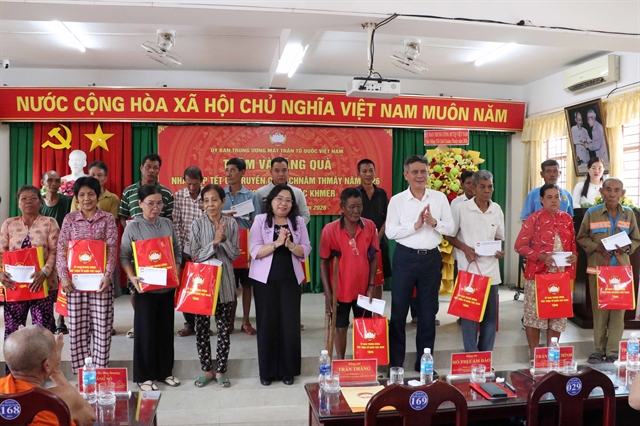
| A delegation from the Việt Nam Fatherland Front Central Committee visits and presents gifts to Khmer people in Cần Thơ City on the occasion of the 2026 Chol Chnam Thmay festival on April 13. — VNA/VNS Photo |
CẦN THƠ – Cần Thơ’s targeted ethnic policies have helped Khmer communities stabilise livelihoods, secure housing and achieve sustainable poverty reduction.
The Cửu Long (Mekong) Delta city has implemented a range of ethnic policies, including housing support, job creation, cultural preservation and community care under national target programmes, to help residents improve living standards.
In many areas with large Khmer populations, temporary houses are gradually being replaced with concrete ones.
In Lịch Hội Thượng Commune, where Khmer people account for nearly 42 per cent of the population, local authorities assisted needy Khmer households to build and repair 117 houses with total funding of more than VNĐ8 billion (US$34,000) last year while local social organisations contributed labour to help them build and repair their homes.
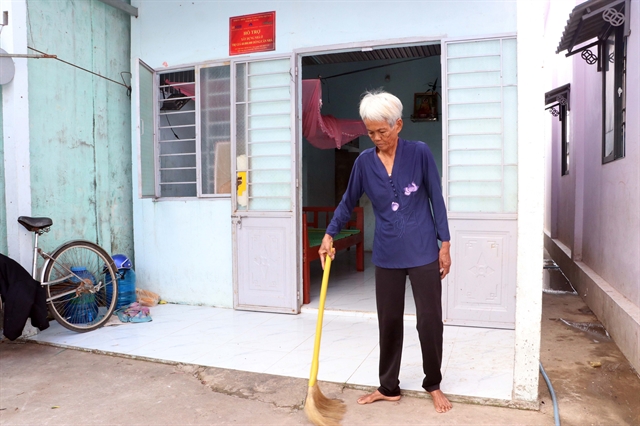
In Mỹ Xuyên Ward, the family of Thạch Thị Hồng Nhiên, a poor household without farming land, previously lived in a severely degraded house. With support for a new home, the family now has a stable place to live.
Lý Sươl, Nhiên’s mother, said: “I am very happy that the State supported my daughter with a house. Life used to be very difficult because the old house was badly damaged and leaked in many places. Now my grandchildren have a proper place to live, and we feel more at ease to work and improve our lives.”
|
| Lý Sươl, a Khmer resident in Mỹ Xuyên Ward, stands beside her daughter’s newly built house, funded by State support. — VNA/VNS Photo |
Supporting livelihoods
Cần Thơ has prioritised livelihood support for Khmer people through soft loans and farming technique assistance.
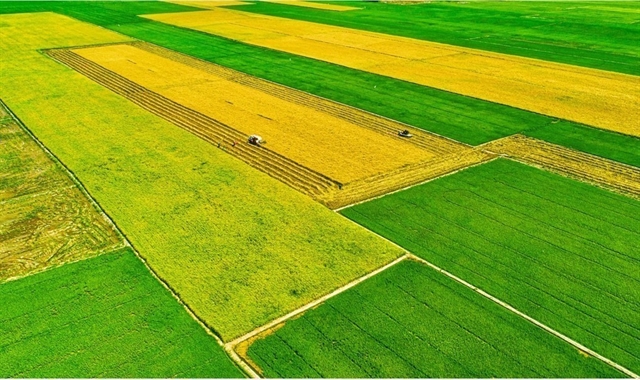
Mỹ Xuyên Ward’s Đại Nghĩa Thắng area is home to 983 households, more than 90 per cent of whom are Khmer. Access to soft loans has enabled many farmers in Đại Nghĩa Thắng to adopt new techniques, shift to high-quality rice varieties and expand intercropping models.
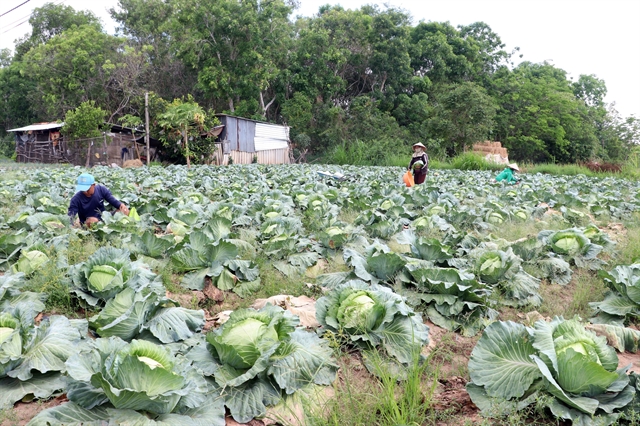
Diệp Phước Nghĩa, a local Khmer resident, has been granted two soft loans worth a total of VNĐ50 million ($1,900) to grow vegetables on a 4,000sq.m field, earning an annual profit of more than VNĐ50 million.
He also received a breeding cow from local authorities three years ago and now has two cows.
His family has escaped poverty, built a concrete house, and has a stable income.
Lâm Minh Hà, head of Đại Nghĩa Thắng residential area, said: “Most farmers are hardworking and willing to innovate. With loan capital, they have applied scientific techniques, switched to fragrant rice varieties and developed intercropping practices.”
The farming mindset of Khmer people has changed significantly, moving from traditional farming to collective economic models, he said.
Most rice fields have been shifted to grow specialty fragrant rice such as ST24 and ST25 rice varieties through production linkages, helping ensure stable output and higher profits, he said.
He added that this approach is key to reducing poverty quickly and moving towards sustainable income growth for local residents.
As a result, the poverty rate of Đại Nghĩa Thắng has fallen sharply, with only 15 poor households and nine near-poor households remaining out of 983.
|
| Khmer farmers in Mỹ Xuyên Ward expand intercropping of vegetables for higher profits. — VNA/VNS Photo |
In Nhu Gia Commune, nearly 38 per cent of its population is Khmer, and livestock and other farming models have also proved effective.
Thạch Nam, a farmer who has recently escaped from poverty, said support with breeding cattle helped stabilise his family’s income.
“The Party, the State and local authorities have supported us, so I must make an effort. Now I have a herd of cattle that is developing well. There are four pregnant cows and one calf that I recently bought,” he said.
Nguyễn Quốc Hưng, Deputy Chairman of the Nhu Gia People’s Committee, said the commune had 71 poor households as of the end of last year, accounting for 0.83 per cent, down by 10 households compared with the end of 2024.
The number of poor and near-poor households among ethnic minorities has also declined significantly, reflecting the clear effectiveness of State support policies, he added.
Economic development has been accompanied by efforts to preserve Khmer cultural identity.
|
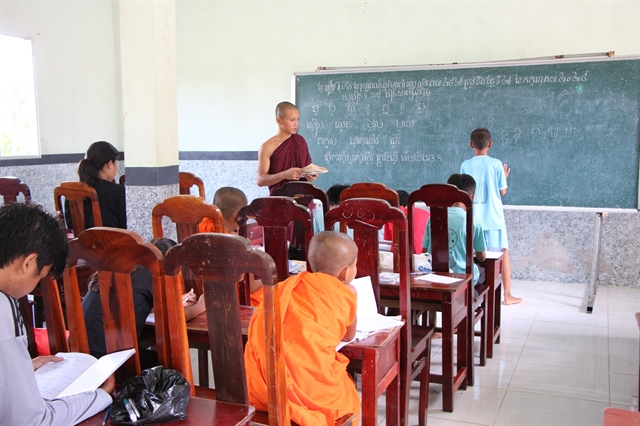
| A Khmer language class for Khmer pupils is held annually during the summer at Pôthivongsa Pagoda in Xà Phiên Commune. — VNA/VNS Photo |
At many Khmer pagodas, Khmer language classes are held during summer, attracting many students. These classes help preserve the language while nurturing aspirations and guiding the younger generation about their traditions, behaviour and festivals.
Thị Thanh Thảo of Xà Phiên Commune said the classes have made her summer truly meaningful, as she and her friends practise their ethnic language and script.
Cần Thơ is home to more than 494,400 ethnic minority people, accounting for 15.46 per cent of the population, including over 411,100 Khmer.
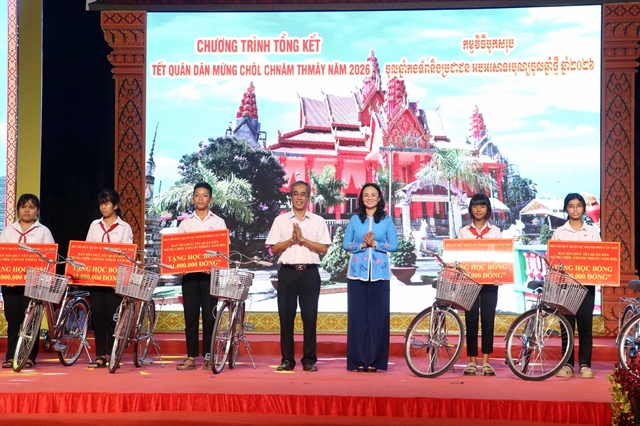
|
| Disadvantaged Khmer students receive scholarships at the “Military–Civilian New Year celebration for the 2026 Chol Chnam Thmay” programme, held in An Ninh Commune on the evening of April 12. — VNA/VNS Photo |
Khmer festival
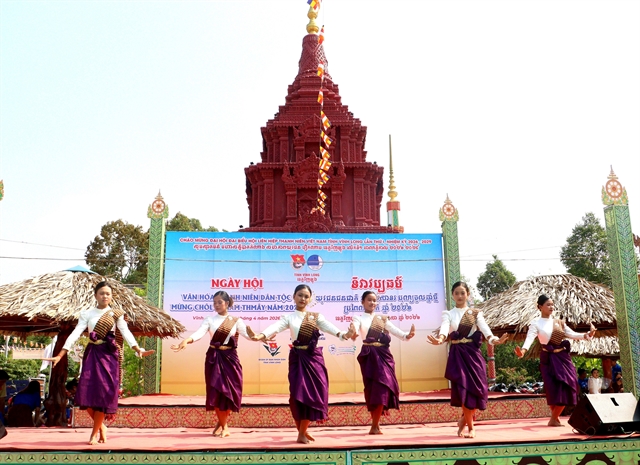
During the 2026 Chol Chnam Thmay festival, the traditional Khmer New Year, which falls from April 14 to 16, Cần Thơ has organised various activities for Khmer communities.
The Cần Thơ Border Guard organised various activities to support the material and spiritual lives of Khmer people, and its officers and soldiers.
On April 11, it held the “zero-cost market” programme to provide 70 gift packages, including rice, instant noodles and essential goods, worth VNĐ21 million ($800), to disadvantaged households in Lai Hòa Commune and Vĩnh Phước Ward.
The city held the “Military–Civilian New Year celebration for the 2026 Chol Chnam Thmay” programme from April 10 to 12.
The programme, with total funding of over VNĐ18 billion ($684,000), covered various activities such as installing 140 solar-powered lights, building three rural transport bridges, repairing roads, and creating flower-lined routes, as well as building 238 “great unity” houses for needy Khmer households.
It also presented gifts to Khmer pagodas, delivered 950 gift packages to poor households and policy beneficiary families, awarded 360 scholarships and 500 bicycles to disadvantaged students, and provided free medical check-ups and medicine to 1,200 people.
The programme also organised a Vietnamese goods fair, attracting more than 2,800 visitors.
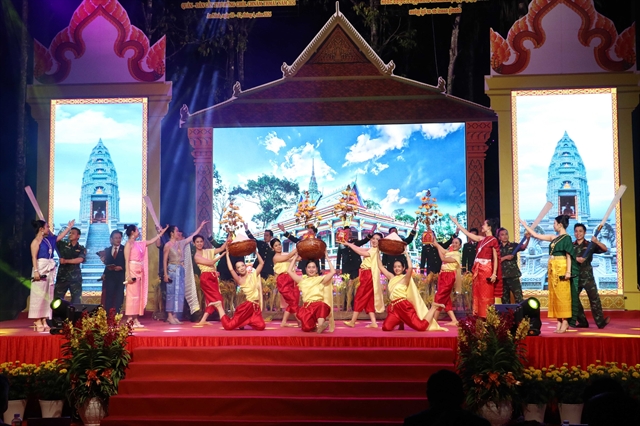
|
| An artistic performance highlighting the close bond between Khmer people and soldiers at the closing ceremony of the “Military–Civilian New Year celebration for the 2026 Chol Chnam Thmay” programme, held in An Ninh Commune on April 12. — VNA/VNS Photo |
On April 10, the Việt Nam Television Centre in the Southern region opened the 2026 Mekong Delta Khmer Farmers Football Tournament for the Bình Điền Cup in Cần Thơ during the Chol Chnam Thmay festival.
This is the largest tournament ever held exclusively for Khmer people in the Mekong Delta.
Central and local Government officials have also visited and presented gifts to Khmer people on the occasion of the festival.
A delegation from the Việt Nam Fatherland Front Central Committee led by Trần Thắng, deputy secretary of the Party Committee of the Việt Nam Fatherland Front and central mass organisations, visited and presented gifts to Khmer people in Cần Thơ on April 13.
On April 12, Y Thông, Deputy Minister of the Ministry of Ethnic and Religious Affairs, led a delegation to visit and extend 2026 Chol Chnam Thmay festival greetings to Khmer people in the city. — VNS
Society
Society
 Society
 Society
 Society
 Society
 Society
 Society
 Society
 Society
 Society
 Society
 Society
.jpg) Society
Society
 Society