 Society

PM arrives in Phnom Penh, starting official visit to Cambodia
1.
|
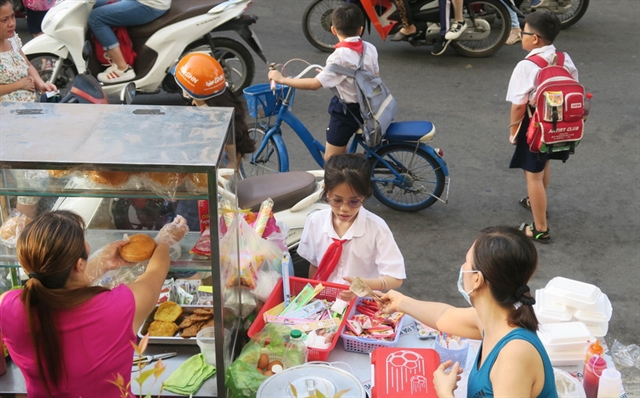
| Street food stalls remain a popular choice among students. Individuals are found to sell unsafe food for children will be fined up to VNĐ40 million. —VNA/VNS Photo |
HÀ NỘI — Selling unsafe food or products to children could now cost individuals up to VNĐ40 million (US$1,519), with penalties doubled for organisations, under a new Government decree designed to strengthen protections for vulnerable groups.
Decree No 98/2026/NĐ-CP sets out administrative sanctions in the fields of social protection, social assistance and child protection. The maximum fine reaches VNĐ50 million ($1,898) for individuals and VNĐ100 million ($3,797) for organisations, aiming to deter acts that exploit or harm children and other vulnerable populations.
Violations related to fraudulently claiming social assistance benefits, social pension allowances or support for victims of human trafficking may incur fines ranging from VNĐ500,000 to VNĐ5 million ($189). Violations involving support for trafficking victims or individuals in the process of being identified as such may face higher penalties of VNĐ3 million ($113) to VNĐ30 million ($1,139).
The decree also stipulates sanctions for breaches in the care and nurturing of beneficiaries of social protection policies, including the elderly, persons with disabilities and children within communities. Caregivers found withholding food or water, restricting personal hygiene, exposing individuals to toxic or dangerous environments, or engaging in verbal abuse, mistreatment or humiliation may be fined between VNĐ10 million ($379) and VNĐ20 million ($759).
Where caregiving is exploited for personal gain, or individuals are forced into heavy, hazardous or dangerous labour, fines increase to VNĐ20 million–30 million ($759–1,139). More serious violations such as inciting, luring or coercing individuals into illegal activities may be penalised up to VNĐ40 million ($1,519).
For social assistance facilities, elderly care centres, disability care institutions, victim support centres and child protection service providers, violations of operational regulations may result in fines ranging from VNĐ1 million ($37.9) to VNĐ10 million ($379). Service providers responsible for benefit disbursement may also face penalties of VNĐ3 million ($113) to VNĐ10 million ($379) for failing to meet their obligations.
Another key provision targets prohibited acts against persons with disabilities, with fines ranging from VNĐ3 million to VNĐ40 million. Discriminatory behaviour, obstruction of marriage and parenting rights, or barriers to community integration and access to information technology may incur fines of VNĐ3 million to VNĐ5 million. Exploiting the image or personal information of persons with disabilities for profit may result in fines of up to VNĐ20 million, while coercing them into unlawful acts may lead to penalties of up to VNĐ40 million.
For children, the decree introduces stringent sanctions to prevent abuse and exploitation. Forcing children to perform excessive household labour that negatively affects their education and development may be fined VNĐ20 million to VNĐ30 million. Acts such as organising or forcing children to beg, using children for begging, or luring them into exploitative or unlawful labour may face fines of VNĐ30 million to VNĐ40 million.
Exploiting children’s images or personal data to create harmful content or for profit may incur fines of up to VNĐ50 million. Additionally, providing unsafe products or services to children, including selling or allowing the use of addictive substances, stimulants or unsafe food, may be penalised from VNĐ30 million to VNĐ40 million.
All fines stipulated apply to individuals, with penalties for organisations doubled, the decree states. — VNS
Society
 Society
 Society
 Society
 Society
 Society
 Society
 Society
 Society
 Society
 Society
 Society
 Society
 Society
 Society