 Society
Việt Nam sets four priorities for APEC Finance Ministers’ Meeting in 2027
1.
|
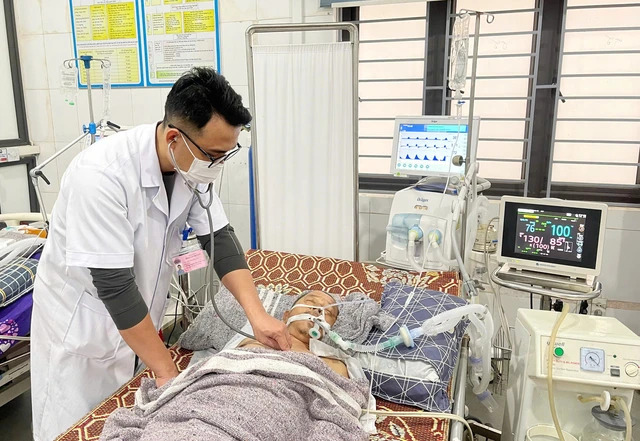
| Dr Trần Đình Linh provides emergency care and treatment for a patient. |
HÀ TĨNH — For residents in remote and mountainous areas of central Hà Tĩnh Province, access to quality healthcare once meant long journeys to central hospitals.
Today, that reality is changing, thanks in part to a growing generation of young doctors who are bringing advanced skills, new techniques and renewed confidence to local medical facilities.
Among them is doctor Trần Đình Linh, 35, currently working at the General Hospital in Kỳ Anh Township.
After graduating from Hà Nội Medical University, he could have remained in larger urban hospitals with better conditions. Instead, he returned to his hometown and committed himself to district-level healthcare, where the need is often greatest.
Over nearly nine years in intensive care and emergency medicine, Dr Linh has participated in the treatment and resuscitation of thousands of patients, including critically ill cases transferred from remote southern areas of the province.
The work is demanding, both physically and emotionally, but also deeply meaningful.
“Emergency medicine is a very high-pressure field, but it helps us mature quickly. What matters is having support from the sector so we can feel confident staying long term,” he told Sức khỏe & Đời sống (Health & Life) newspaper.
During the height of the COVID-19 pandemic, he and colleagues remained on the ground, combining treatment with public education on disease prevention. Long nights in isolation wards and hurried meals between shifts remain vivid memories of that period.
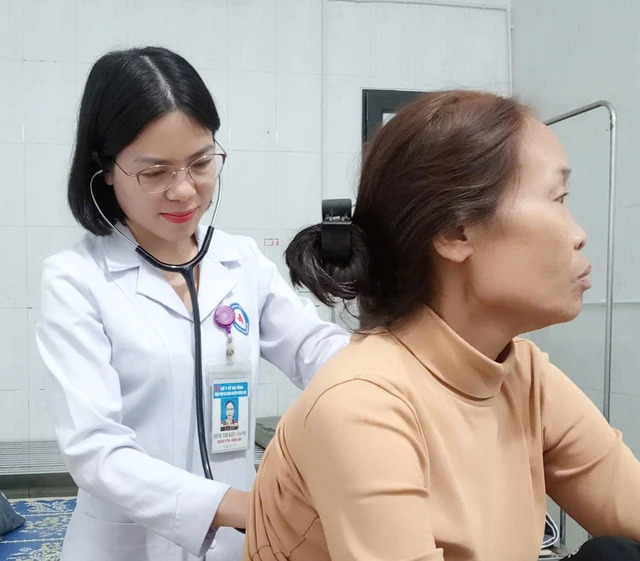
In the mountainous commune of Hương Khê, doctor Đinh Thị Kiều Oanh from Hương Khê medical centre has earned similar respect.
Working in internal medicine, she is known for her patience in explaining conditions and treatment plans, particularly to elderly patients and those with chronic illnesses.
“In rural areas, many people still lack knowledge about health care. Some diseases would not be complicated if detected early, but patients often come when the illness has become severe. That motivates me to stay here,” she said.
For these young physicians, working at grassroots level represents more than a professional decision. It is a commitment to community responsibility, combining treatment with education to improve long-term health outcomes.
Building local capacity
Dedication alone, however, is not enough. Young doctors in Hà Tĩnh are also focused on strengthening their professional capacity, recognising that advanced skills are key to maintaining public confidence and reducing the need for referrals to central hospitals.
At the provincial General Hospital, doctor Lê Huyền Anh, 38, deputy head of the on-demand treatment department, represents this drive for excellence.
|
| Dr Đinh Thị Kiều Oanh examines a patient. |
After completing specialised training in France from 2022 to 2024, she chose to return home rather than pursue opportunities elsewhere, introducing advanced obstetric and gynaecological techniques to the provincial hospital.
One of her notable contributions has been the introduction of hysteroscopic surgery, an important procedure for diagnosing and treating infertility. The technique allows doctors to detect and correct uterine abnormalities – conditions that can prevent conception.
Within a short time, nearly 100 procedures have been successfully performed locally, enabling many patients to avoid travelling long distances to major cities for treatment.
“Each time a former infertility patient shares the news that she is pregnant, I feel the effort has been worthwhile,” she said.
The presence of young doctors has become increasingly visible across Hà Tĩnh Province in recent years, particularly in mountainous and disadvantaged areas. They are key participants in vaccination campaigns and disease prevention programmes, and they played an important frontline role during the pandemic.
Doctor Nguyễn Minh Đức, director of the provincial Health Department, described them as an essential successor generation for the healthcare sector, highlighting their strengths in foreign languages, technology and rapid access to new medical knowledge.
Yet he emphasised that professional attitude remains fundamental.
“Young doctors today have many advantages, but the most important factor is still their willingness to learn and their commitment to patients," he said.
"The sector will continue improving training opportunities and policies so they can develop sustainable careers."
Medical procedures once available only in central hospitals are now being carried out successfully within the province, reducing costs, travel time and psychological burden for patients. Just as importantly, public confidence in local healthcare is gradually strengthening.
The contribution of Hà Tĩnh’s young doctors is therefore measured not only in technical achievements but also in trust, when patients feel secure receiving treatment near home, when communities gain better preventive health knowledge, and when vulnerable groups receive regular care.
This new generation is carrying forward the medical profession’s proud tradition, quietly safeguarding community health for the future. — VNS
Society
 Society
 Society
 Society
 Society
 Society
 Society
 Society
 Society
 Society
 Society
 Society
 Society
 Society
 Society