 Society
Việt Nam fosters comprehensive cooperation with Uruguay
1.
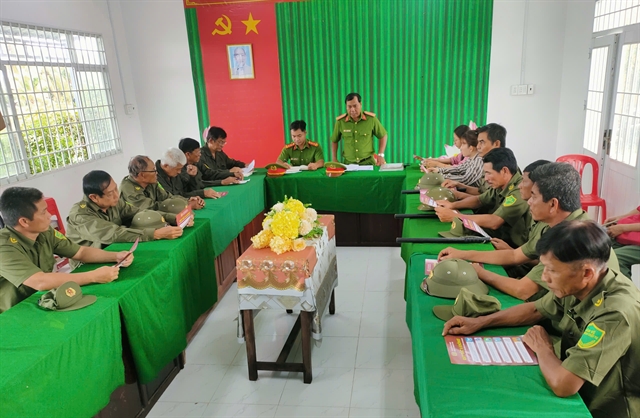 |
| A meeting between Hà Tiên Ward police and mobile civil defence team. — VNS Photo Đoàn Tùng |
by Minh Hằng
AN GIANG — At the south-western edge of the country, where border markers cut across villages and footpaths, security is shaped as much by human relationships as by patrol schedules. In Hà Tiên Ward, An Giang Province, a community-based model has taken root, with local residents including farmers and respected ethnic Khmer elders quietly assuming roles usually associated with uniformed forces.
Through routine patrols, everyday conversations and a constant presence on the ground, the mobile civil defence team has become a crucial line of defence, helping to prevent crime and social evils from taking root along the border.
A complex border, constant pressures
Hà Tiên Ward, bordering Cambodia, was established through the merger of four former wards of Hà Tiên City in the former Kiên Giang Province, including Bình San, Đông Hồ, Pháo Đài and Mỹ Đức.
The terrain itself is complex, with numerous trails, shortcuts and coastal routes, making it vulnerable to smuggling, illegal border crossings and drug trafficking.
Recognising these challenges, the Hà Tiên Ward Police have proactively advised the local Party Committee and authorities to deploy comprehensive measures to maintain public security and order, closely linked to movements encouraging all people to protect national security.
The mobile civil defence team was established in March 2021, initially to support authorities and functional forces in preventing and controlling the COVID-19 pandemic along the border. After the pandemic was brought under control, practical demands for ensuring public security and order prompted the model to be reviewed and strengthened, with its focus shifting to crime prevention and the maintenance of order in local and border areas.
Under the direct guidance of the police, particularly ward-level community officers, the team has gradually proven itself to be a highly effective supporting force for the Hà Tiên ward police in maintaining security at grassroots level. The team currently has 11 members, most of whom are respected individuals from the Khmer community. They understand the local terrain, customs and traditions and hold strong influence among residents living along the border.
The team focuses on patrol and control, legal communication and grassroots intelligence gathering. Through a combination of mobile patrols and close, community-based outreach, it has effectively become an extended arm of the police force, helping to address gaps in border supervision.
According to the Hà Tiên ward police report on the model’s performance in 2025, the mobile civil defence team coordinated with community police officers, border guards and grassroots security forces to conduct 175 public patrols, with 1,039 individual participations.
Through these patrols, groups of youths gathering late at night were dispersed, along with two small-scale gambling spots. The team also worked with community police officers to approach, rehabilitate and educate 69 individuals of various categories, detected some cases of illegal drug use and supported the compulsory rehabilitation of 12 individuals.
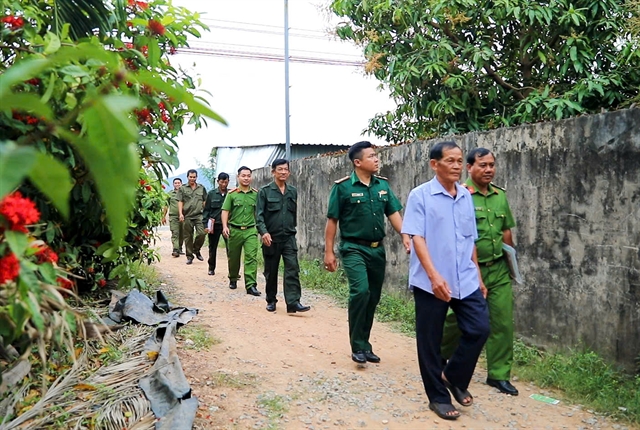 |
| Local authorities, police officers and members of the mobile civil defence team during a joint patrol. |
Alongside patrol duties, communication work was carried out extensively. Over the year, the team organised 472 communication sessions at meetings of self-management residential groups, along with hundreds of direct household visits. Topics focused on legal awareness and warnings about criminal tactics, particularly online fraud, theft, robbery and snatch theft, illegal entry and exit and the transportation of banned goods, weapons, explosives and fireworks. Team members also guided residents in installing electronic identification via VNeID and using online public services, contributing to the Government’s Project 06 on digital transformation.
The team provided timely information on public security and residence management to the police, enabling many incidents to be resolved at grassroots level. Members also contributed labour to support programmes to eliminate temporary and dilapidated housing, assisting households in border areas, while actively taking part in other local community movements.
Silent guardians
Sharing his experience, Si Phon, head of the team, said: “Team members actively keep track of emerging issues in residential areas so that we can communicate and help resolve them in a timely manner. We try to be creative and flexible in how we communicate, both directly and indirectly. Sometimes, when we are simply sitting and chatting with neighbours, we take the opportunity to share information, as long as it is effective.”
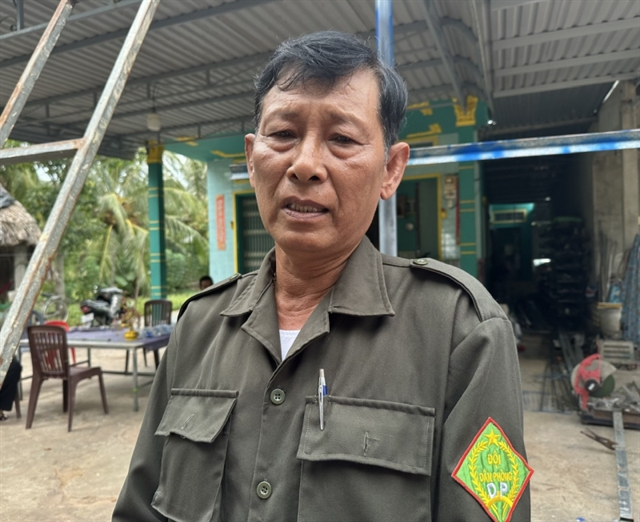 |
| Si Phon, head of the mobile civil defence team. |
According to Si Phon, criminals operating along the border are becoming increasingly sophisticated. They exploit the many trails and shortcuts, along with gaps in legal awareness among some residents, to lure people into transporting smuggled goods or drugs or organising illegal border crossings. Of particular concern is the way some target women and children with offers of 'easy jobs with high pay,' gifts or short-term benefits.
In response, team members go door to door, especially in areas inhabited by ethnic minority communities along the border, reminding residents not to participate in, facilitate or conceal illegal activities, to be cautious of strangers, not to provide personal information or bank account details and not to click on suspicious links or download unknown applications or attachments. Communication sessions are carried out in flexible and approachable ways, ranging from neighbourhood meetings to everyday conversations.
“We work regardless of time. The advantage we have is that we are from the ethnic community, we understand the culture, customs and routes, so we know how to communicate in ways people will listen to,” Lâm Đoạn, a team member, said.
Similarly, Trần Văn Chéo, head of Thạch Động residential area and a member of the team since March 2021, said he constantly tries to refresh communication methods so that messages are easy to hear, understand and remember.
“Sometimes, while drinking tea, I weave different stories into the conversation so people understand and do not cross the border via informal routes, do not help others cross illegally and do not listen to those who try to entice them,” Chéo said, adding that many local households have since committed to not engaging in illegal transport or smuggling.
Assessing the model’s effectiveness, Lieutenant Colonel Châu Văn Nát, a police officer in Xà Xía residential area in Hà Tiên Ward, said: “After being directly communicated with and mobilised by the mobile civil defence team, residents have strictly complied with the Party’s guidelines and the State’s laws and public order in the area has remained stable.”
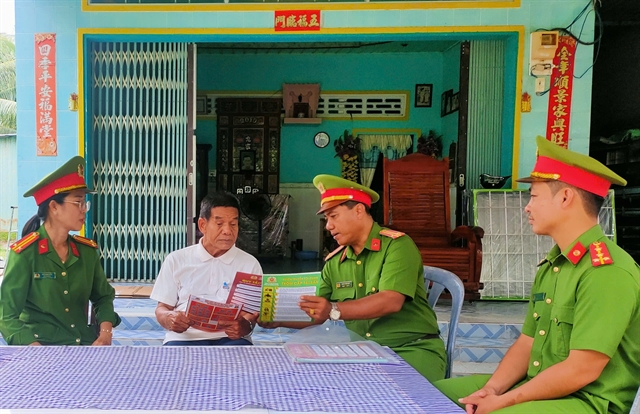 |
| Police officers brief local residents on legal policies and regulations. |
Lieutenant Colonel Ngô Kim Thảo, Deputy Head of Hà Tiên Ward Police, said the mobile civil defence team has coordinated closely with and effectively supported the police in maintaining public security and order in the border area, contributing to safeguarding political security in the locality.
She said the ward police would continue to guide team members on appropriate communication content and methods, provide timely updates on new criminal tactics and strengthen the management, rehabilitation and education of individuals at risk of offending.
From the perspective of the local authority, Phạm Khắc Phara, Vice Chairman of the Hà Tiên Ward People’s Committee, said the team has not only supported the police effectively but has also fostered consensus and active participation among residents in maintaining security and order from the grassroots level. He said the ward People’s Committee would continue to consolidate the model and study ways to replicate it in line with evolving security requirements.
Operating on a voluntary basis, without salaries or allowances, members of the mobile civil defence team remain committed to their work, viewing the maintenance of peace along the border as a shared responsibility to the community. Their quiet and persistent efforts are helping to build a strong people’s shield, safeguarding tranquillity along the Hà Tiên border, where security is upheld not only by regulations and forces but by trust, understanding and unity among the people. — VNS
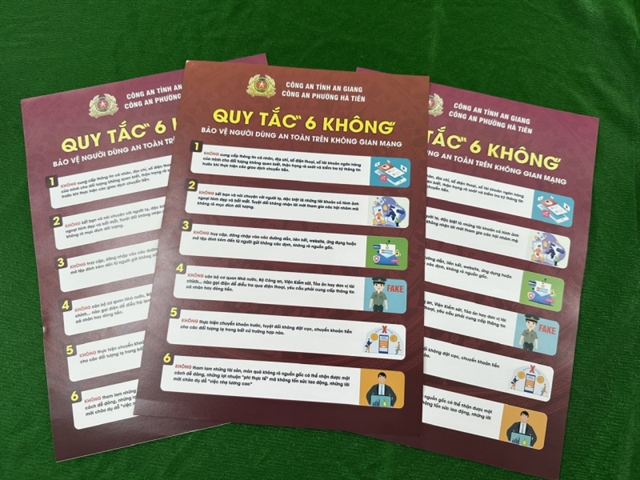 |
| A leaflet used by the mobile civil defence team in its legal awareness work with local residents. |
Society
 Society
 Society
 Society
 Society
 Society
 Society
 Society
 Society
 Society
 Society
 Society
 Society
 Society
 Society