 Society
HCM City refines master plan to preserve traditional crafts, rural livelihoods
1.
|
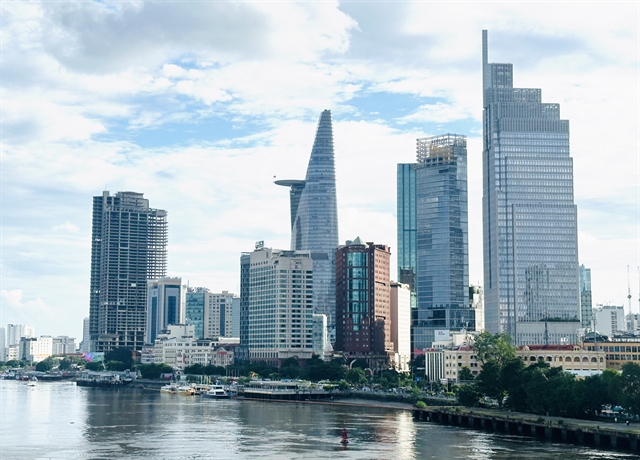
| Bạch Đằng Wharf Park in downtown HCM City. Public spaces integrated with transport infrastructure are increasingly seen as key to improving livability and enhancing the city’s investment appeal. — VNS Photo Nguyễn Diệp |
HCM CITY — As it moves towards becoming a “mega-city”, HCM City faces growing pressure from rapid population growth, strained infrastructure and intensifying competition for investment, prompting experts to view public spaces not merely as social amenities but as strategic economic and investment assets.
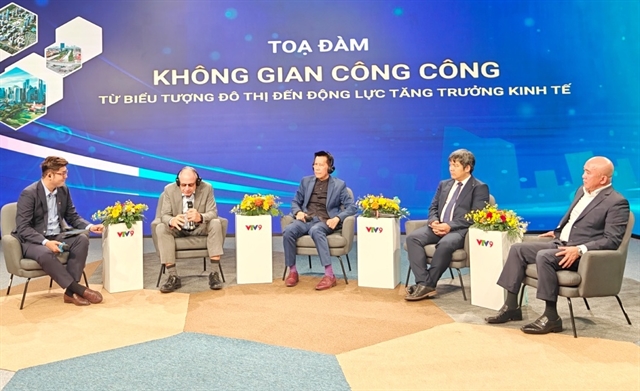
This view was underscored at the forum Public Spaces – From Urban Symbols to Drivers of Economic Growth, organised by Vietnam Television’s HCM City Centre (VTV9) on December 23, which brought together domestic and international experts in urban planning, development economics and investment.
Participants agreed that developing high-quality public spaces depends not only on allocating land for parks, but more critically on integrated transport infrastructure — the “arterial” connections that enable people to access, use and generate value from urban spaces.
Transport as a prerequisite
Dr Nguyễn Bá Hùng, Chief Economist at the Asian Development Bank (ADB) Vietnam Resident Mission, said public transport is a fundamental condition for effective public space development.
“Without convenient transport, people will not gather in these spaces.”
When accessibility improves, communities form, creating the basis for reinvestment or, at the very least, better maintenance,” he said.
“Expanding public transport coverage, particularly bus networks, should be prioritised in the short term, as urban rail systems require much longer lead times.”
Applying ADB’s urban quality assessment framework, the city still scores relatively low compared to international benchmarks, especially in healthcare services, infrastructure and the cultural environment, he said.
Together, these factors account for 65 per cent of the overall score, alongside stability and education.
Architect David Ching, founder and chairman of David Ching & Partners, and former director of Planning and Development at Singapore’s Jurong Bird Park, described urban rail corridors as the city’s “lifelines”.
“These are the arteries,” he said. “Open spaces are what connect everything together.”
Architect Steven Townsend, Managing Director of Studio Urban Design (SUDV), who has worked on the Phú Mỹ Hưng New Urban Area and urban regeneration projects in central HCM City, said better mobility delivers shared benefits across the community.
“When movement systems are well designed, people may even choose cycling over cars or motorbikes,” he said.
|
| Speakers share insights at a forum on public spaces and urban development held in HCM City on December 23, organised by the Vietnam Television’s HCM City Centre (VTV9). — VNA/VNS Photo |
Public spaces as investment assets
In global cities such as New York, London and Singapore, public spaces have been repositioned as a form of “soft infrastructure” capable of catalysing private investment, increasing property values, and enhancing urban productivity.
Projects such as New York’s High Line or Singapore’s Clarke Quay-Boat Quay riverfront demonstrate how investment in public spaces can generate strong spillover effects, attract billions of dollars in private capital and create new urban growth poles.
Experts said there remains significant potential to unlock underutilised “urban gaps” in HCM City, particularly along rivers and canals, around public transport corridors and on unused public land.
Townsend said modern public spaces should be multifunctional and closely integrated with land-use planning, public transport and socio-economic activities.
“A well-planned square, park or riverfront space can serve as an anchor, drawing in surrounding commercial, service and creative developments,” he said.
Meanwhile, David Ching, currently Vice Chairman of Janus Capital Vietnam, shared international experience showing that public spaces must be linked with transit-oriented development (TOD) models and public-private partnerships (PPP).
Such approaches, he said, help reduce the State’s budget burden while creating opportunities for the private sector to invest, operate and generate value more effectively.
From an economic perspective, Dr Hùng said investment in public spaces is ultimately an investment in quality of life, public health and labour productivity — factors increasingly prioritised by international investors when choosing destinations.
Cities lacking high-quality public spaces, he warned, face substantial long-term social costs, from rising healthcare and environmental pressures to the risk of brain drain. In contrast, livable cities are better positioned to retain skilled talent and attract sustainable capital flows.
Sử Ngọc Khương, senior director of Investment at Savills Vietnam, said cities with well-developed public space systems tend to enjoy more resilient property values, stronger appeal to long-term investors and greater credibility in international mergers and acquisitions.
To unlock the investment value of public spaces, experts proposed developing integrated riverfront corridors, applying PPP and land value capture mechanisms, and using Resolution No. 98 to pilot more flexible management models.
Experts agreed that if properly planned and governed, public spaces would not only serve as the city’s “breathing spaces”, but also become strategic assets shaping the city’s long-term competitiveness and growth momentum. — VNS
Society
 Society
 Society
 Society
 Society
 Society
 Society
 Society
 Society
 Society
 Society
 Society
 Society
 Society
 Society