 Society
Việt Nam fosters comprehensive cooperation with Uruguay
1.
|
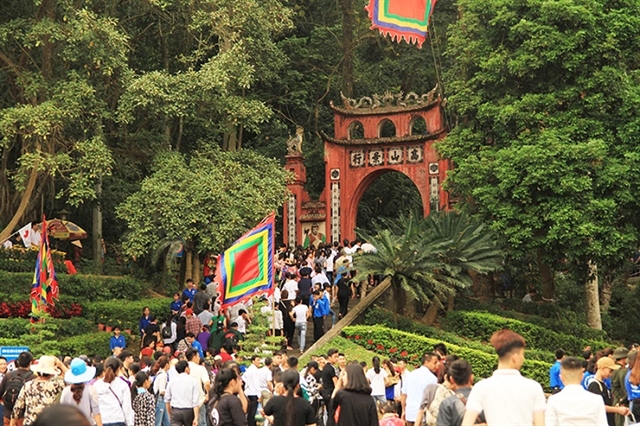
| Tourists visit Hùng Kings Temple in Phú Thọ Province. VNA/VNS Photo |
By Tố Như
PHÚ THỌ — The merger of the three provinces of Phú Thọ, Vĩnh Phúc and Hòa Bình to form the new Phú Thọ Province is not merely an adjustment of administrative boundaries, but also a strategic milestone in reorganising regional development space.
Built upon a highly integrated foundation of resources, infrastructure and cultural identity, the new province is now facing major opportunities to restructure its key economic sectors, with tourism identified as the field best positioned to create breakthroughs and drive growth.
Phú Thọ encompasses three distinctive sources of strength of the ancestral homeland with its system of exceptional cultural and historical heritage; the dynamic midland–urban zone with rapidly developing service, tourism and resort infrastructure; and the mountainous ecological space rich in cultural identity, with rivers, lakes and majestic mountains accompanied by the diverse cultural tapestry of ethnic communities.
The synergy of these three strands creates a rare foundation to shape Phú Thọ into a large-scale cultural–ecological tourism centre of the northern region in the new context.
Over many years, tourism in the former three provinces has been steadily strengthening its position, with annual growth rates of 10-15 per cent, with product types ranging from cultural–historical, ecological, resort and recreational tourism to community-based tourism, regional cuisine, MICE and golf.
Within the new spatial configuration, the central role of the Đất Tổ (Ancestral Land) region continues to be affirmed through the Đền Hùng Special National Relic Site – a symbol of the worship of the Hùng Kings, recognised as an intangible cultural heritage of humanity.
Hát Xoan Phú Thọ and hundreds of traditional folk festivals create cultural depth and distinctive identity, forming the spiritual axis of ancestral and spiritual tourism.
To the west, the former Hòa Bình Province stands out as a distinctive ecological–community space. Hòa Bình Lake, with its spectacular river–mountain scenery together with Mường, Dao and Thái ethnic villages that preserve traditional lifestyles, opens large potential for community-based, ecological and nature-linked resort tourism.
“Hòa Bình Culture” — a world-renowned archaeological cradle — is not only a scientific value but also a special resource for creating deep, unique and sustainable experiential tourism products.
Meanwhile, the former Vĩnh Phúc Province –with Tam Đảo, Tây Thiên, Đại Lải and Kim Bôi – plays the role of a centre for resort, conference, event and high-end tourism.
Its synchronous transport infrastructure, four to five-star resorts and hotels, and extensive green spaces make this area a key link between Hà Nội, the midlands and the northern mountainous region, attracting mid- to high-end and international travellers.
This complementarity in space and product offerings has enabled the new Phú Thọ to gradually shape a multi-centre tourism development model, creating seamless experience chains from heritage–spiritual to ecological–community and modern leisure tourism.
In practice, Phú Thọ’s tourism sector is being developed methodically with strong investment in inter-provincial connectivity.
Famtrips, linked festivals and tourism promotion conferences with provinces such as Lào Cai, Ninh Bình and Sơn La are organised regularly, creating extensive networks of routes and destinations, diversifying experiences and lengthening visitor stays.
The image of Phú Thọ is increasingly defined not only as the ancestral land but also as a modern, friendly destination rich in cultural and ecological experiences.
In 2025, Phú Thọ is expected to welcome about fourteen point five million visitors, including four point five million overnight visitors, with revenue reaching nearly VNĐ14,800 billion (US$562 million), and an average annual growth rate above ten per cent.
In the first nine months alone, the province welcomed 3.6 million overnight visitors, including 95,000 international visitors, with revenue nearing VNĐ12,000 billion ($455 million).
These are positive signals showing ample room for further growth as space and products continue to expand.
Alongside heritage and landscapes, cuisine is an important highlight shaping Phú Thọ’s tourism identity. Rustic but flavourful dishes such as the Mường leaf tray meal, Việt Trì catfish, Thanh Sơn fermented pork, fish from the Đà River, Tam Đảo chayote, Xuân Sơn sắng vegetables, Long Cốc tea and Đoan Hùng pomelos not only satisfy gastronomic cravings but also convey stories of culture, lifestyle and the bond between people and nature in the region.
To stimulate tourism demand, the province is implementing numerous promotional programmes in 2025, offering price discounts on accommodation, dining, transport, resort and entertainment services.
Phú Thọ is also placing strong emphasis on digital transformation in tourism.
The development of an intelligent digital tourism map, destination data systems, online booking services, multilingual audio guides at Đền Hùng and other relic sites, public wifi coverage and digital marketing on social media platforms have all contributed to improving visitor experience and effectively promoting the destination.
An investment wave in Phú Thọ’s tourism sector is accelerating, with numerous large-scale projects from domestic corporations that create growth momentum but also form a system of premium products aimed at long-stay international visitors.
Alongside economic development, the province places special emphasis on preserving and promoting cultural heritage values, especially the intangible heritage of ethnic communities.
The dossier on Mo Mường ritual chanting is being completed for submission to UNESCO for recognition as an intangible cultural heritage in need of urgent safeguarding, opening opportunities to develop exclusive, distinctive and sustainable cultural tourism products.
Bùi Xuân Trường, deputy director of the provincial Department of Culture, Sports and Tourism, said that the sector aims to harmonise ecological and high-end resort tourism with multi-cultural values and ethnic community life.
Meanwhile, Phú Thọ’s vice chairwoman Phùng Thị Kim Nga said that Phú Thọ is not only the sacred ancestral land, a place to return to one’s roots, but also a modern, dynamic and experience-rich destination where traditional culture harmonises with high-quality tourism services, opening expectations for a breakthrough phase of sustainable development.
Phú Thọ aims to receive around 18.7 million visitors, including 7.3 million overnight visitors and more than 1 million international visitors, with revenue expected to reach around VNĐ24 trillion ($910.5 million) by 2030.
From 2026 to 2030, the province will focus on building the green corridor linking Tam Đảo – Đền Hùng – Kim Bôi – Mai Châu, connecting ancestral tourism with ecological and resort tourism.
With expanded development space, rich cultural–ecological potential and a decisive, well-planned investment strategy, Phú Thọ is standing before a golden opportunity to become a distinctive cultural–ecological tourism centre of the northern region.
This is not only a development aspiration for the tourism sector but also an important driving force for enhancing the Đất Tổ region’s position on the national and regional tourism map in the new era.VNS
Society
 Society
 Society
 Society
 Society
 Society
 Society
 Society
 Society
 Society
 Society
 Society
 Society
 Society
 Society