 Society

AIMCONNECT 2026 Held in Singapore, Bringing Global Automotive Leaders Together to Explore the Future of AI, Trust and Connected Mobility
1.
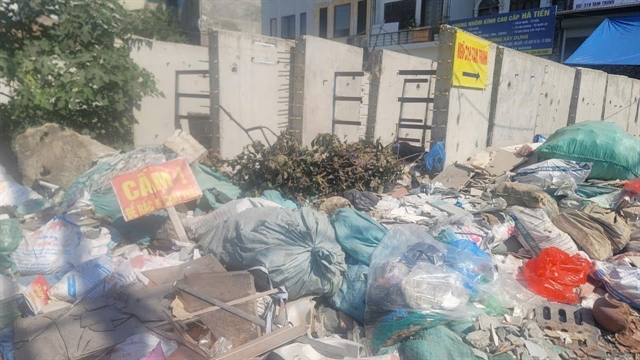 |
| Along less than 1km of the Kim Ngưu River, dozens of open-air garbage dumps cause environmental pollution, affecting the people’s health and the urban landscape of Hà Nội. — VNA/VNS Photo Phương Anh |
HÀ NỘI — On windy days in Hà Nội, the pungent smell of waste from open-air landfills in the suburbs is carried by the wind, infiltrating residential areas, clinging to rooftops, and even entering the meals of many families living around the waste collection and treatment sites.
It is not just an unpleasant odour; uncovered and inadequately treated landfills are causing air pollution, dust, groundwater and soil contamination, threatening public health and the local ecosystem.
The problem has persisted for many years in several communes such as Sóc Sơn, Phú Xuyên and Chương Mỹ in the capital city, where large and small landfills still operate using traditional burial methods, with many spontaneous waste dumping spots.
At many open-air landfills, household waste, plastic packaging, leftover food and construction debris pile up high without timely covering.
Under sunlight or humid weather, rising temperatures accelerate waste decomposition, generating various toxic gases such as H2S (hydrogen sulphide), which smells like rotten eggs and irritates the eyes, CH4 (methane), which is flammable and poses fire risks, and NH3 (ammonia), which irritates the respiratory tract.
Especially notable is the fine dust around these areas originating from transport trucks, waste stirring processes, and the dry landfill surface.
On average, Hà Nội generates 6,000 to 7,000 tonnes of waste daily, but most of it is still handled through burial, leading to rapid landfill overcapacity.
Additionally, many illegal waste dumping sites near residential areas result from locals disposing of garbage or collectors temporarily dumping waste without covering or leachate containment ponds.
The outdated waste treatment technology still relies mainly on traditional burial, and environmental monitoring remains problematic.
Consequences
Nguyễn Văn Quân, a resident of Nam Sơn Commune in Hà Nội, said: “Some days the smell of garbage hits our nose right in the house's yard, making it hard to breathe. It's even stronger at night. Kids here cough all the time and always have to keep the doors closed.”
The consequences of these open-air landfills are not only air pollution but also soil and groundwater contamination, affecting people’s health and living quality in the long term.
A worrying issue is leachate – a dense black mixture containing heavy metals, decomposed organic matter and disease-causing bacteria — seeping into the soil and groundwater flowing into residential areas, containing substances like lead (Pb), cadmium (Cd), ammonium (NH4+), E.coli, and Coliform bacteria.
Many wells within 300 to 500 metres of landfills have changed colour or developed strange smells.
Trần Thị Lan from Hồng Kỳ Commune said: “My well water used to be very clear. In recent years, the water pumped up is sometimes yellow like tea with floating oil. My family has to buy clean water for drinking and cooking, which is very costly. Groundwater pollution not only affects human health but also has long-term impacts on crops, livestock and soil degradation.”
Environmental monitoring data from several organisations has recorded that areas near large landfills often have high PM2.5 fine dust density, exceeding World Health Organisation (WHO) recommendations. This is a primary cause of respiratory and cardiovascular diseases and long-term nervous system effects.
Not only the Nam Sơn landfill but also streets and small roads leading into residential areas and dike roads often have waste dumped into piles and burned spontaneously. Many landfills smoulder day after day due to the presence of nylon and plastic waste.
Đỗ Thị Hằng from Tây Hồ Ward said that because her area is near the market, the household waste landfill often overflows onto the streets and is burned spontaneously, causing a strong burnt smell for many days.
When the landfill smokes, the nearby neighbourhood is enveloped in polluted and suffocating air.
Along Nguyễn Xiển, Trung Văn and Thăng Long Boulevard streets, many people burn straw, agricultural waste and household garbage by the roadside.
Large and small plastic packagings and all kinds of household waste bags are scattered. When waste becomes too much, they burn it, producing black smoke that disrupts traffic.
Bùi Công Biên, living in an apartment in Đại Mỗ Ward, expressed frustration.
“Because of spontaneous waste burning, smoke from alleyways flies directly into our homes. My asthma is getting worse. We hope authorities take strong measures and not let this continue,” Biên said.
Hoàng Dương Tùng, President of the Việt Nam Clean Air Network, said that waste burning was a major reason for Hà Nội’s continuously poor air quality.
Without control, residents will suffer long-term damage, especially children, the elderly and those with underlying health conditions.
People suffer health impacts and are frustrated by their city’s deteriorating image. Smoke makes streets, once clean, now gloomy with unpleasant odours invading living spaces.
Lê Thị Hạnh, a resident in Đại Mỗ Ward, said: “We want Hà Nội to be clean, but every morning we go outside and see thick smoke. We hope authorities intervene, not only to manage waste but also to penalise those who intentionally burn it.”
Pollution from open-air landfills cannot be solved overnight, but this is the time for bold, decisive and sustainable steps.
Hà Nội aims to shift to modern waste treatment technology, gradually reduce burial, and strengthen household waste separation.
With changes in technology, raised community awareness and tightened management, Hà Nội can restore clean air, safe water and a healthy environment for its people. — VNS
Society
 Society
 Society
 Society
 Society
 Society
 Society
 Society
 Society
 Society
 Society
 Society
 Society
 Society
 Society