 Society

Results of the ixCrypto Index Series Quarterly Review (2026 Q3)
1.
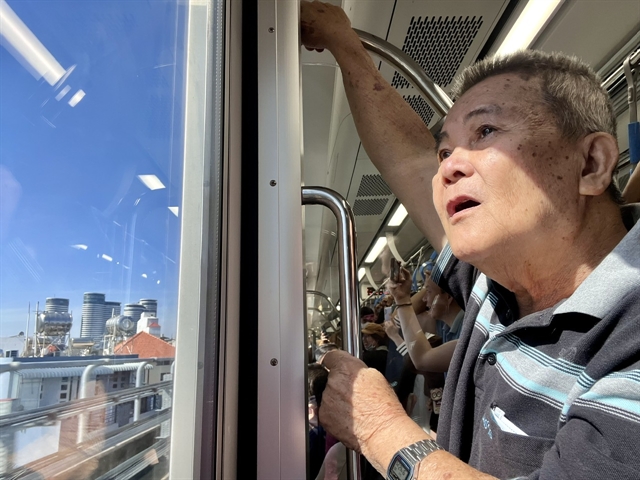 |
| A passenger looks out from the first metro line during its opening late last year. The city now plans to train nearly 500 core personnel to operate and manage its expanding urban rail network. — VNS Photo Bồ Xuân Hiệp |
HCM CITY — HCM City has announced an extensive workforce development plan to train nearly 500 core personnel to operate and manage its future urban rail network, marking a significant step toward its ambition of building one of Southeast Asia’s largest metro systems.
The newly issued programme, approved by the municipal People’s Committee, sets out a roadmap to develop high-level expertise capable of planning, constructing, operating, and maintaining metro lines to international standards.
The plan covers 2025-2030, with a long-term vision for 2050.
The initiative comes as HCM City accelerates its rail ambitions. The city aims to operate seven metro lines totalling 355km by 2035 and expand the network to 510km by 2045, a scale that would surpass the current systems in Bangkok, Manila, and Kuala Lumpur.
The training programme consists of two main components: long-term academic coursework and specialised professional training tailored to individual job functions.
Course content will span engineering, infrastructure systems, rolling stock technology, automated control systems, and transit-oriented development (TOD)-based planning.
Additional modules cover environmental management, safety protocols, risk assessment, and global best practices in metro governance.
City leaders and officials from relevant departments will also receive annual briefings on financing models, regulatory frameworks and emerging technologies shaping urban rail systems worldwide.
HCM City currently operates only one metro line, Metro Line No. 1 (Bến Thành-Suối Tiên), which opened late last year after more than a decade of construction. Metro Line No. 2 (Bến Thành-Tham Lương) is expected to break ground soon, while several other lines remain in planning stages.
With just one operational line, the city continues to rely heavily on foreign technical specialists.
Officials say the lack of a domestic pool of highly trained professionals will make it difficult to expand operations safely and efficiently.
Under the new plan, at least 50 per cent of the city’s 60 core metro management personnel will receive advanced training by 2030, including five to ten staff members obtaining master’s degrees.
By 2035, 80 per cent of management personnel are expected to be highly trained, with 30 per cent holding master’s degrees and 10 per cent doctorates.
From 2035 to 2045, the city aims to fully standardise its leadership team, with more than 50 per cent expected to earn master’s degrees and 10-20 per cent doctorates.
To build project management capacity, the city targets training 160 specialists by 2030, rising to 310 by 2035 and 400 by 2045.
At least 50 per cent of metro personnel will be sent overseas each year for technical exchanges, technology updates and operational training with established Asian and European metro systems.
Urban rail is considered essential to easing chronic congestion in Việt Nam’s largest city, home to more than 10 million people and a vast network of motorbikes.
However, metro development has suffered repeated delays. Line No. 1, approved in 2007, only entered service in 2024 following cost overruns, contractor disputes and prolonged construction setbacks. Line No. 2 has faced years of redesign and land-clearance challenges.
Despite these obstacles, officials say building a capable local workforce is just as important as completing physical infrastructure.
A senior official described the new training programme as “a foundation for HCM City to take ownership of its metro system rather than remain dependent on foreign expertise.”
The initiative also supports the city’s broader urban transformation strategy. Metro expansion is expected to anchor TOD-based development, reshape land-use patterns and influence housing and commercial growth across the city.
As construction activity accelerates over the next decade, the city’s ability to manage a complex, multi-line metro system will depend heavily on how effectively it develops home-grown expertise, experts said. — VNS
Society
 Society
 Society
 Society
 Society
 Society
 Society
 Society
 Society
 Society
 Society
 Society
 Society
 Society
 Society