 Society

Việt Nam, Laos aim to raise bilateral trade to US$5 billion
1.
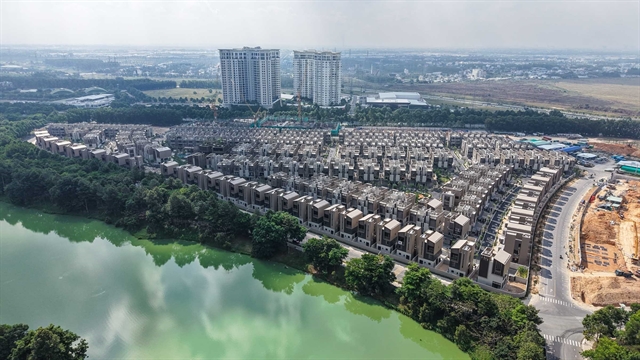 |
| An overview of the New City Bình Dương Commercial Centre, which is gradually establishing its position in smart urban development in Việt Nam. — VNA/VNS Photo Hoàng Hiếu |
HÀ NỘI — As urbanisation accelerates rapidly and the impacts of climate change become increasingly evident, developing a smart city model along with improving air quality have jointly become an inevitable trend and a key solution for sustainable development in Việt Nam.
Experts agreed with this assessment during a conference on urban planning and sustainable development organised by the United Nations Human Settlements Programme (UN-Habitat) in Việt Nam.
The two-day conference, which ends on Friday, drew the participation of nearly 100 international and domestic experts on urban planning, transport, and climate change.
Việt Nam is widely considered one of the countries most severely affected by climate change. With a coastline of 3,260km, a sea-level rise scenario of 100cm could submerge 16.8 per cent of the Red River Delta and 38.9 per cent of the Mekong Delta area.
In response to this pressing challenge, at the 26th United Nations Climate Change Conference, Việt Nam committed to achieving net-zero emissions by 2050.
Realising this commitment hinges on developing sustainable smart cities based on digital technology platforms and improving air quality as a key solution.
Smart planning
Hán Minh Cường, Director of the AIST Institute of Construction Science and Technology and also Chairman of S-Group Vietnam, said: “Smart urban planning is not only about building future cities, but also shaping how we govern cities today."
With rapid urbanisation posing unprecedented challenges in infrastructure, population and environm,ent, a new model of planning and governance is required, which should be data-driven and flexible and include community participation.
Cường said that a crucial piece of this transformation is shifting from traditional planning to the "data and simulation mindset" of smart planning.
He pointed out the fundamental difference between the two models. Traditional planning, with a top-down approach, is often rigid and has difficulty forecasting population and economic fluctuations, leading to a "gap between the plan and development reality."
Smart planning, on the other hand, is an adaptive process, with decision-making based on real-time data evidence.
To implement smart planning, Cường emphasised three core mechanisms.
First is integrating digital infrastructure from the planning stage, including fibre optic cables, data centres, and electric charging stations, to build a "digital foundation" parallel to physical infrastructure.
Another mechanism involves applying decision support tools, such as 3D models and artificial intelligence (AI) forecasting systems, which allow real-time simulation and management.
Finally, a mechanism for community participation through digital platforms will be needed.
He gave the example of Barcelona, where the Decidim platform is used for citizens to directly participate in planning and propose projects, helping make the process transparent, improve social consensus and connect government with citizens and businesses.
In terms of policy, Cường noted significant progress in Việt Nam. The Prime Minister's Decision 950/QĐ-TTg of 2018 approved the Sustainable Smart Urban Development Scheme, defining three pillars: planning, management and utilities.
Most recently, Decree 269/2023/NĐ-CP mandates integrating smart content into planning. The Ministry of Construction has issued Sustainable Smart Urban Criteria, confirming that smart planning has become the dominant legal and technical foundation.
Cường also emphasised that smart planning is the backbone of the smart urban governance system.
Sustainable orientation
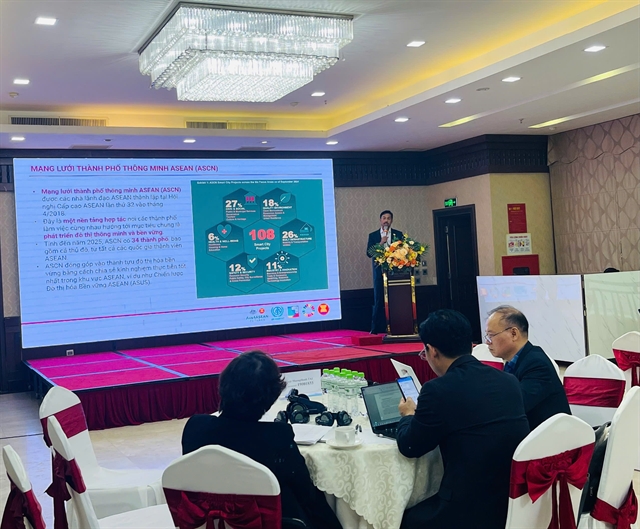 |
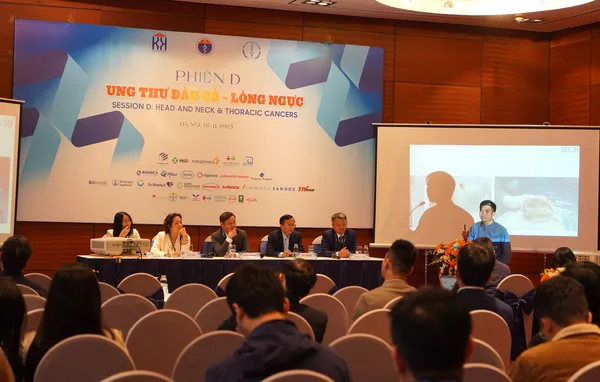
| An expert gives a presentation on smart urban systems at the conference. — VNS Photo Thu Trang |
Sovanarith Sieng, an urban development expert at the UN-Habitat in the Asia-Pacific region, said that Việt Nam needs a strategic investment roadmap focusing on key infrastructure pillars, while overcoming financial and implementation capacity barriers.
Regionally, ASEAN is witnessing an investment wave in smart cities, with frameworks such as the ASEAN Sustainable Urbanisation Strategy and the ASEAN Smart Cities Network.
But the concept "smart" is often misunderstood as merely applying high technology, rather than aiming at human-centred urban systems that are climate resilient and financially sustainable, he said.
An UN-Habitat analysis shows that many smart city projects in emerging markets, including Việt Nam, face three main obstacles reducing attractiveness to investors: unsynchronised project preparation processes lacking clear feasibility assessment standards; fragmented data and a lack of transparent key performance indicators; and a lack of alignment between local development priorities and national and regional frameworks.
This causes difficulty in attracting investment capital, slowing implementation and eroding trust from both public and private sectors.
Sovanarith said Việt Nam needs to redirect its strategy based on four key infrastructure pillars with low risk and long-term benefits.
The first pillar is developing sustainable transport systems and transit-oriented urban areas, combined with electronic mobility solutions ensuring safe access for all.
Another focuses on water management and flood safety via combined green-gray infrastructure at the commune and ward scale.
The third pillar emphasises building a comprehensive and social infrastructure network that can reduce urban heat and promote community cohesion.
Finally, developing interoperable public data infrastructure based on human rights and linked to Sustainable Development Goal 11 indicators is a foundation for a truly smart city.
UN-Habitat also proposes a three-level approach to minimise risk and build stakeholder trust sequentially.
The first level involves tactical interventions via small-scale, low-cost pilot projects to prove efficacy and gain initial support.
Successful projects will expand into corridors or networks at the system upgrade level, while the highest level is transformative projects integrating multi-sectoral areas like transport, land development, and climate resilience to create dual benefits and long-term sustainability.
To realise this roadmap, Sovanarith said, financial frameworks and project preparation must be standardised using existing toolkits to ensure compatibility with regional frameworks.
Identifying clear key performance indicators based on recognised monitoring and evaluation frameworks is crucial to turning reports into banking instruments for projects.
More importantly, applying human-centred smart city principles from the outset will ensure urban development is not only modern, but inclusive and equitable.
Experts agree the ultimate goal is to create a prosperous urban future resilient to climate change and, most importantly, deliver good air quality as well as quality of life for all residents. — VNS
Society
 Society
 Society
 Society
 Society
 Society
 Society
 Society
 Society
 Society
 Society
 Society
 Society
 Society
 Society