 Politics & Law

HKSTP Partners with Leading Science and Technology Company Merck to Open a New Chapter in I&T Collaboration
1.
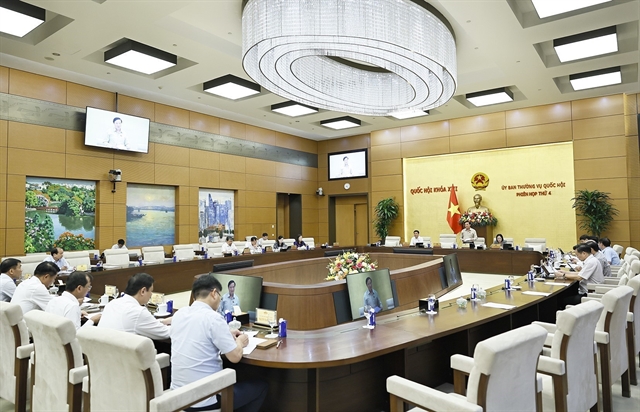 |
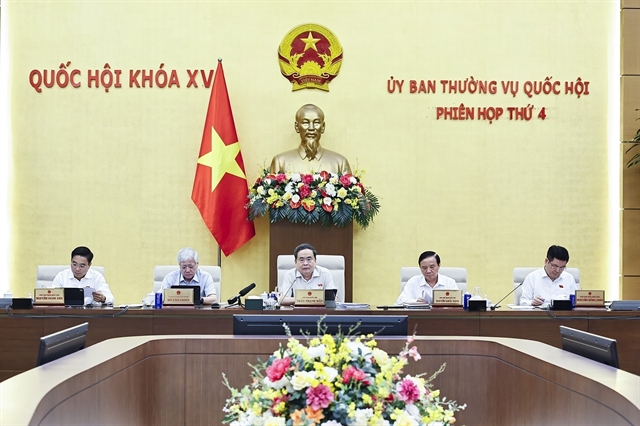
| NA Standing Committee discussed the draft revised Criminal Procedure Code on July 17. — VNA/VNS Photo |
HÀ NỘI — Continuing its fourth session, the National Assembly (NA) Standing Committee on Friday discussed the draft revised Criminal Procedure Code.
According to the Supreme People's Procuracy, the revised code aims to fully and promptly institutionalise the Party's policies on improving the socialist rule-of-law state, advancing judicial reform, enhancing judicial governance, meeting new crime prevention requirements, and promoting digital transformation and international integration in criminal proceedings.
The draft also seeks to strengthen checks on the exercise of power, prevent wrongful convictions and abuse of authority, while ensuring criminal justice is both rigorous and humane.
The revised code proposes more progressive procedural rules to enhance adversarial proceedings, tighten power oversight and better protect human and citizens' rights. It will retain effective existing provisions, amend or repeal outdated regulations, and introduce new procedures to expedite case handling, reduce procedural costs and improve efficiency while ensuring fairness, objectivity and greater protection of the lawful rights and interests of organisations and individuals. It also aims to modernise criminal proceedings through the wider application of digital technologies and closer alignment with international practices.
The overhaul is comprehensive in scope. The revised code will govern principles, procedures and processes for receiving and handling crime reports, initiating criminal proceedings, investigation, prosecution, trial and certain aspects of criminal sentence enforcement. It also defines the powers and responsibilities of judicial authorities and officials, the rights and obligations of participants in criminal proceedings, complaint and denunciation mechanisms, and international cooperation in criminal justice.
Presenting the verification report, Chairman of the NA Committee on Legal and Judicial Affairs Phan Chí Hiếu said the committee supported the need to revise the code, noting that the draft reflects the Party's policies and guidelines. However, he urged the Supreme People's Procuracy to further review the draft to ensure all newly introduced provisions fully embody the Party's orientations.
Concluding the discussion, NA Vice Chairman Nguyễn Khắc Định said the Standing Committee broadly agreed with the proposed comprehensive revision. Although the number of amended articles is relatively limited compared with the current code, he noted that the changes constitute a fundamental overhaul because they introduce numerous new policy directions.
He asked the drafting body to continue refining the bill for submission to the first extraordinary session of the 16th NA. During the revision process, the draft should closely follow the Party's resolutions and conclusions while ensuring consistency with the 2013 Constitution and relevant international treaties.
Dinh also called for closer coordination with the drafting committees for the revised Penal Code and the Law on Organisation of Criminal Investigation Agencies to ensure coherence across Việt Nam's legal framework. He stressed the need for a thorough review of the draft to guarantee consistency, logic and compatibility among its provisions, given the Criminal Procedure Code's central role in the country's judicial system.
Under the agenda, the second phase of the NA Standing Committee's fourth session will resume on July 27. — VNA/VNS
Politics & Law
 Politics & Law
 Politics & Law
 Politics & Law
 Politics & Law
 Politics & Law
 Politics & Law
 Politics & Law
 Politics & Law
 Politics & Law
 Politics & Law
 Politics & Law
 Politics & Law
 Politics & Law
 Politics & Law