 Politics & Law

HKSTP Partners with Leading Science and Technology Company Merck to Open a New Chapter in I&T Collaboration
1.
|
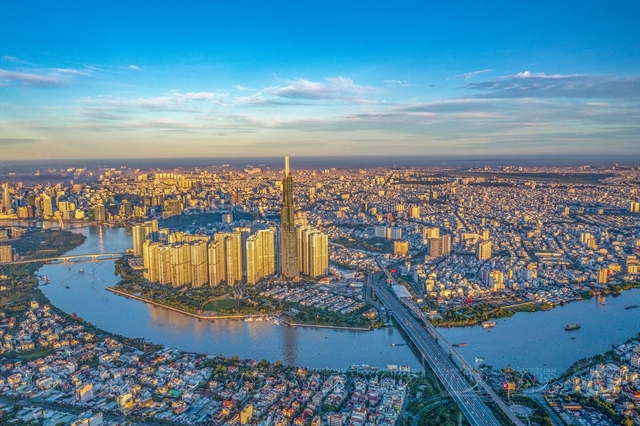
| A panoramic view of HCM City’s rapidly developing urban landscape. — VNA/VNS Photos |
HCM CITY — The Urban Development Bill will open up new opportunities for HCM City, but experts say ambitious mechanisms are needed urgently if the southern metropolis is to become a regional innovation hub and global city.
The city has an urgent need to attract and retain high-quality human resources.
While the law is expected to contain breakthroughs for attracting and developing talent, experts said the city must also create a highly competitive working environment if they are to succeed.
For years, the city has struggled with a severe brain drain, particularly in healthcare, education, and urban management.
Following the COVID-19 pandemic, the healthcare sector alone saw around 1,000 medical workers resign each year between 2021 and 2023, with the figure peaking at more than 1,500 in 2022.
Experts said the domestic exodus was driven by inadequate pay and high-pressure working environments, while the failure to attract foreign replacements was due to cumbersome visa and work permit procedures.
To address these bottlenecks, Article 36 of the bill contains several landmark measures like support for training, investment in state-of-the-art research infrastructure, and streamlined visa and residency procedures for foreign professionals and their families.
Hà Hải, vice-chairman of the HCM City Bar Association, said the proposals demonstrate the city's recognition that human resources are the decisive factor in development.
"The policy will only deliver lasting results when combined with a strategy to train and develop local talent, creating a self-sustaining talent ecosystem."
Trần Hải Linh, chairman of the Việt Nam-Korea Business and Investment Association, said South Korea's experience shows that talent attraction policies must be backed by a strong research ecosystem and effective mechanisms to commercialise research.
He proposed a dedicated programme to attract overseas Vietnamese intellectuals from South Korea, Japan, the US, and Europe to work in HCM City for at least two years.
He said it would offer four key incentives: personal income tax exemption, relocation assistance, housing support, and access to a global professional network.
Participants would be exempt from personal income tax for their first five years, receive priority access to residential land at preferential prices, and receive financial support for relocation and resettlement, he said.
The city would also establish the HCM City Global Talent Network, spanning 20 to 30 countries, to serve as a strategic advisory body, he said.
Đỗ Phú Trần Tình, director of the Institute for Policy Development at the Việt Nam National University-HCM City, referring to Article 26 of the law on healthcare development, welcomed the proposal allowing the city to recognise foreign medical licences, authorise imports of specialised medicines, and approve advanced medical techniques.
"But this can pose safety risks if the criteria for recognising medical licences are not clearly defined."
|
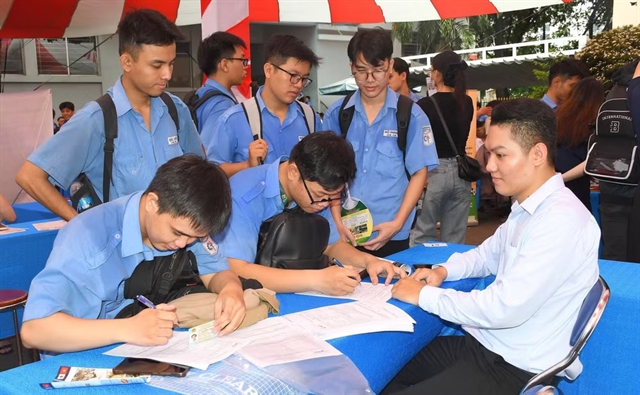
| Job seekers look for employment opportunities at a job fair in HCM City. |
Building a competitive workplace
Global experience shows that attracting world-class talent cannot rely on financial incentives alone.
Many experts believe that creating an open, professional, and merit-based working environment is even more important.
Phạm Phương Thảo, former chairwoman of the municipal People's Council, said the working environment often matters more to professionals than the salary.
Despite introducing several generous remuneration policies over the past decade, the city has attracted only about a dozen of them, many of whom have since left, she pointed out.
"If experts are recruited into the administrative system but are still required to clock in and out, without autonomy over their ideas, personnel, or research conditions, it is very difficult for them to work effectively."
She said the draft law should give HCM City greater autonomy in recruiting talent, allowing experts the freedom to develop innovative ideas and deliver practical breakthroughs.
Alongside attracting overseas expertise, the proposed law also empowers the People's Council to allocate city funds to modernise key high-quality colleges to achieve regional and international standards and provide tuition support for students studying priority and advanced disciplines.
Linh proposed a "University-Enterprise-Smart City" model that would allow universities to establish subsidiaries, technology spin-offs, and incubators on campus.
He suggested modelling the approach on South Korea's KAIST, where academia and industry are closely integrated from research to commercialisation, to build a world-class HCM City Innovation University.
Originally drafted as the Law on Special Cities, the bill was renamed the Law on Urban Development by the Government to reflect its broader scope, which now covers other centrally run cities and special economic zones.
Nguyễn Thị Hồng Hạnh, director of the city Department of Justice, said the special mechanisms designed for HCM City remain fully intact, enabling it to develop appropriate policies without conflicting with the Constitution.
The bill is scheduled to be submitted to the Government in mid-July before being tabled at the National Assembly in early August.
Hạnh said the law would help establish a modern urban governance model and serve as a "breakthrough of breakthroughs", enabling the city to accelerate its development in the country's new era. — VNS
Politics & Law
 Politics & Law
 Politics & Law
 Politics & Law
 Politics & Law
 Politics & Law
 Politics & Law
 Politics & Law
 Politics & Law
 Politics & Law
 Politics & Law
 Politics & Law
 Politics & Law
 Politics & Law
.jpg) Politics & Law
Politics & Law