 Politics & Law
HCM City urged to expand social housing to improve affordability
1.
|
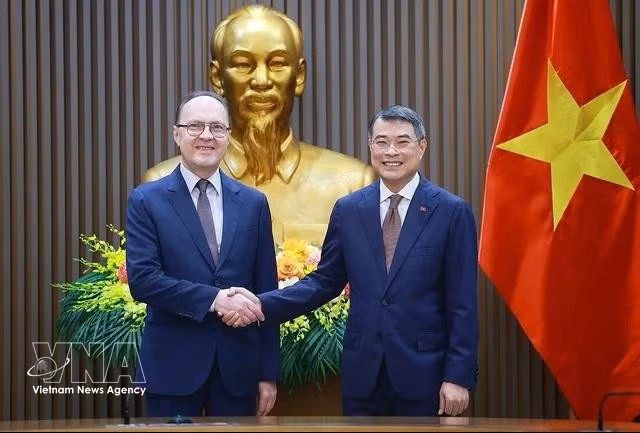
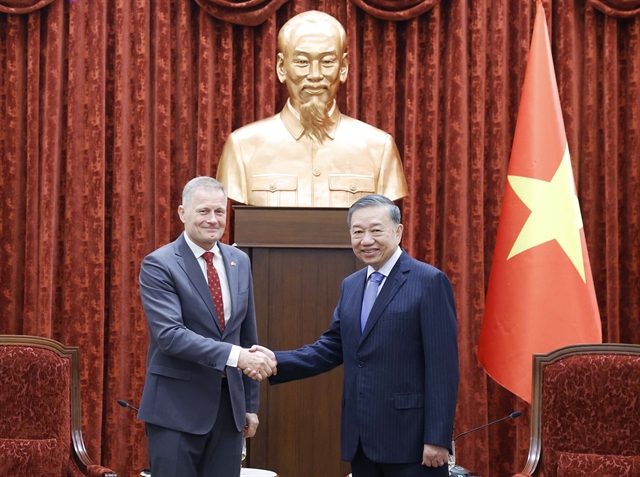
| Prime Minister Lê Minh Hưng (right) receives Russian Ambassador to Việt Nam Gennady Bezdetko in May 2026. VNA/VNS Photo |
HÀ NỘI – After 35 years of relations, economic cooperation between ASEAN and Russia is entering a new phase of development and delivering increasingly tangible results.
As leaders gather in Kazan, Russia, for the ASEAN-Russia Commemorative Summit marking the 35th anniversary of dialogue relations from June 16-18, the implementation of a “sectoral strategic partnership” model and efforts to connect Eurasian economic spaces are expected to provide fresh momentum for bilateral cooperation while enhancing energy security and technological development.
Since their first contacts in 1991 and the elevation of ties to a Strategic Partnership in 2018, economic collaboration has remained one of the most productive pillars of ASEAN-Russia relations. Both sides are increasingly positioning themselves as indispensable partners in a rapidly evolving regional architecture.
According to V. Mazyrin, Director of the Centre for Việt Nam and ASEAN Studies under the Russian Academy of Sciences, ASEAN now occupies a prominent place and is regarded as a priority partner in Russia’s updated foreign policy strategy. Russian Foreign Ministry spokesperson Maria Zakharova likewise described ASEAN as an exemplary model of cooperation based on mutual respect and shared interests, helping Russia diversify its external economic relations under its “Look East” policy.
For ASEAN, Russia plays an important role as a supplier of essential resources, including energy, agricultural products, and advanced technologies. Maintaining strong ties with Russia not only supports economic growth but also helps Southeast Asian countries diversify external partnerships and preserve strategic balance among major powers.
The achievements of this partnership are reflected in growing trade figures. According to data released at the ASEAN-Russia Joint Cooperation Committee meeting in April, two-way trade reached approximately US$21.6 billion, while substantial untapped potential remains. Notably, the two sides fulfilled 82 per cent of the targets outlined in the Comprehensive Plan of Action for 2021-2025, focusing on key sectors such as oil and gas, fertilisers, and human resources development.
These results demonstrate that ASEAN-Russia economic relations have moved beyond potential and are generating concrete benefits for both sides.
The strengthening of cooperation has been driven in part by profound changes in the global landscape. Since 2022, amid continuing challenges in Russia’s relations with Western countries, Moscow has accelerated its pivot toward Asia, identifying the region as a strategic priority. In this context, ASEAN has emerged as an important partner due to its favourable geo-economic position, robust growth prospects, and central role in regional cooperation mechanisms.
At the same time, ASEAN countries are seeking to diversify partnerships in order to maintain strategic balance and enhance energy security.
Looking ahead, cooperation is increasingly shifting toward knowledge-based industries and sustainable development. Mazyrin noted that Russia is promoting a “sectoral strategic partnership” approach to concentrate resources on priority areas. Such a focused strategy will enable both sides to adapt more effectively to global supply chains and create new sources of economic value beyond traditional exploitation industries.
Preparatory meetings for the commemorative summit highlighted the need to expand cooperation in digital transformation, high technology, innovation, cybersecurity, artificial intelligence, and sustainable development. These sectors are widely viewed as future growth drivers for ASEAN-Russia relations over the coming decade.
A key element of Russia’s long-term vision is the Greater Eurasian Partnership initiative, under which the Eurasian Economic Union (EAEU) and ASEAN are expected to serve as two major pillars. Closer links between these mechanisms could help diversify supply chains and strengthen regional resilience against global economic disruptions.
Within this framework, Việt Nam continues to play a bridging role in ASEAN-Russia relations. Vietnamese Ambassador to Russia Đặng Minh Khôi affirmed that Việt Nam has consistently been one of the strongest supporters of ASEAN-Russia cooperation, adding that the country is now assuming an even more active role.
Evidence of this growing engagement can be seen in the $1.72 billion in Việt Nam-Russia trade recorded during the first four months of 2026, up 9.22 per cent year-on-year, while the number of Russian visitors to Việt Nam surged by 194 per cent compared with the same period in 2025.
As Việt Nam prepares to assume the role of ASEAN-Russia Dialogue Relations Coordinator for the 2027-2030 period, it is expected to play an important part in shaping future initiatives, including the Ninh Thuận 1 Nuclear Power Plant.
Against a backdrop of rapid geopolitical change, traditional cooperation mechanisms are under increasing pressure to become more adaptive, practical, and results-oriented. In this regard, the summit in Kazan is more than a commemorative event. It represents an opportunity for ASEAN and Russia to chart the future direction of their partnership and transform shared potential into tangible economic benefits in a rapidly changing world. VNA/VNS
Politics & Law
 Politics & Law
 Politics & Law
 Politics & Law
 Politics & Law
 Politics & Law
 Politics & Law
 Politics & Law
 Politics & Law
 Politics & Law
 Politics & Law
 Politics & Law
 Politics & Law
 Politics & Law