 Politics & Law
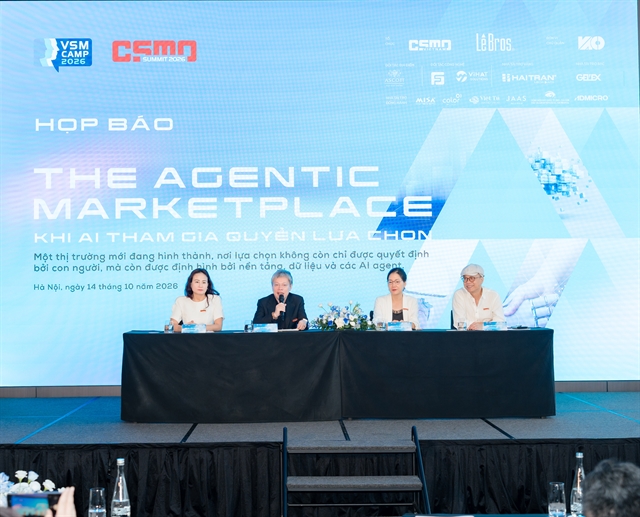
Sales, marketing congress discusses growing influence of AI
1.
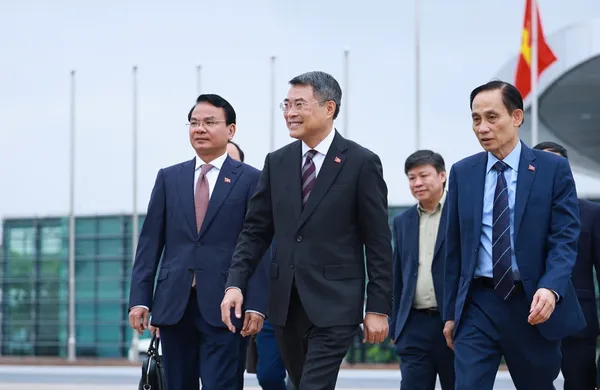
HÀ NỘI – Prime Minister Lê Minh Hưng and a high-ranking delegation yesterday departed Hà Nội to attend the ASEAN–Russia Commemorative Summit and conduct bilateral activities in Kazan, Russia from June 16–18, at the invitation of Russian President Vladimir Putin.
The official delegation accompanying the PM includes Politburo members Minister of Foreign Affairs Lê Hoài Trung and Secretary of the Hà Nội Party Committee Trần Đức Thắng.
Other members include Minister-Chairman of the Government Office Đặng Xuân Phong, Minister of Industry and Trade Lê Mạnh Hùng, Minister of Finance Ngô Văn Tuấn, Minister of Science and Technology Vũ Hải Quân, Governor of the State Bank of Việt Nam Phạm Đức Ấn, Deputy Minister of National Defence Nguyễn Văn Hiền and Deputy Minister of Public Security Nguyễn Ngọc Lâm.
Also joining the delegation are Việt Nam’s Ambassador to Russia Đặng Minh Khôi, Deputy Chairman of the Government Office Đôn Tuấn Phong, Deputy Minister of Foreign Affairs and head of the ASEAN Senior Officials' Meeting (SOM) delegation of Việt Nam Đặng Hoàng Giang, Assistant to the PM Trần Anh Tuấn and President of the Việt Nam Chamber of Commerce and Industry Hồ Sỹ Hùng.
The working visit carries particular significance, as it marks the Government leader’s first official trip to Russia in his new capacity. Russia is a traditional and close partner and a comprehensive strategic partner of Việt Nam.
PM Hưng’s participation in this summit once again reflects Việt Nam’s consistent foreign policy of independence, self-reliance, resilience, peace, friendship, cooperation and development, as well as the diversification and multilateralisation of external relations in line with the spirit of the 14th National Party Congress.
The visit also sends a clear message of Việt Nam’s regard for the ASEAN–Russia strategic partnership, helping reinforce the country’s role as a bridge and generate fresh momentum for ASEAN–Russia relations, while further strengthening the traditional friendship, strategic trust and effective cooperation between Việt Nam and Russia forged over decades.
Việt Nam’s traditional role in SEA
Russia has praised Việt Nam’s traditional role as a bridge in Southeast Asia and confirmed that the two countries maintain close coordination at multilateral forums to drive the stable development of the Russia–ASEAN Strategic Partnership, said Deputy Director of the ASEAN Centre at the Moscow State Institute of International Relations (MGIMO) Dr Valeria Vershinina.
In an interview with Vietnam News Agency correspondents in Moscow for the summit, Vershinina said Russia and Việt Nam see eye-to-eye on preserving ASEAN’s centrality in regional security architecture, toward a comprehensive and lasting security system in the Asia-Pacific.
She said that Russia values Việt Nam’s contributions to the ASEAN community and its active role in pushing Russia–ASEAN ties forward, adding that Moscow will consistently back Việt Nam’s constructive initiatives to reinforce ASEAN’s unity, cohesion and flexible response to contemporary geopolitical challenges.
As evidence of this commitment, Russian Foreign Minister Sergey Lavrov sent a message to the third ASEAN Future Forum in Hà Nội, describing it as a prestigious multilateral platform for in-depth discussions on key regional development issues.
Reflecting on the 35-year Russia–ASEAN partnership, the MGIMO scholar identified continuous and steady progress as hallmark achievements. Even as foreign policy headwinds have stiffened and great power rivalry has intensified, both Russia and ASEAN have remained committed to sustaining dialogue. A key takeaway is a mutual recognition of practical needs and complementarities, which has created new opportunities and widened the scope for strategic cooperation, she noted.
Amid profound global geopolitical shifts, Vershinina underscored Russia’s support for ASEAN’s central role in maintaining Asia-Pacific peace and stability. She said Russia is convinced that the bloc’s longstanding principles, including consensus, non-interference in internal affairs, respect for national sovereignty and the peaceful settlement of disputes, will endure as core systemic values.
On the macro-cooperation agenda, she pointed to the long-running discussion of folding ASEAN into the Greater Eurasian Partnership and a broader Eurasian security architecture. While this remains a long-term process with objective complexities, she argued that access to new export markets could deliver sizeable economic benefits for Southeast Asian firms.
The scholar also highlighted considerable advantages in expanding investment ties between ASEAN and Eurasian Economic Union (EAEU) member states, building new transport and logistics corridors and tapping the EAEU’s integration know-how in customs procedures, e-declarations and unified certification databases.
Turning to the Shanghai Cooperation Organisation (SCO), Vershinina said that beyond established priorities such as security coordination, counterterrorism and combating transnational crime, there remains considerable potential in joint work on transport infrastructure, energy security and digital economy.
On the Kazan summit’s role in shaping a multipolar security and cooperation architecture in Southeast Asia, she noted that the choice of city itself embodies that vision.
Kazan has lately become a stage for multipolar gatherings, including the BRICS Summit and Kazan Forum. With the ASEAN Secretary-General, EAEU representatives and the SCO Secretariat all in attendance, the summit is set to debate blueprints for a multipolar security system before adopting its final joint documents. — VNA/VNS
Politics & Law
 Politics & Law
 Politics & Law
 Politics & Law
 Politics & Law
 Politics & Law
 Politics & Law
 Politics & Law
 Politics & Law
 Politics & Law
 Politics & Law
 Politics & Law
 Politics & Law
 Politics & Law
 Politics & Law