 Politics & Law

Việt Nam, China seek stronger substantive parliamentary cooperation
1.
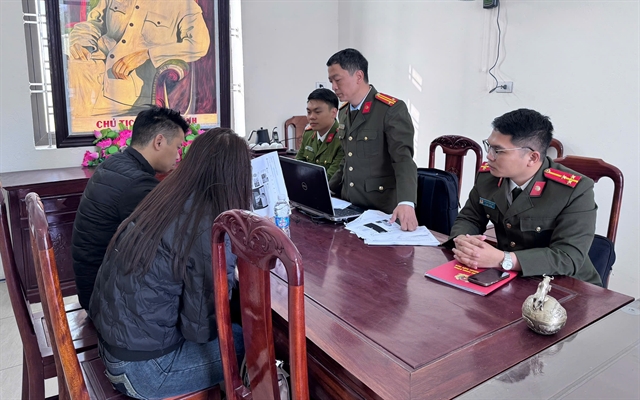 |
| Authorities handle a case of spreading false information in Ninh Bình Province in February 2026. — VNA/VNS Photo |
HÀ NỘI — The Government recently issued a new decree specifying administrative penalties for violations in postal services, telecommunications, e-transactions and information technology, which will take effect on July 1.
The regulation applies to organisations, household businesses and individuals.
Where criminal liability is not involved, fines of between VNĐ30-50 million (US$1,140-1,900) may be imposed for sharing false information that causes public panic, harms socio-economic activities, disrupts the operations of State agencies or activities of public officials, or infringes on the lawful rights and interests of organisations or individuals.
The same administrative penalty applies to disclosing state secrets, personal privacy or other protected confidential information; or sharing content that distorts history, denies revolutionary achievements, undermines national unity, insults religion or promotes gender or racial discrimination.
Meanwhile, fines ranging between VNĐ20-30 million ($760-1,140) can be issued for sharing content graphically depicting acts of violence, killings, accidents or horror scenes.
The new regulation also highlights intellectual property protection. Sharing journalistic, literary, artistic works or publications without the consent of rights holders, as well as distributing materials not authorised for circulation, may be subject to the same amount of fines.
The decree further penalises the advertising or sharing of prohibited goods and services, the dissemination of maps of Việt Nam that omit or misrepresent national sovereignty, and sharing links to prohibited online content.
The same penalty also applies to providing or sharing fabricated, false, distorted, defamatory or slanderous information, or content that harms the reputation of agencies and organisations, or the honour and dignity of individuals.
Violators may also receive administrative fines for sharing content that promotes social evils, prostitution or human trafficking; posting obscene or pornographic material; or content harmful to national traditions, social ethics or public health, provided it does not warrant criminal prosecution.
In addition, individuals or organisations using social media to produce unauthorised content in the form of journalistic reports, investigations or interviews may face penalties. Press agencies that fail to notify authorities when establishing accounts, community pages, content channels or groups on domestic or foreign social media platforms may also be sanctioned.
Violators will be required to remove false, misleading or unlawful content as remedial measures. Authorities may also order the suspension of violating accounts, pages, groups or channels.
Social media account holders, channel owners, page administrators and group moderators can be subject to penalties if they fail to remove illegal content at the request of competent authorities. This includes information affecting the lawful rights and interests of organisations or individuals or harmful content affecting children. — VNS
Politics & Law
 Politics & Law
 Politics & Law
 Politics & Law
 Politics & Law
 Politics & Law
 Politics & Law
 Politics & Law
 Politics & Law
 Politics & Law
 Politics & Law
 Politics & Law
 Politics & Law
 Politics & Law
 Politics & Law