 Life & Style
Sơn La holds second coffee festival, targeting stronger businesses in future
1.
|
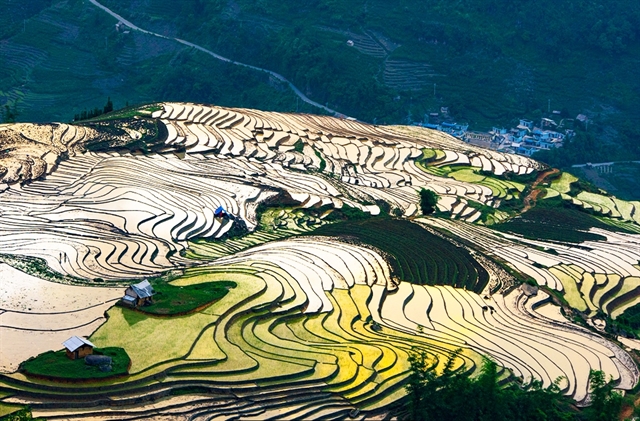
| The northwestern region of Việt Nam has beautiful scenery during the water-filling season. — Photo viettourist.com |
LÀO CAI — Northwestern Việt Nam is famous for its gentle valleys, terraced rice fields, limestone karst mountains and traditional stilt houses.
Spanning the four provinces of Sơn La, Điện Biên, Lai Châu and Lào Cai, the region offers immersive cultural experiences with ethnic communities and sweeping mountain landscapes.
From late April into May and even June is the most breathtaking time of the year to visit the area, as farmers fill the terraced rice fields with water, known as the water-pouring or water-filling season.
In Mù Cang Chải and Sa Pa, in Y Tý and further afield in Hoàng Su Phì, the stunning terraced rice fields, built by residents over generations, shimmer with a silvery sheen. They reflect the sky like mirrored stairways – a magnificent, poetic watercolour bestowed by nature.
This time of year is when local farmers pour water into the fields to prepare the land for planting. Unlike the golden radiance of harvest season, the water-filling season reveals a more pristine and dreamlike beauty.
As water is gently channelled from mountain springs into the fields, each terrace begins to fill, mirroring the cerulean sky, the fiery hues of sunset or the delicate veil of early morning mist.
Terraces cascade one after another, layer upon layer, like stairways ascending to the heavens – at once graceful and fluid, yet grand and boundless in their majesty.
If you're looking for destinations in the northwestern mountainous region, don't miss this list of amazing locations which promise a mesmerising visual experience for a summer trip.
|
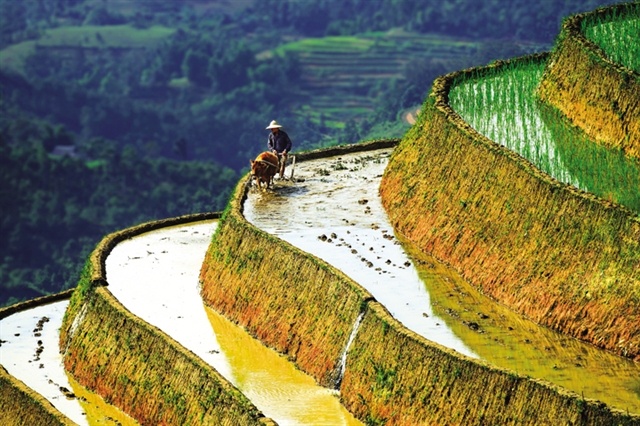
| IMPRESSIVE IMAGE: Farmer works in the terraced rice field of Hoàng Su Phì which is known as the most beautiful and largest terraced rice field system in Việt Nam. Photo doanhnhanplus.vn |
Mù Cang Chải in Lào Cai Province is one of the most popular destinations for visitors thanks to the dreamy beauty of its terraced rice fields, which were classified as a Special National Heritage site in 2020.
These terraced fields on mountain slopes cover an area of about 300ha in La Pán Tẩn and Dế Xu Phình in Púng Luông Commune and Chế Cu Nha in Mù Cang Chải Commune, formed after the recent national merger.
Mông people account for over 90 per cent of the area's population. They have a rich folk culture that reflects a perception of life as being closely associated with nature.
In Mù Cang Chải, tourists can see terraced fields with layer after layer stretching across hills. The terrain here features high mountains divided by streams and crevasses alongside vast, rolling pine forests.
The stepped terraces, forests and streams interwoven together have created a spectacular landscape. Terraced fields are used for rice cultivation on hilly areas, and are also a means to effectively keep water supplied to the fields.
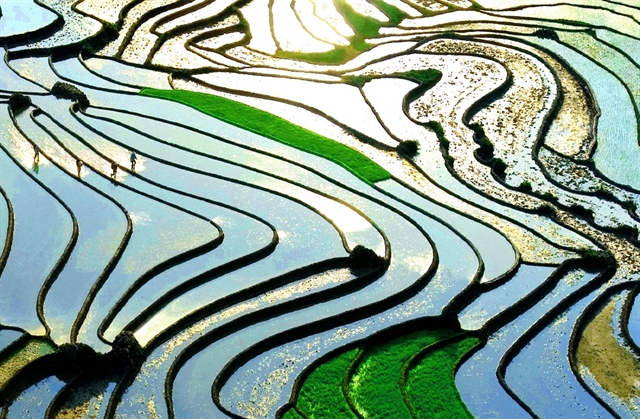
Also in Lào Cai, Sa Pa is a globally well-known tourist destination that also draws a lot of attention during the water-filling season.
Shimmering terraced rice fields make the valleys of Mường Hoa, Tả Van and Tả Phìn especially enchanting, as water flowing from mountain streams floods the paddies, creating rippling waves that glisten under the sunlight.
|
| Sa Pa's rice fields after they are flooded with water, converting the area into a huge mirror that reflects the sky. — Photo viettourist.com |
Cultivated for millennia by Mông, Dao and Tày communities, they were voted among the seven most magnificent terraced fields in the world by readers of the renowned US travel magazine Travel + Leisure in 2009 and the international tourism electronic communication network Touropia in 2013.
The spacious surroundings, fresh air and tranquil scenery make it an ideal destination for those seeking nature tourism experiences, photographing the rainy season or simply enjoying the beauty of the northwest in summer.
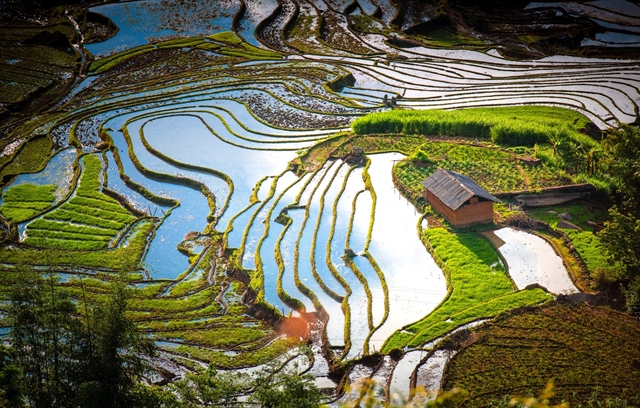
Meanwhile, Y Tý in Lào Cai is called the land of clouds, but its stunning terraced rice fields farmed by the Hà Nhì people are also wonderful, resembling giant stairways stretching towards the sky. They have become a defining feature of the area’s breathtaking landscape.
|
| Y Tý is a must-see on the list of terraced rice fields to visit in May and June. — VNS Photo Hoàng Cương |
The sight of shimmering rice paddies interspersed with the traditional rammed-earth houses of local residents, often hidden in the early morning mist or sea of clouds, creates a picture as beautiful as paradise.
One particularly beautiful spot for tourists to admire the terraced rice fields is at Thiên Sinh Bridge, located at the end of Lao Chải Village, about 10km from the centre of Y Tý Commune. Above, white clouds swirl around the mountain peaks, while below, the flooded rice fields reflect the clouds and sky in a truly stunning sight.
The water-filling season in Y Tý brings a sense of peace and tranquility, making visitors feel as if they have entered another world, completely separate from the hustle and bustle of the city.
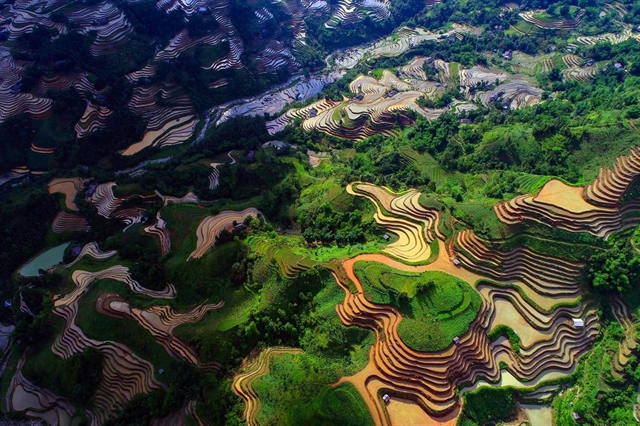
Hoàng Su Phì in Tuyên Quang is also home to magnificent terraced rice fields that are recognised as a National Heritage Site.
|
| The terraced rice fields of Hoàng Su Phì are also known as the most beautiful and largest terraced rice field system in Việt Nam. Photo dantri.com.vn |
It is renowned for the majestic and distinctive beauty of its endless terraced rice fields. The harmony between nature and human ingenuity has turned Hoàng Su Phì into what many describe as a spectacular work of art – a giant brocade painting that captivates visitors with its charm and grandeur.
With its steep mountainous terrain, the creation of these terraced fields is not only a remarkable technical achievement but also a testament to the creativity of the local La Chí, Dao and Nùng ethnic groups and their deep connection with nature.
Luốc, Phùng, Nậm Piên and Ông Thượng villages are ideal places for visitors to admire the masterpieces of nature and people. — VNS
Life & Style
 Life & Style
 Life & Style
 Life & Style
 Life & Style
 Life & Style
 Life & Style
 Life & Style
 Life & Style
 Life & Style
 Life & Style
 Life & Style
 Life & Style
 Life & Style
 Life & Style