 Politics & Law

Business incubator helps SMEs enhance competitiveness
1.
|
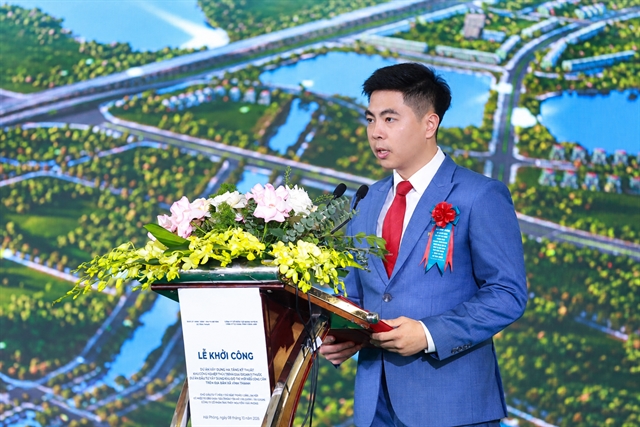
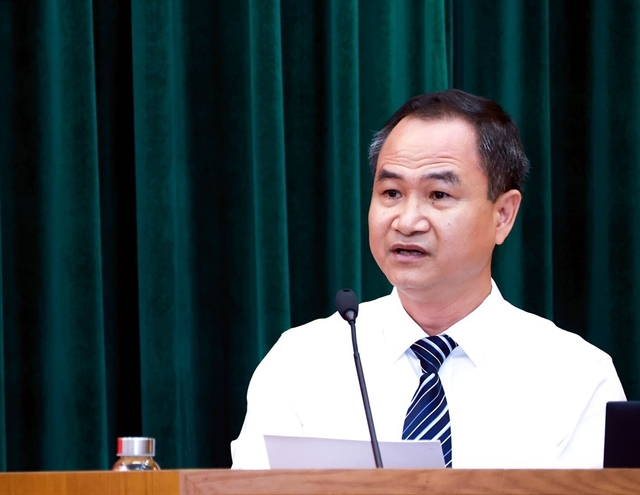
| Đỗ Xuân Tuất, Deputy Director of the Institute of Hồ Chí Minh and Party Leaders, speaks at the seminar. — VNA/VNS Photo Tuấn Anh |
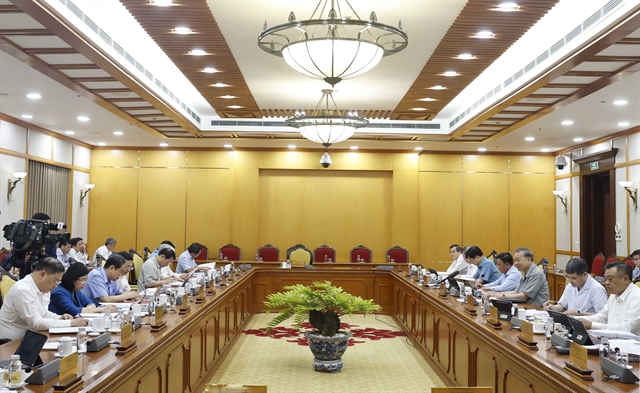
HÀ NỘI — A scientific seminar, hosted by the Institute of Hồ Chí Minh and Party Leaders under the Hồ Chí Minh National Academy of Politics on Friday, highlighted the theoretical and practical significance of President Hồ Chí Minh’s contributions to the National Assembly (NA) of Việt Nam.
In his opening remarks, Assoc. Prof. Dr Đỗ Xuân Tuất, Deputy Director of the Institute of Hồ Chí Minh and Party Leaders, stressed that at the very first meeting of the Provisional Government, President Hồ Chí Minh identified the organisation of a general election and the drafting of a democratic constitution as top priorities.
The success of the general election on January 6, 1946 marked a major milestone in the development of Việt Nam’s democratic institutions and paved the way for the establishment of the first-tenure NA.
According to Tuất, from the first to the third tenures of the NA, President Hồ Chí Minh consistently viewed the legislature as the centre of state power and the highest representative body of the people. During nearly 25 years as head of state, he devoted significant efforts to building a constitutional and lawful state apparatus grounded in the principle that all power belongs to the people.
During the resistance war against French colonialists, the NA and the Government served as a crucial political foundation helping the country overcome numerous challenges.
Tuất affirmed that Hồ Chí Minh’s ideological legacy on democracy, the rule of law and great national unity continues to provide an important theoretical foundation for the ongoing building of a socialist rule-of-law state in Việt Nam. Over the past 80 years, under the guidance of his thought, the NA has continued to develop and contribute significantly to the cause of national development and defence, as well as the country’s development goals until 2030 and vision towards 2045.
In his presentation, Assoc. Prof. Dr Võ Xuân Vinh, director of the Institute of History under the Việt Nam Academy of Social Sciences, highlighted President Hồ Chí Minh’s decisive role in the success of the August Revolution, the establishment of the Democratic Republic of Việt Nam and the foundation of Việt Nam’s first democratic institution.
He noted that despite immense pressure and sabotage attempts faced by the young revolutionary government, Hồ Chí Minh remained committed to organising the general election based on universal suffrage, direct voting and secret ballots, granting Vietnamese people the right to determine their own political destiny for the first time.
Vinh stressed that Hồ Chí Minh was not only the leader of the August Revolution but also the “architect” of the modern Vietnamese state, opening a new era of national independence associated with the people’s right to mastery.
Director of the President Hồ Chí Minh Relic Site at the Presidential Palace Lê Thị Phượng said the first session of the NA was not merely a political event but also a milestone in translating Hồ Chí Minh’s thought on democratising state power into reality.
According to her, Hồ Chí Minh’s core principle was that all state power belongs to the people, with the NA serving as the highest representative body of the people’s will and aspirations. State power must be controlled through the Constitution and law to prevent corruption and abuse, she added.
The official said the first-tenure NA marked the first establishment in Việt Nam of a state mechanism that was “of the people, by the people and for the people”.
Phượng also underscored Hồ Chí Minh’s ideology of great national unity, reflected in the broad composition of the first-tenure NA and the resistance coalition government, which brought together nearly 300 delegates from different social classes, religions, political parties and social groups.
Hồ Chí Minh’s proposal to include representatives from Việt Quốc and Việt Cách political parties demonstrated his mindset of placing national interests above political differences in order to strengthen the legitimacy and unity of the revolutionary government, she added.
According to Phượng, the 1946 Constitution institutionalised many of Hồ Chí Minh’s key ideas, including the principle that power belongs to the people, the guarantee of democratic freedoms, and mechanisms for the division and supervision of state power, thereby laying the legal foundation for the Democratic Republic of Việt Nam.
Delegates at the seminar agreed that the first session of the first-tenure NA not only held immediate historical significance but also laid a lasting foundation for the building of a socialist rule-of-law state in Việt Nam.
President Hồ Chí Minh was recognised as the figure who laid the “first bricks” for Việt Nam’s modern democratic state and left enduring values on democracy, the rule of law and national unity that remain highly relevant to the country’s ongoing renewal and institutional reform efforts. — VNA/VNS
Politics & Law
 Politics & Law
 Politics & Law
 Politics & Law
 Politics & Law
 Politics & Law
 Politics & Law
 Politics & Law
 Politics & Law
 Politics & Law
 Politics & Law
 Politics & Law
 Politics & Law
 Politics & Law