 Politics & Law

AXA Global Healthcare Mind Health Report reveals global differences in how cost and stigma affect access to professional mental health care
1.
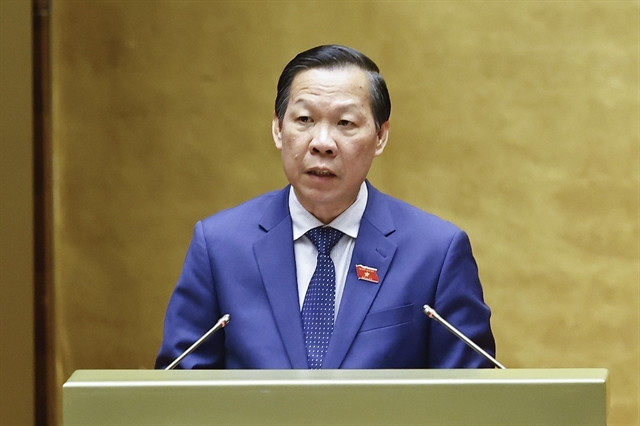 |
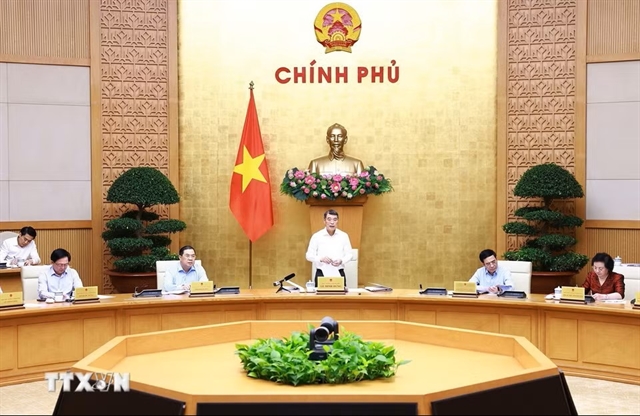
| Phan Văn Mãi, Chairman of the National Assembly (NA)’s Economic and Financial Committee presents the verification report on Thursday afternoon in Hà Nội. — VNA/VNS Photo Doãn Tấn |
HÀ NỘI — The Government has been urged to ensure that the formulation and implementation of the 2026-30 socio-economic development plan closely follow and fully operationalise the orientations set out in the 14th National Party Congress Resolution, the conclusions of the second plenum of the 14th Party Central Committee and key Politburo resolutions.
The plan should remain firmly anchored in the principles of substantive growth, macroeconomic stability, efficient resource utilisation, and the alignment of growth with social progress and equity.
Clear priorities, sequencing, resource allocation and implementation roadmaps are essential to deliver tangible progress from the outset of the 2026-30 period.
The recommendations were made by Phan Văn Mãi, Chairman of the National Assembly (NA)’s Economic and Financial Committee, while presenting the committee’s verification report on the Government’s proposed five-year socio-economic development plan at the legislature’s first session on Thursday in Hà Nội.
He also highlighted mounting pressure on budget balances and the mobilisation and deployment of investment capital, given the substantial resource demands required to sustain growth.
Institutional reform must constitute a genuine strategic breakthrough, he said.
This goes beyond amending legal documents to improving the overall quality, coherence and enforceability of the legal system.
A comprehensive review is needed to eliminate overlaps, contradictions and inconsistencies across laws and sub-law regulations, while linking law-making more closely with implementation, using outcomes as the key measure of institutional quality.
Balancing high growth with macroeconomic stability remains a major challenge, requiring prudent, flexible and disciplined policy management.
The committee called for greater clarity on the scope and limits of fiscal and monetary policy, as well as consistent coordination to avoid abrupt policy shifts.
At the same time, stronger budget discipline is needed, with spending restructured to prioritise development investment.
Proactive measures should be taken to ensure energy security and to manage impacts on inflation, exchange rates and financial markets.
A clear roadmap for capital market development is also required to gradually reduce reliance on bank credit.
Energy constraints were identified as a critical bottleneck to growth, requiring fundamental and long-term solutions.
Priority should be given to developing energy infrastructure, reviewing planning frameworks and accelerating key projects.
In parallel, a competitive electricity market and flexible, transparent pricing mechanisms must be established to attract investment and control costs.
Over the longer term, the energy mix should shift towards greater self-reliance, aligned with green and circular economy principles.
Renewable energy development must proceed in a sustainable and coordinated manner, avoiding overheating and fragmentation.
The committee also underscored that economic growth must go hand in hand with social progress, equity and sustainability, without compromising the environment or social welfare.
“Cultural development and human capital were highlighted as key internal drivers, with a particular focus on improving workforce quality, especially high-skilled labour, in line with labour market needs and the requirements of a new growth model,” he said.
At the same time, proactive responses are needed to demographic ageing, labour market fluctuations and shifts in employment structures.
He also emphasised that strengthening governance capacity and implementation effectiveness is the decisive factor in ensuring policy success.
He warned that challenges in this year and throughout the 2026-30 period will be more intense than in previous years, requiring the development and execution of the five-year plan to reflect a new context with higher demands for growth quality, economic self-reliance and resilience.
This period calls for a renewed development mindset, strong political determination and close, effective coordination across all levels and sectors to achieve breakthroughs in socio-economic development and lay a solid foundation for subsequent growth phases.
Additionally, the committee broadly endorsed the Government’s proposed viewpoints, overarching objectives, key targets and 11 groups of tasks and solutions.
Draft plan
Earlier, the NA deputies heard Deputy Prime Minister Nguyễn Văn Thắng present the draft five-year socio-economic development plan for 2026-30.
He said the global environment over the coming period will remain highly volatile, fast-changing and unpredictable.
To realise development goals and visions for 2030 and 2045, and to avoid the middle-income trap, the Government has set a target of rapid and sustainable growth, aiming for GDP expansion of at least 10 per cent in 2026 and on average over the 2026-30 period, while maintaining macroeconomic stability.
GDP per capita is projected to reach US$8,500 by 2030, 1.7 times higher than in 2025, alongside efforts to maintain a peaceful and stable environment and improve living standards so that people can fully benefit from development outcomes.
Based on a comprehensive assessment of opportunities and challenges, the Government has submitted to the National Assembly five guiding principles, 59 key targets, 11 major solution groups for 2026-30, and 92 priority tasks to be implemented in 2026.
Key priorities include completing a modern, coherent and competitive institutional framework to drive growth and establish a new growth model, as well as shifting State management from a “pre-check” to a “post-check” approach.
Enhancing the effectiveness of law enforcement, refining standards and technical norms, and removing structural bottlenecks to support the digital economy and investment activities are also central to the agenda.
Administrative reform will be accelerated, with the aim of placing Việt Nam among the top three investment environments in ASEAN and the world’s top 30 by 2028.
Efforts to combat corruption, negativity and wastefulness will be further intensified.
The Government will also prioritise science, technology, innovation and digital transformation, with a focus on removing institutional barriers, linking research outcomes to practical applications and accepting controlled risks in innovation activities.
Priority will be given to acquiring, transferring, applying and mastering core, strategic and digital technologies, alongside strengthening basic research in areas where Việt Nam has demand, potential and comparative advantages.
By 2030, the digital economy is expected to account for around 30 per cent of GDP.
“In implementation, the Government will continue to direct agencies to closely monitor developments, improve forecasting and assess impacts in order to adopt proactive, flexible, timely and effective policy responses, ensuring that the set objectives are achieved,” Thắng said. — VNS
Politics & Law
 Politics & Law
 Politics & Law
 Politics & Law
 Politics & Law
 Politics & Law
 Politics & Law
 Politics & Law
 Politics & Law
 Politics & Law
 Politics & Law
 Politics & Law
 Politics & Law
 Politics & Law
 Politics & Law