 Politics & Law
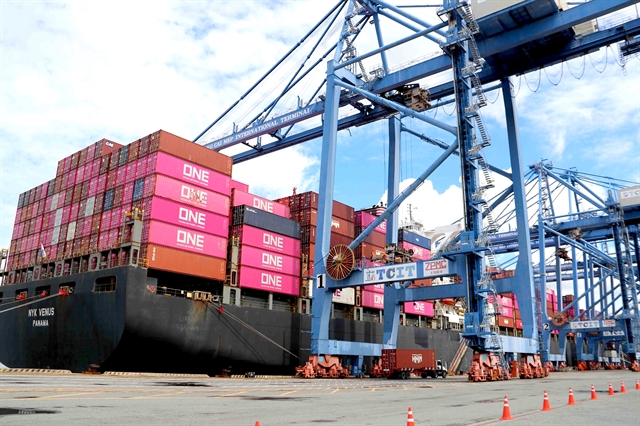
HCM City seeks stronger port connectivity, green transition
1.
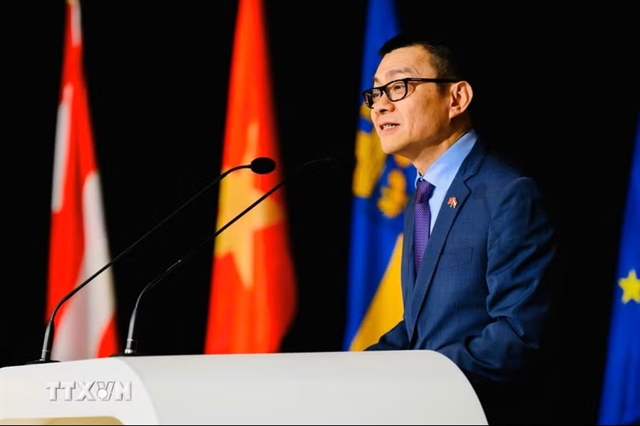 |
| Vietnamese Ambassador to Austria Vũ Lê Thái Hoàng. VNA/VNS Photo |
VIENNA – Vietnamese Ambassador to Austria Vũ Lê Thái Hoàng has called for closer cooperation between the missions of the Association of Southeast Asian Nations (ASEAN) and the Group of Latin American and Caribbean Countries (GRULAC) to strengthen their collective voice at multilateral forums.
Addressing a meeting of ASEAN and GRULAC heads of mission on April 8, Ambassador Hoàng emphasised the value of the dialogue mechanism in fostering coordination among developing countries, while highlighting the need to enhance transparency and improve the efficiency of resource allocation and utilisation across United Nations activities.
He also thanked participating countries for sending delegations to the signing ceremony of the UN Convention against Cybercrime in Hà Nội in 2025, describing the event as a clear demonstration of international solidarity and shared determination to tackle emerging non-traditional security challenges.
The ambassador reaffirmed the pivotal role of the International Atomic Energy Agency (IAEA) in global nuclear governance, particularly in advancing the peaceful use of nuclear energy, strengthening nuclear safety and security, and implementing verification mechanisms that promote transparency and confidence-building. He stressed the close connection between the IAEA’s work and the implementation of the Treaty on the Non-Proliferation of Nuclear Weapons (NPT), underscoring the importance of maintaining balance among the treaty’s three pillars, non-proliferation, nuclear disarmament and peaceful uses of nuclear energy, without allowing any pillar to be undermined.
Hoàng noted that Việt Nam is honoured to assume the presidency of the 11th NPT Review Conference in April 2026, approaching the role with responsibility, impartiality and a commitment to inclusive, constructive dialogue through extensive consultations with regional groups and member states, including GRULAC countries. He suggested that ASEAN and GRULAC could further coordinate in identifying shared priorities and advancing bridge-building initiatives aimed at achieving balanced outcomes that reflect the interests of all members, particularly developing nations.
Participants agreed that despite differences, countries share a common interest in preserving the credibility and effectiveness of the NPT, stressing that the conference’s success will depend on goodwill, flexibility and efforts to narrow divergences. ASEAN reaffirmed its readiness to deepen coordination with GRULAC in promoting a balanced approach that safeguards the treaty’s integrity while advancing development priorities, especially cooperation on peaceful nuclear applications through improved technology access, capacity building and technical assistance via the IAEA.
Delegations at the meeting reiterated the central role of multilateralism and the UN system, highlighting consensus as a key principle underpinning inclusive and effective international decision-making. Concerns were also raised over the UN’s financial constraints, with participants calling for stable and sufficient resources alongside improved budget efficiency.
Multilingualism was underscored as vital to ensuring equal participation, particularly for developing countries. Delegations further emphasised the UN’s coordinating role in addressing transnational, environmental and cybercrime, while advocating increased resources for specialised mechanisms, including processes linked to the UN Convention against Cybercrime.
Heads of delegation reaffirmed their commitment to maintaining regular exchanges, strengthening coordination of positions and contributing actively to reinforcing multilateralism, thereby supporting effective responses to global challenges and advancing sustainable development. The discussions reflected growing ASEAN–GRULAC cooperation in pursuit of peace, security, safety and sustainable development, while highlighting ASEAN’s and Việt Nam’s increasingly proactive and responsible engagement in key multilateral processes, especially in the nuclear domain. VNA/VNS
Politics & Law
 Politics & Law
 Politics & Law
 Politics & Law
 Politics & Law
 Politics & Law
 Politics & Law
 Politics & Law
 Politics & Law
 Politics & Law
 Politics & Law
 Politics & Law
 Politics & Law
 Politics & Law
 Politics & Law