 Politics & Law

Cultural industry product 'The Moment' debuts to bring new staging experience to theatregoers
1.
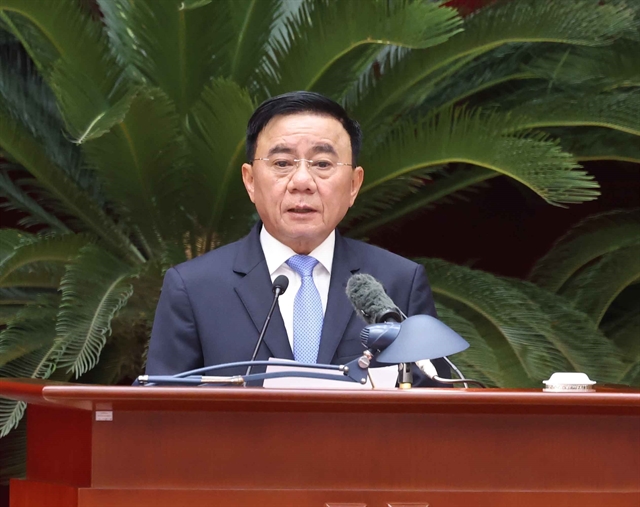 |
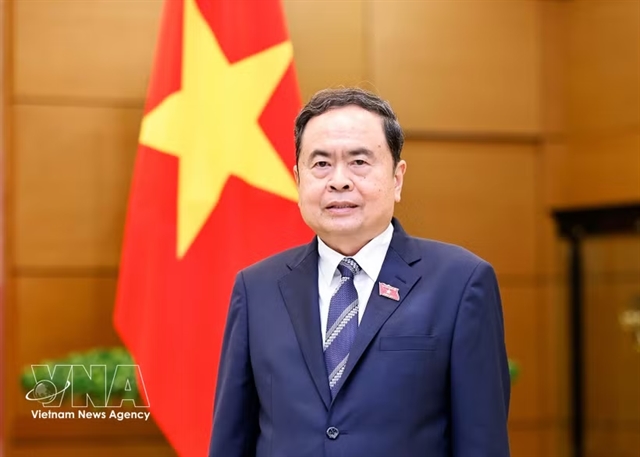
| Politburo member and permanent member of the Party Central Committee’s Secretariat Trần Cẩm Tú. — VNA/VNS Photo |
HÀ NỘI — Upcoming official visits by Politburo member and Permanent member of the Party Central Committee’s Secretariat Trần Cẩm Tú to Laos and Cambodia are expected to enhance trilateral relations, according to Deputy Minister of Foreign Affairs Nguyễn Mạnh Cường.
Cường said in an interview with the Vietnam News Agency ahead of the visits on April 9–10 that they will reinforce political trust, deepen substantive cooperation and elevate the comprehensive partnership among the three neighbouring countries.
According to the deputy minister, the trip will be made at the invitation of Vilay Lakhamphong, Permanent member of the Secretariat of the Lao People’s Revolutionary Party Central Committee, and Samdech Say Chhum, Vice President of the Cambodian People’s Party and Chairman of the party’s Standing Committee.
The visits carry special political and cultural significance, as they will be Tú’s first official trips to the neighbouring countries.
They also coincide with the traditional New Year festivals of Laos and Cambodia, Bunpimay and Chol Chhnam Thmey, which embody community solidarity and the longstanding bonds between the three nations. They also take place shortly after Việt Nam successfully held the 14th National Party Congress and completed the consolidation of its leadership apparatus, setting new strategic orientations for national development.
The trip follows the highly successful state visits by Party General Secretary Tô Lâm to Laos and Cambodia in February, demonstrating the continuity and consistency in Việt Nam's foreign policy. It also reflects efforts to translate high-level commitments into concrete actions, creating fresh momentum for trilateral cooperation.
Against the backdrop of complex and unpredictable global and regional developments, strengthening ties between Việt Nam, Laos and Cambodia is of strategic importance, particularly as the three countries are pursuing development, modernisation and deeper international integration.
Cường said the visits aim to uphold Việt Nam's policy of giving top priority to relations with its two neighbours, consolidate the foundation of political trust among the three Parties and States, and review the implementation of high-level agreements. They are also expected to enhance public awareness, especially among younger generations, of the traditional solidarity and friendship binding the three nations.
During the visits, Tú will hold discussions with senior Lao and Cambodian leaders on major orientations for advancing comprehensive cooperation, with a focus on effectively implementing existing agreements. Priority areas include infrastructure connectivity, border trade, education and training, and digital transformation, with a view to delivering tangible benefits for people in all three countries.
The deputy foreign minister noted that in recent years, Việt Nam's relations with Laos and Cambodia have continued to develop positively across all fields.
With Laos, political ties remain the cornerstone, underpinned by high mutual trust, regular high-level exchanges and close coordination at international forums. Following Lâm's state visit, the two sides quickly implemented 'strategic cohesion', a concept that reflects deep cooperation, from a development vision to specific policies.
Economic cooperation has also gained strong momentum, with bilateral trade reaching nearly US$3 billion in 2025, up almost 33 per cent year-on-year. Việt Nam is currently Laos’ third-largest trading partner and one of its leading investors, with 274 projects worth nearly $6 billion, particularly in transport connectivity, energy and logistics infrastructure.
Defence and security cooperation continues to be a key pillar, helping to maintain political stability and social order, especially in border areas. At the same time, sectors like education, culture, health care and agriculture have also achieved positive results, helping to improve people's living standards.
Meanwhile, relations between Việt Nam and Cambodia have also recorded robust progress. Political trust has been steadily reinforced, while economic cooperation has further expanded. Việt Nam is Cambodia’s third-largest trading partner globally and its biggest within ASEAN. Bilateral trade exceeded $11.3 billion in 2025, marking an increase of nearly 12 per cent compared to the previous year.
Việt Nam has 229 investment projects in Cambodia with a total registered capital of nearly $3 billion, focusing on key sectors such as agriculture, telecommunications, banking and energy.
Defence and security cooperation continues to be strengthened, playing an important role in ensuring stability in the shared border, while collaboration in culture and science and technology, as well as people-to-people exchanges, have been strongly promoted, especially in cooperation between bordering localities.
Cường stressed that relations between Việt Nam, Laos and Cambodia are built on three main pillars: strong political trust, expanding economic cooperation and increasingly close people-to-people ties. These form a solid foundation for the three countries to advance together amid deepening global integration.
He expressed confidence that the visits will generate new momentum for the three nations' ties in various areas.
Specifically, they will promote the effective implementation of high-level commitments and enhance economic connectivity, particularly in transport infrastructure, energy and digital transformation. The visits are also expected to expand cooperation in education and workforce development and further strengthen people-to-people exchanges, especially among the younger generation.
With the strong political will of the three Parties and States and longstanding solidarity among their people, the visits are expected to be a success, helping further consolidate and elevate the traditional friendship and comprehensive cooperation between Việt Nam, Laos and Cambodia for peace, stability, cooperation and sustainable development in the region. — VNA/VNS
Politics & Law
 Politics & Law
 Politics & Law
 Politics & Law
 Politics & Law
 Politics & Law
 Politics & Law
 Politics & Law
 Politics & Law
 Politics & Law
 Politics & Law
 Politics & Law
 Politics & Law
 Politics & Law
 Politics & Law