 Politics & Law

LANDMARK Launches ‘Destination CENTRAL’: A District-Wide Invitation to Explore the Dynamism, Luxury, and Soul of Central
1.
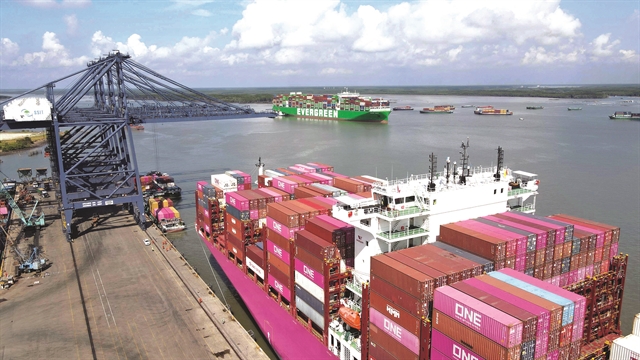 |
The SSIT Port in HCM City. Resolution 19 sets the goal that, by 2030, Việt Nam will be a developing country with modern industry and upper-middle-income status. — VNA/VNS Photo Đoàn Mạnh Dương |
Thu Trang
HÀ NỘI — As Việt Nam looks towards the next stage of its development, the question is no longer simply how fast the economy can grow, but where that growth will come from and how it can be sustained.
Science and technology, innovation, digital and green transformation, and human resource development are emerging as the new drivers of an economy seeking to become more productive, self-reliant and competitive.
Against this backdrop, sustainable development is increasingly seen as a way for businesses to work alongside the Government and local authorities to turn these ambitions into lasting growth and build a more innovative and integrated development model.
On July 29, the ruling Communist Party of Việt Nam adopted a resolution on renewing the national development model, highlighting institutional breakthroughs and modernised national governance as the foundation for creating new development capacity and setting out a shift from extensive growth to development based on productivity, science and technology.
The guiding principle running throughout the resolution, also known as Resolution 19, is to place people at the centre of development — as its subjects, beneficiaries and driving force. At the same time, it calls for a shift from a management and control mindset towards one focused on creating conditions for and leading development, with institutional breakthroughs given top priority.
Resolution 19 sets the goal that, by 2030, Việt Nam will be a developing country with modern industry and upper-middle-income status, and that by 2045 it will have escaped the middle-income trap and become a developed, high-income country.
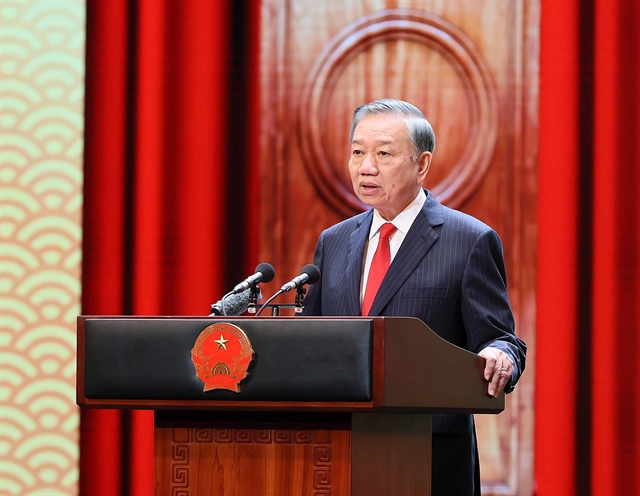
Party General Secretary and State President Tô Lâm said: "Renewing the development model is about renewing the way development achievements are created, distributed and enjoyed, placing the people and human beings at the centre as the subject, the goal and the driving force. Science, technology, data, innovation and human resources must become the principal driving forces.”
He added that every resolution must be followed by an action programme. An action programme must reflect the circumstances, pace of life and specific characteristics of each ministry, sector, locality and grassroots-level authority in order to be implemented effectively.
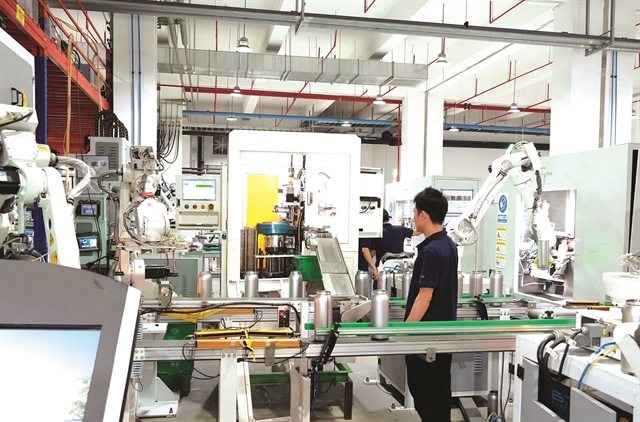 |
| Thousands of technical improvement initiatives have been applied, contributing to higher productivity and better product quality. — VNA/VNS Photo Đồng Thúy |
A decade to break through
Nguyễn Thanh Bình, head of the Faculty of Economics at the Academy of Policy and Development under the Ministry of Finance, said: “The Party and the State have clearly identified the next 10 years as a golden period for Việt Nam to promote economic growth and improve social conditions. This is a decisive opportunity, as Việt Nam is expected to officially enter a period of population ageing around 2036."
"As the demographic structure changes, the workforce participating in the economy will decline, which will have a considerable impact on potential growth. We therefore have only about a decade in which to make a breakthrough,” Bình added.
Việt Nam’s GDP per capita currently stands at more than US$5,000. To achieve the goal of becoming a high-income country by 2045, Việt Nam will need to maintain continuous annual growth of between 7 and 8 per cent over the next decade.
If the opportunity is fully leveraged, the economy could raise GDP per capita to between $10,000 and $12,000 over the next 10 years, with total GDP consequently reaching approximately $1–1.2 trillion.
“This is a challenging but entirely achievable goal if we work together to implement three strategic pillars: developing high-quality human resources, promoting comprehensive digitalisation and pursuing resolute institutional reform,” Bình said.
People at the centre
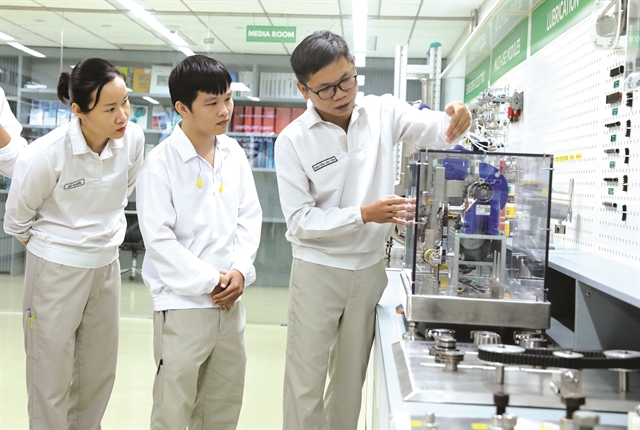 |
| Technology guidance and transfer to Vietnamese staff at the Bông Sen Plant in the Thăng Long Industrial Park 2 in Hưng Yên Province. — VNA/VNS Photo Mạnh Khánh |
Economist Đoàn Anh Tú from Khánh Hoà University said he believed that the new growth model, based on productivity, knowledge and technology as its central and decisive factors, would shape Việt Nam’s development. At the heart of the transition to this new growth model and the creation of new development momentum would be the smart economy and AI.
The key point is that science and technology, innovation and digital transformation must be genuinely converted into productivity, treated as levers for creating material wealth and improving people’s living standards, according to Tú. At the same time, the new model places people at the centre: they are not merely a resource to be exploited, but the ultimate purpose of all development policies.
Looking at the broader strategic significance of the model, Tú argued that transforming the growth model would be a historic undertaking that would determine the country’s destiny for many decades to come.
In particular, the new model would enable Việt Nam to participate more deeply in global value chains in segments with high added value. It could emerge as a regional and global centre for design, chip manufacturing, data centres and research and development.
By placing people at the centre and making their well-being the highest objective of development, the new model would help create a highly adaptable society better prepared to confront and overcome the challenges of the future.
The resolution stresses the need to master core, foundational and strategic technologies. Under the national scheme, Việt Nam aims to master at least 10 core technologies to support the development of strategic technologies by 2030, with priority given to fields such as artificial intelligence, semiconductors, robotics, unmanned aerial vehicles, 5G and blockchain.
It sets out seven groups of tasks and solutions, covering institutions, national governance and the improvement of the political system; the economy; society; culture; the environment; national defence and security; and foreign affairs.
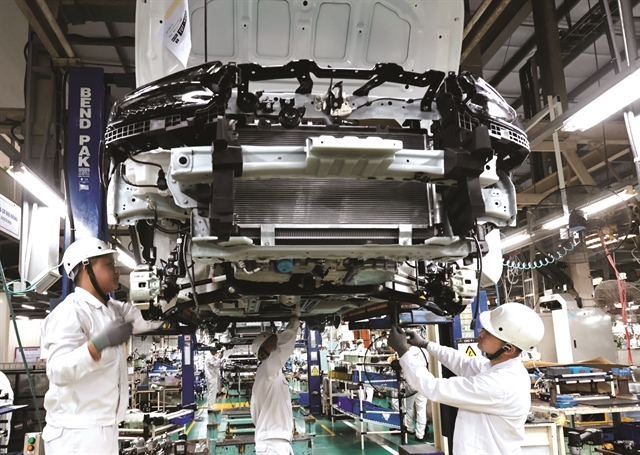 |
| A car assembly line at the Honda Việt Nam Plant in Phú Thọ Province. The next 10 years are identified as a golden period for Việt Nam to promote economic growth. — VNA/VNS Photo Trần Việt |
Turning policy into productivity
According to experts, the success of the shift to the new development model hinges on three factors: institutions and governance, under which the nation's vision must be genuinely translated into productivity and quality; the dual role of the developmental State and the market, with the private economy identified as the most important driver; and foreign investment that is tied to technology transfer in order to enhance endogenous capacity.
Trần Mạnh Báo, vice chairman of the Việt Nam Veterans Business Association and the Việt Nam Science and Technology Business Association, said the country needed to shift from manual labour to creative work. He stressed the importance of restructuring the development strategy around science and technology.
“If the relevant guidelines and resolutions are put into practice in a substantive and vigorous manner, the economy will certainly achieve a remarkable breakthrough, and we will accomplish the goals of the new era,” Báo said.
Specifically, he added that institutions must take the lead and be translated into practice. For the Party’s resolutions to take root in society, the State must institutionalise them through clear mechanisms, policies and legal frameworks. Only then would enterprises and the people have a firm basis for implementation.
According to a report by the Ministry of Science and Technology, last year Việt Nam had 53 science and technology organisations operating at regional and international levels, as well as six high-tech parks. High-tech products accounted for nearly 50 per cent of total exports. Việt Nam ranked 44th out of 139 countries in the Global Innovation Index, while its start-up ecosystem ranked 55th worldwide.
By the end of March this year, 5G coverage had reached 91.9 per cent of the population, with more than 22.4 million subscribers. Việt Nam ranked 14th globally in terms of mobile Internet speed.
Obstacles ahead
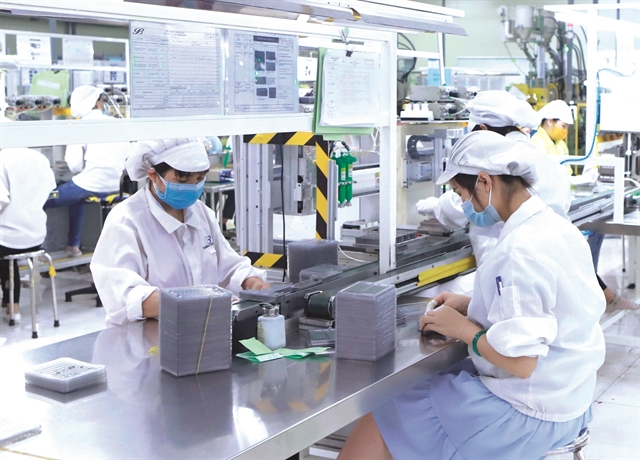 |
| A new growth model based on productivity, technology and people will shape Việt Nam’s development. — VNA/VNS Photo Nguyễn Thảo |
Associate Professor Lâm Quang Vinh, head of the Department of Science and Technology at Việt Nam National University HCM City, said there were three major obstacles requiring focused attention.
First is the shortage of suitable personnel. Việt Nam needs more leading experts in strategic fields such as semiconductors, artificial intelligence, biotechnology and new energy.
Second are mechanisms and policies. Many existing processes and procedures remain slow and have yet to keep pace with the speed of innovation.
Third is investment in research. The proportion of investment in research and development remains low. Stronger incentive policies are needed to encourage investment in research, together with the development of seed funds to support promising ideas and projects from their earliest stages.
Faculty head Bình said the digital transformation of state administrative management generally would go through three stages: establishing procedures, building databases and promoting the application of technology.
“Việt Nam is currently in the second stage, namely beginning to collect and synchronise data, before entering a period of vigorous promotion over the next five years,” Bình said.
"By international standards, the pace of administrative digitalisation in Việt Nam has been relatively fast, thanks to the advantages of a young population and the Government’s strong determination. The legal framework still needs to be further improved to keep pace with reality.”
As the country moves towards data-driven governance, the criteria for assessing the performance of public agencies must shift from qualitative to quantitative measures based on specific key performance indicators.
For projects that generate direct revenue, such as expressways, airports and industrial parks, measuring economic effectiveness would be relatively straightforward. For projects serving social purposes, such as healthcare, education and national defence, however, their impact would be indirect and long-term.
“We therefore need to apply digitalisation and artificial intelligence to quantify work outcomes. The most accurate measurements should be based on genuine public satisfaction, the time taken to process applications and the costs incurred, rather than reports that are merely a formality. This will help ensure that national resources are allocated in a scientific manner,” Bình said.
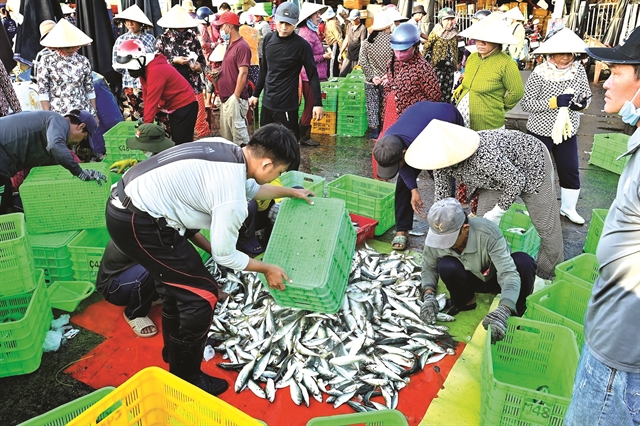 |
| Fishery ports are bustling as the southern fishing season gets under way. — VNA/VNS Photo Hồng Hiếu |
Assoc Prof Vinh expressed strong confidence in Việt Nam’s capabilities.
“I place particular trust in intellectuals, scientists, educational and training institutions, and technology entrepreneurs," he said.
"They are the pioneering force in creating knowledge and new technologies and in training the people needed to use them. They will serve as the engine driving breakthroughs and strengthening Việt Nam’s position as a regional and international centre of innovation." — VNS
Politics & Law
 Politics & Law
 Politics & Law
 Politics & Law
 Politics & Law
 Politics & Law
 Politics & Law
.jpg) Politics & Law
Politics & Law
 Politics & Law
 Politics & Law
 Politics & Law
 Politics & Law
 Politics & Law
 Politics & Law
 Politics & Law