 Politics & Law

Oriental Residence Bangkok Awarded One MICHELIN Key for the Third Consecutive Year
1.
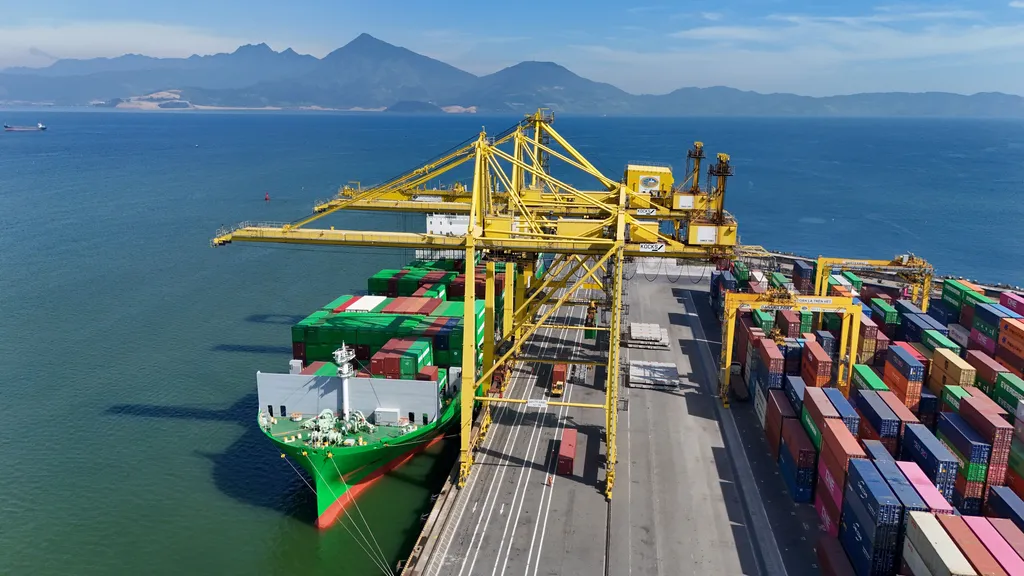 |
| Tiên Sa Port, the sea gateway of the central city of Đà Nẵng. — VNA/VNS Photo Xuân Quý |
Looking back on nearly a century since the Communist Party of Việt Nam (CPV) was founded and began leading the country’s revolutionary cause goes beyond simply revisiting the past. It offers an opportunity to reflect on a long national journey of struggle, nation-building and development – and to draw lessons that may help guide the country through the challenges ahead.
As Việt Nam draws closer to two historic centenary milestones – the centenary of the founding of the Communist Party in 2030 and the centenary of national independence in 2045 – the lessons of history are being translated into new sources of strength for the new era
Vũ Minh Giang, PhD, vice chairman of the Việt Nam Association of Historical Sciences, says any review of the Party’s century-long leadership must first address a fundamental question: what was the source of the strength that enabled the country to overcome periods of extraordinary difficulty, including moments when its very survival was at stake?
The project to review 100 years of the Party’s history, according to Giang, should therefore be understood as an undertaking with a genuinely long-term, even century-spanning, perspective. Its purpose is not simply to catalogue achievements, but to identify the deeper sources of strength that empowered the Party to lead the country through successive trials – beginning with the objective of placing an independent Việt Nam on the world map – and ultimately helped it attain its present stature.
At the heart of that history lies the original mission of the CPV: to serve the nation, first and foremost by securing national liberation and independence, and ultimately by building a strong and prosperous country.
From that mission emerged one of the clearest lessons confirmed by historical experience: the ability to mobilise the strength within the nation while making full use of the forces and opportunities of the times. The combination of national strength and the strength of the era allowed Việt Nam to navigate circumstances that at times appeared exceptionally perilous, strengthen its own national capacity and enhance its standing in the international community.
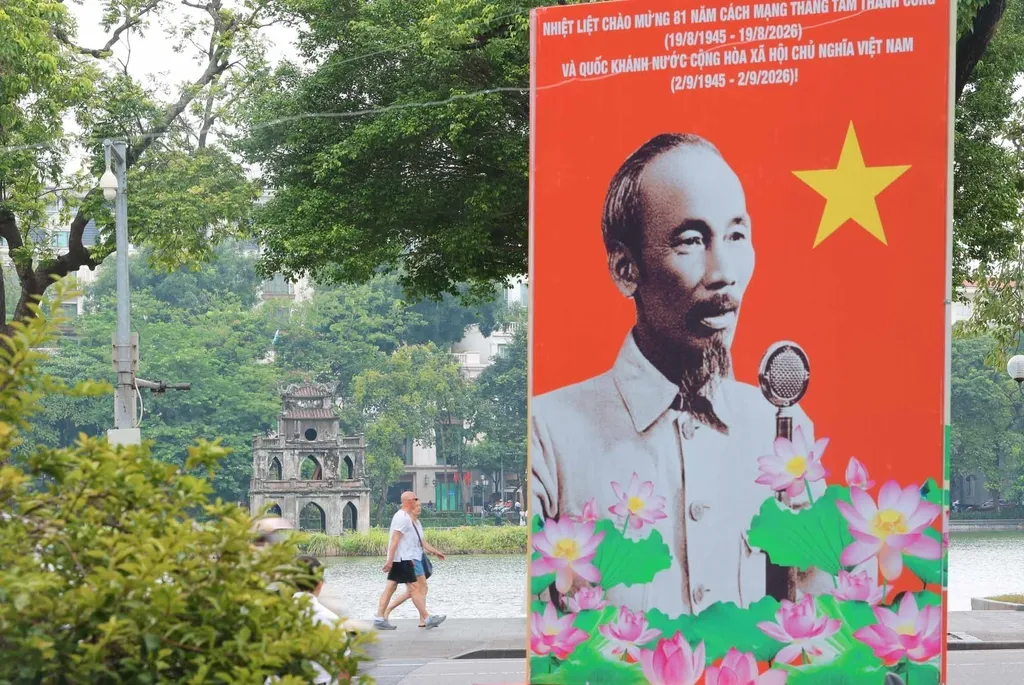 |
| In the days leading up to the 81st anniversary of National Day on September 2, Hà Nội is adorned with vibrant billboards, posters and banners of various sizes. VNA/VNS Photo Hoàng Hiếu |
Seen from this perspective, a historical review cannot stop at recording what has been accomplished. The past must be distilled into lessons capable of informing present decisions, helping the country respond to emerging challenges and anticipate those that may arise in the future.
Giang argues that the ultimate value of such reflection lies not simply in nurturing national pride and confidence, but in discovering the principles behind past successes and identifying the lessons that should continue to be applied to generate new strength for the country.
Among those lessons, one principle retains its enduring significance: development must rest on the strength of the nation and place the interests of the country and its people at the centre.
This is not a lesson confined to a single historical period but remains a "lodestar" for development today – expressed in the simple but profound idea that "what benefits the people should be resolutely pursued, while what does not serve their interests should be avoided".
History, in this sense, is not a closed chapter. It becomes a reservoir of experience from which the country can draw as it enters a new stage of development.
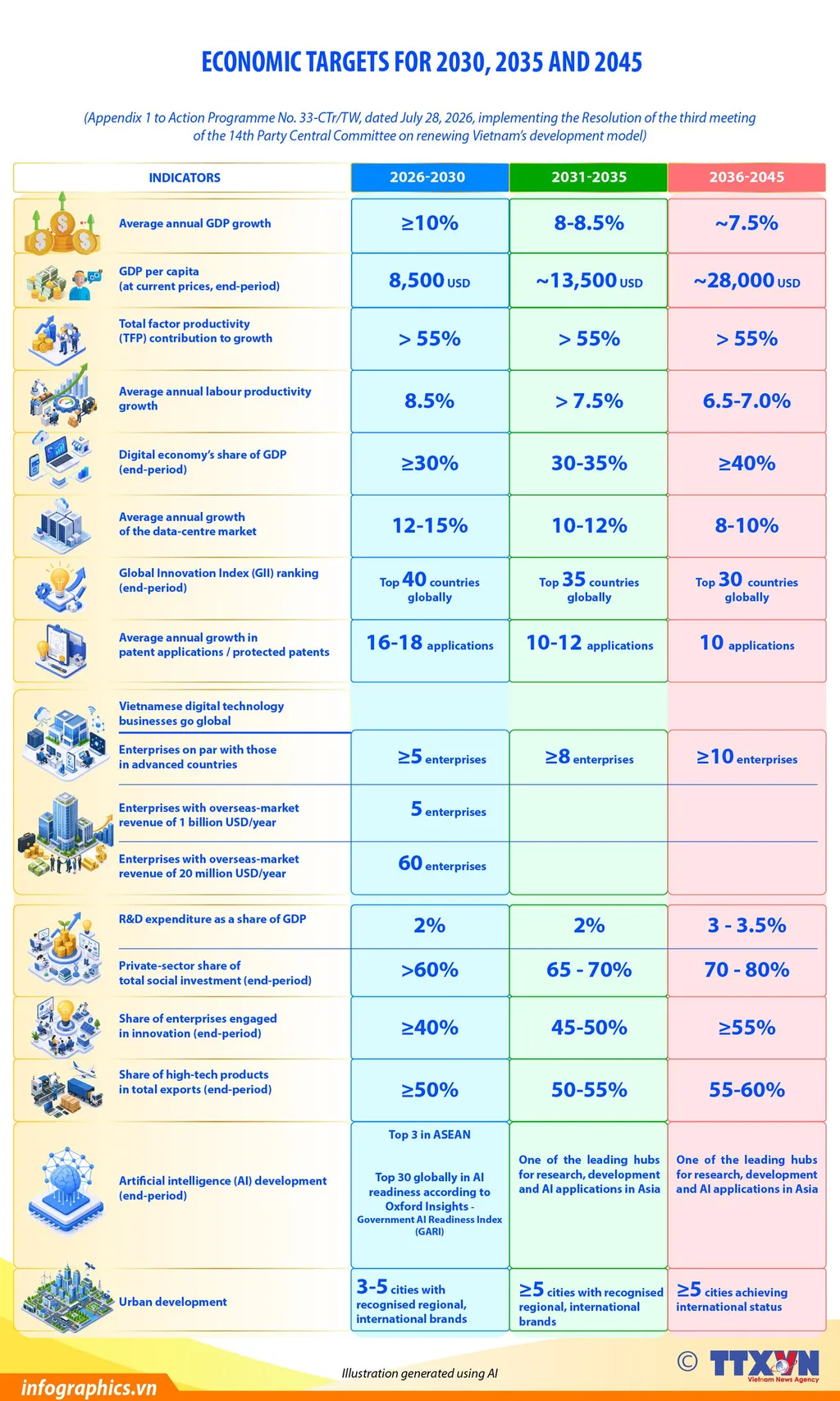 |
| The CPV's Action Programme 33, dated July 28, 2026, sets specific economic targets under the Resolution of the 14th Party Central Committee on reforming Việt Nam's development model, including average annual GDP growth of at least 10 per cent in 2026–2030, 8–8.5 per cent in 2031–2035, and around 7.5 per cent in 2036–2045. — VNA/VNS Infographic |
A new era
If history provides lessons about the sources of national strength and the choices that shape a country's path, the challenge today is to convert those lessons into practical momentum and determine a development model suited to new conditions and new national aspirations.
Phạm Hồng Tùng, PhD, chairman of the Scientific and Training Council of the Institute of Vietnamese Studies and Development Sciences under the University of Social Sciences and Humanities, Việt Nam National University Hà Nội, stresses that whenever a country enters a new historical phase, choosing the right development model is of exceptional importance to its future.
Việt Nam’s own history offers ample evidence. After regaining independence following centuries of northern domination, successive generations gradually shaped institutions and models of governance suited to the circumstances of their time.
The relocation of the capital from Hoa Lư to Đại La–Thăng Long under the Lý Dynasty in 1010 was no mere administrative decision. It represented a strategic vision of creating a durable political and economic centre from which the country could develop over the long term.
Centuries later, following the victory of the Lam Sơn uprising, the challenge of constructing an appropriate system of governance again came to the fore and was gradually consolidated under the Early Lê Dynasty.
History also offers lessons in the opposite direction. When an established development model reaches its limits but fails to adapt in time, a country can become trapped in stagnation.
The latter half of the 19th century offers a sobering example. The traditional monarchical model no longer possessed sufficient capacity to respond to profound changes in the international environment, while weaknesses in education, knowledge and the predominantly subsistence-based economy became increasingly significant constraints on national development.
Such experiences demonstrate that the choice of a development model is far more than an abstract theoretical question. It can directly influence the destiny of a nation.
Every historical period imposes a requirement to recognise the limits of existing arrangements and adjust, renew or transform them in response to changing domestic conditions and the broader currents of the age.
After nearly four decades of Đổi mới (Renewal), Việt Nam has achieved historic gains. Its national potential has expanded, its resilience has strengthened, and its international position has continued to rise.
Yet the world is now entering a new phase of profound transformation. Globalisation is becoming increasingly intertwined with the Fourth Industrial Revolution, while competition is intensifying over growth, sustainability, scientific and technological capacity, innovation and the ability to integrate into global networks.
That changing landscape necessitates a development model capable of responding to the demands of the times.
Such a model must inherit the nation's rich cultural and civilisational traditions while adapting to contemporary realities. At its core must be Việt Nam's people, Vietnamese intelligence and Vietnamese culture, with development ultimately serving people’s happiness, national independence and freedom.
At the same time, domestic resources must increasingly be complemented by science and technology, innovation, cultural strength, dialogue and international integration.
In this process, Việt Nam must become an active, organic and worthy participant in an increasingly interconnected world – contributing to the shaping of that world rather than simply responding to it.
Engines of growth
Within this development architecture, people and human resources occupy a particularly consequential position.
Tùng notes that global competition is increasingly determined by the speed at which scientific knowledge advances, the pace at which technological cycles become shorter, and the amount of intellectual value embedded in products and services.
Science and technology and innovation have consequently become decisive sources of national competitiveness. At the same time, they impose an urgent requirement: Việt Nam must prepare generations of workers capable not only of using new technologies but of mastering, creating and advancing them.
The significance of this task becomes especially clear when viewed against the horizons of 2030 and 2045.
Those who will shape the country at those milestones are sitting in classrooms and lecture halls today. University students today will form an important part of the workforce building the country towards 2030. Today’s schoolchildren will be among the principal actors in Việt Nam's development journey towards 2045.
Preparing high-quality human resources is therefore, in the deepest sense, preparing the country's development capacity for the coming decades.
This makes a breakthrough in education and training not the sole responsibility of the education sector, but an undertaking that requires the engagement of the entire political system and society – all aimed at equipping younger generations with the knowledge, capabilities and creative confidence needed to assume their role as the future owners and builders of the country.
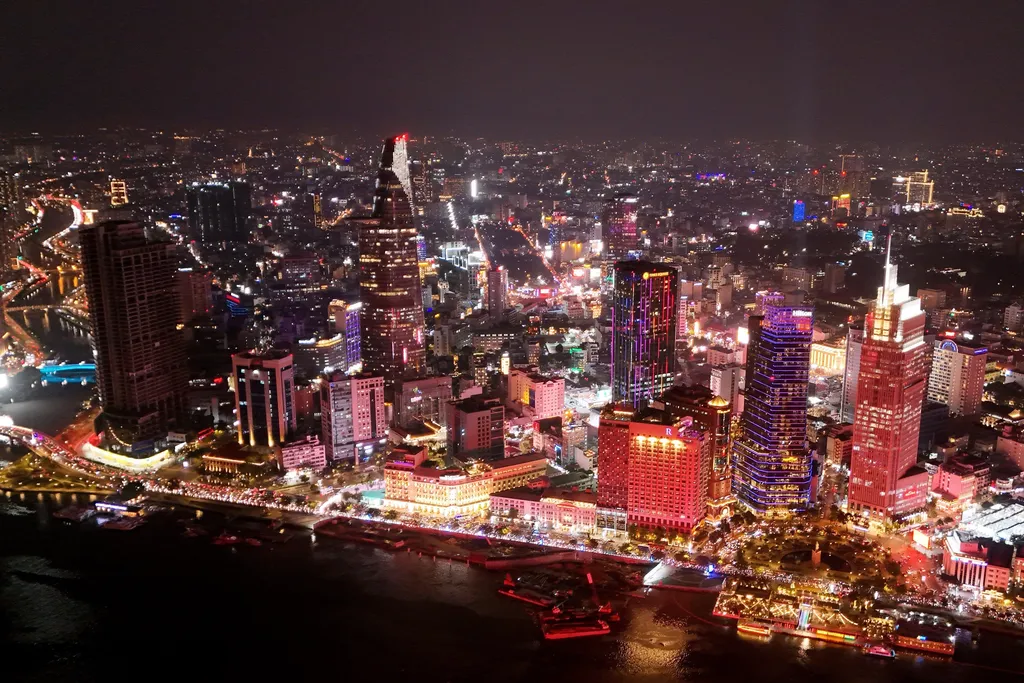 |
| METROPOLIS: The bustling downtown of HCM City by night. VNA/VNS Photo |
Alongside education and technology, culture too must have a place in the development model.
In an era of extensive international integration, preserving cultural identity is only one part of the equation. Equally important is enabling the finest values of Vietnamese culture to flourish, reach beyond national borders and transform from heritage into a source of endogenous strength in global competition and engagement.
For these sources of strength to be fully mobilised, institutions remain of particular importance.
Institutional strength is closely connected with public trust in the Party and State, as well as the quality of leadership and cadres at every level, Tùng says.
Strategic leadership, in turn, requires both a long-term vision and the ability to address immediate challenges in ways that maximise opportunities and development resources.
A country may possess considerable resources, but without institutions capable of bringing them together, those resources can remain fragmented.
Tùng argues that when the aspirations and efforts of agencies, businesses, citizens, localities and the nation as a whole can be brought together, the Vietnamese people can become a dynamic, creative and unified force.
That capacity for collective action may ultimately prove one of the most decisive advantages in the new era.
The demand for new growth momentum also resonates beyond Việt Nam’s borders. Marcelo Rodriguez, head of the External Relations Commission of the Communist Party of Argentina and director of the Centre for Marxist Studies, sees Việt Nam’s current development trajectory as an effort to translate political direction and historical experience into stronger governance, technological capacity and national self-reliance.
Speaking to Vietnam News Agency correspondents in Buenos Aires ahead of Việt Nam’s National Day on September 2, Rodriguez said the orientations set out carried particular significance for strengthening governance, promoting innovation and technological application, and enhancing the country’s capacity for self-reliance.
He particularly highlighted Party General Secretary and State President Tô Lâm’s emphasis on identifying and removing obstructions to development.
For Rodriguez, this forward-looking capacity is increasingly important as new technologies reshape productivity and production methods. — VNS
Politics & Law
 Politics & Law
 Politics & Law
 Politics & Law
 Politics & Law
 Politics & Law
 Politics & Law
 Politics & Law
 Politics & Law
 Politics & Law
 Politics & Law
 Politics & Law
 Politics & Law
 Politics & Law
 Politics & Law