 Politics & Law
PM Hưng meets with Cambodian People's Party, Senate leader Hun Sen
1.

|
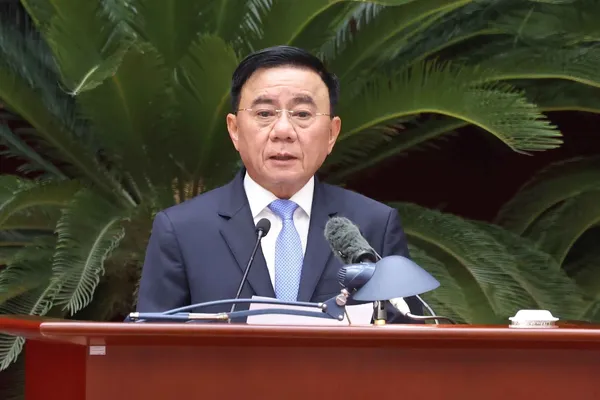
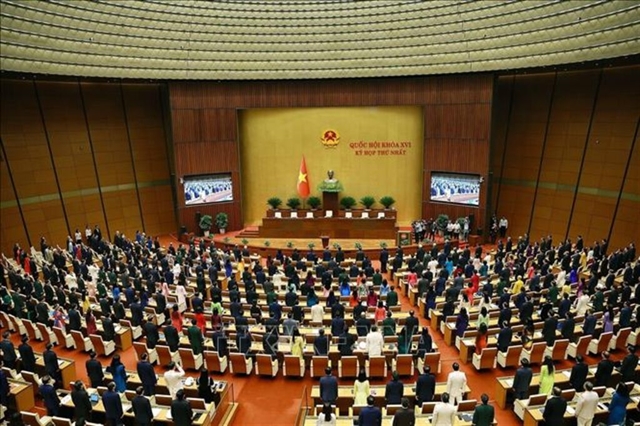
| Minister of Justice Hoàng Thanh Tùng presents the Government’s proposal on the draft revised Capital Law and the draft National Assembly resolution on coordination mechanisms and special policies to enhance the prevention and settlement of international investment disputes. — VNA/VNS Photo Dương Giang |
HÀ NỘI — Lawmakers on Wednesday afternoon discussed the draft revised Capital Law and a draft National Assembly (NA) resolution on coordination mechanisms and special policies to improve the prevention and settlement of international investment disputes, as part of the first session of Việt Nam’s 16th NA.
Presenting the Government’s proposal on the revised Capital Law, Minister of Justice Hoàng Thanh Tùng said the revision is necessary to promptly institutionalise the Party’s guidelines while addressing bottlenecks that have hindered Hà Nội’s development in recent years.
The draft law comprises nine chapters and 36 articles, 18 fewer than the current version, and aims to establish a superior, stable and forward-looking institutional framework commensurate with the capital’s role and position.
Adopting a new approach, the draft emphasises extensive decentralisation, granting 192 authorities to the Hà Nội municipal government to enhance proactiveness, creativity and accountability. It also introduces new policies, simplifies administrative procedures and designs specific mechanisms for financial and human resources to ensure effective implementation.
Delivering a verification report, Chairman of the NA’s Committee for Legal and Judicial Affairs Phan Chí Hiếu said the revised law is intended to create an exceptional institutional framework that strengthens competitiveness and drives Hà Nội’s rapid and sustainable development in the new phase. He noted that the draft had been thoroughly prepared with sufficient documentation for NA consideration.
The committee expressed strong support for decentralisation in three key areas: improving special institutional frameworks and enhancing the capital’s autonomy; organising modern and sustainable development space; and mobilising and efficiently allocating resources to promote innovation and regional linkages.
However, it recommended that the Government continue reviewing and clearly defining regulatory authority among relevant bodies, clarify conditions and oversight mechanisms for urban development, finance, investment and resource policies, and supplement provisions on regional connectivity. It also called for clearer regulations on accountability, reporting timelines, supervision and inspection.
Lawmakers also agreed on the need for an NA resolution on coordination mechanisms and special policies to improve the handling of international investment disputes, aiming to institutionalise Party guidelines and address practical shortcomings.
In recent years, new international investment disputes have continued to increase in both number and value, posing potential risks to the economy, national reputation and investment environment without effective coordination.
The draft resolution consists of five chapters and 20 articles. A notable feature is the establishment of coordination mechanisms not only among Government agencies but also with other bodies such as the courts, procuracies and the State Audit.
Regarding special policies, the draft proposes enhanced allowances to ensure adequate resources. Civil servants at the legal representation agency could receive monthly allowances of up to 300 per cent of their current salary, while those in ministries, sectors and localities may receive up to 100 per cent. Officials assigned to inter-agency task forces would also be entitled to full salary and additional allowances during their involvement.
Importantly, the draft introduces protection mechanisms for officials, including exemption or reduction of liability for heads of agencies and directly involved personnel if they have fully complied with regulations, but losses still occur.
Chairman of the NA’s Economic and Financial Committee Phan Văn Mãi said the committee broadly agrees on the necessity of the resolution to address current challenges.
Most members supported assigning the state agency in charge of foreign investment as the lead body in cases where the directly involved agency or the entity whose measures are challenged is a litigation body. This, they noted, would help ensure the independence of judicial proceedings and avoid conflicts of interest.
However, the committee stressed the need for binding mechanisms requiring litigation bodies to provide information and documents, preventing the lead agency from becoming merely nominal or overly dependent on others.
For the legal representation agency, the reviewing body recommended clarifying its coordination with the lead agency to avoid overlaps or gaps in responsibility, while defining it as the core body responsible for legal expertise. It also called for clearer accountability mechanisms and sanctions for agencies failing to fulfil coordination obligations.
Regarding the proposed preferential policies, the committee acknowledged the need to attract and retain high-quality human resources in a highly specialised and legally risky field. Nevertheless, it urged careful assessment of the State budget’s capacity and alignment with other specialised sectors in the public system. — VNS
Politics & Law
 Politics & Law
 Politics & Law
 Politics & Law
 Politics & Law
 Politics & Law
 Politics & Law
 Politics & Law
 Politics & Law
 Politics & Law
 Politics & Law
 Politics & Law
 Politics & Law
 Politics & Law
 Politics & Law