 Politics & Law
Vietnamese Prime Minister meets Cambodian National Assembly President
1.
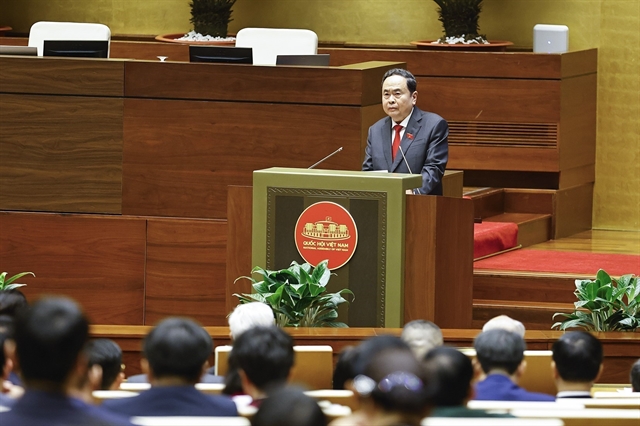 |
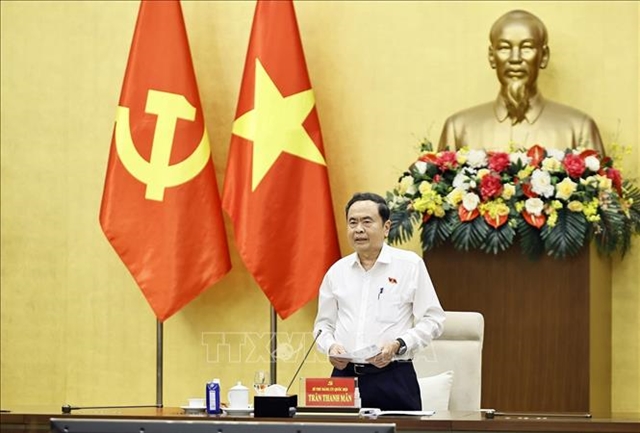
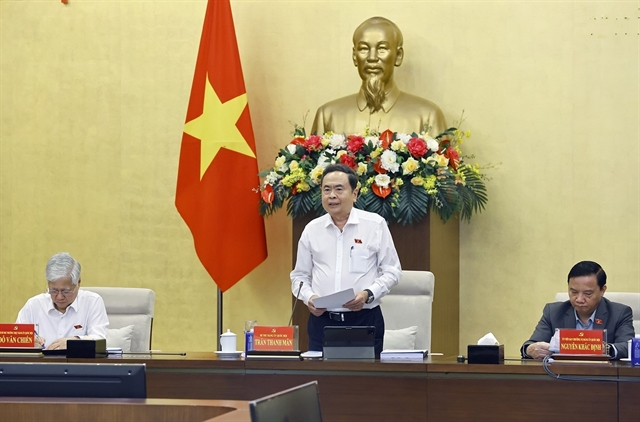
| Chairman of the 15th National Assembly Trần Thanh Mẫn delivers the opening speech at the first session of the 16th National Assembly. — VNA/VNS Photo Doãn Tấn. |
By Nguyễn Hằng
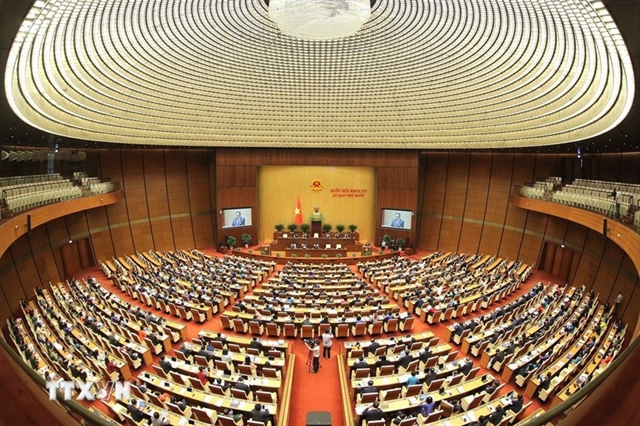
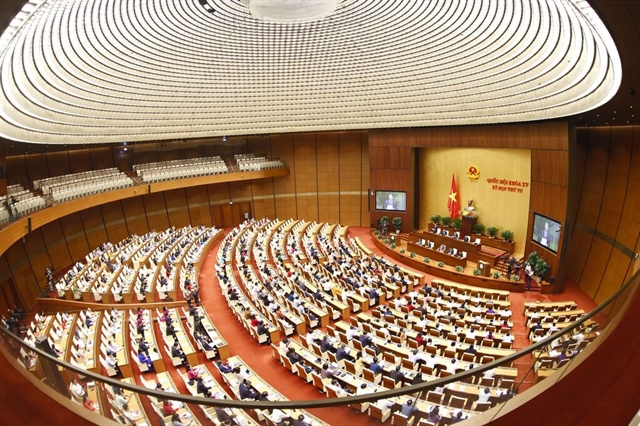
HÀ NỘI — The 16th National Assembly’s first session, an occasion of particular significance, marking not only the beginning of a new term but also laying the groundwork for a new phase in the country’s development, was officially opened on Monday morning at Diên Hồng Hall in the National Assembly House in Hà Nội.
In his opening remarks, Chairman of the 15th National Assembly, Trần Thanh Mẫn, said that the elections for deputies to the 16th National Assembly and People’s Councils at all levels for the 2026-31 term had been a resounding success.
This outcome, he said, reflected meticulous preparation, professional organisation and the strong support and consensus of voters nationwide.
Together with the successful 14th National Party Congress and the second plenum of the 14th Party Central Committee, the election results reaffirm the public’s confidence in the Party and the State, while further enhancing Việt Nam’s image and standing on the international stage.
On behalf of newly elected deputies, the Chairman expressed profound gratitude to voters across the country, as well as to current and former leaders of the Party, State and the Việt Nam Fatherland Front and to previous National Assembly deputies, particularly those of the 15th tenure, whose contributions left a lasting mark.
Despite numerous challenges, the National Assembly had continued to innovate, advancing legislative thinking, promoting science and technology, innovation, digital transformation and artificial intelligence, and reinforcing its role as an institution that leads in shaping the legal framework, removes bottlenecks and mobilises resources for development.
He highlighted that, after 40 years of Đổi Mới (Renewal), Việt Nam has achieved significant milestones.
The economy has maintained strong growth over many years, reaching a size of US$514 billion and ranking 32nd globally.
Average growth over the past five years has stood at 6.2 per cent annually, with 2025 recording 8.02 per cent.
Per capita income has surpassed $5,000, while the multidimensional poverty rate has fallen to 1.3 per cent.
The country has deepened its global economic integration, strengthened its international standing, maintained national defence and security, and steadily improved living standards.
A range of major strategic policies has been implemented in a coordinated and robust manner, creating new momentum and development space.
Administrative boundary adjustments, organisational restructuring of the political system, and the rollout of a streamlined two-tier local Government model have brought notable improvements in the operation of the State apparatus.
To successfully implement the Resolution of the 14th Party Congress, the Politburo and the Secretariat have issued a series of strategic directives on socio-economic development, the building of a socialist rule-of-law State, and reforms to the political system.
These include measures to promote science, technology, innovation and national digital transformation, laying the foundation for rapid and sustainable development in the coming period.
Most recently, Conclusion No 18, issued on April 2, 2026 by the Party Central Committee, outlined plans for socio-economic development, national finance, public debt management and medium-term public investment for 2026-30, with a target of achieving double-digit growth.
Against this backdrop, Mẫn stressed that the 16th National Assembly “must build on the achievements of previous terms, uphold a strong sense of responsibility and political resolve, and embrace modern governance thinking.”
“Deputies should demonstrate critical, objective and constructive analysis, possess strong legislative skills and long-term vision, and be capable of addressing emerging challenges in an era of rapid scientific and technological advancement.”
Laws, he emphasised, must not only be “sound on paper” but also “effective in practice”.
During this session, the National Assembly will consider and decide on the organisational structure of the state apparatus and elect or approve senior personnel.
“This is a central task of the session, directly determining the quality and effectiveness of the State machinery throughout the term,” he added.
The NA will also review reports on socio-economic performance, public finance and the State budget, including assessments of 2025 and the early months of 2026, and propose breakthrough, feasible solutions in response to an increasingly complex and unpredictable global environment, particularly the impact of conflicts in the Middle East.
These efforts aim to ensure the successful implementation of the 2026-30 development plan from the outset of the term.
In addition, deputies will approve the 2024 State budget settlement and consider key five-year plans covering socio-economic development, national finance, public debt, and medium-term public investment.
The session is also expected to review and pass eight laws and one resolution, alongside resolutions on the NA’s 2027 oversight programme, the establishment of a thematic supervisory delegation, and the general resolution of the first session of the 16th NA.
Emphasising that the country stands at a historic turning point, Mẫn said the responsibilities placed on the NA and its deputies are both immense and honourable.
The Party and the people expect deputies to embody intellect, integrity and dedication; to act with courage, accountability and a steadfast commitment to national interests, thereby upholding the proud 80-year tradition of Việt Nam’s NA.
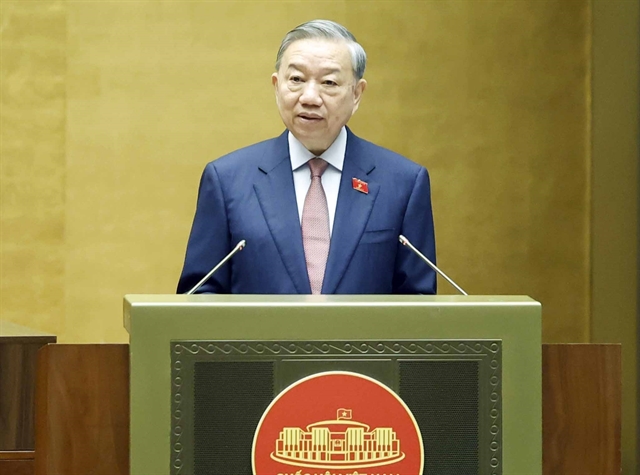 |
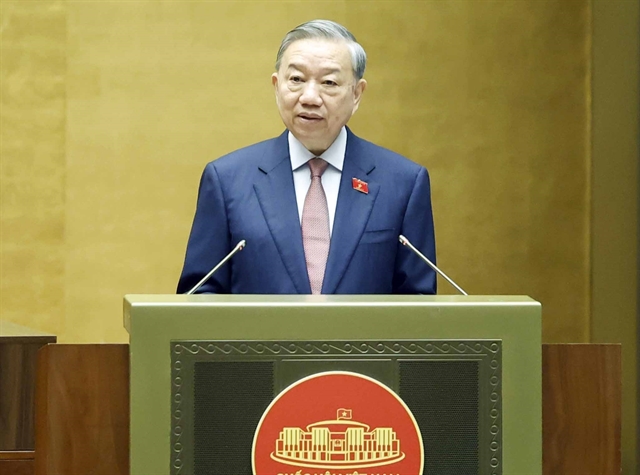
| Party General Secretary Tô Lâm speaks at the opening session of the first session of the 16th National Assembly. — VNA/VNS Photo Thống Nhất |
Four key priorities
Speaking at the opening session, Party General Secretary Tô Lâm said the meeting aimed at consolidating the State apparatus in accordance with the Constitution, while also institutionalising the Resolution of the 14th National Party Congress.
This would provide the legal and policy foundations for a new phase of development, one that is rapid, sustainable, culturally distinctive, and driven by science, technology, innovation and the collective aspiration of the nation, he said.
On behalf of the Party Central Committee, he warmly congratulated the successful election of deputies to the 16th National Assembly and People’s Councils at all levels for the 2026–31 term, as well as those elected.
While describing the mandate as a great honour, he underscored that it also carries profound responsibility to the Party, the people and the nation’s future.
He called on the 16th NA to focus on four key priorities.
First, the NA is required to fundamentally reform legislative work and build a modern, coherent, stable and practical legal system that drives development.
Laws must provide a robust framework for socio-economic progress, protect human and citizens’ rights and foster innovation.
Existing shortcomings - overlaps, inconsistencies and impractical provisions, must be addressed to reduce compliance costs and remove barriers for citizens, businesses and State agencies.
Second, the NA is told to elevate the effectiveness of supreme oversight, ensuring it is substantive, incisive and outcome-oriented.
Oversight should not merely identify shortcomings but must help resolve them, remove bottlenecks, anticipate risks and improve governance.
Third, the NA has to strengthen political resolve and strategic vision in deciding major national issues.
Decisions must be timely, accurate and aligned with long-term national interests, particularly in areas such as public investment and national target programmes, where delays could mean missed strategic opportunities.
Fourth, the NA was asked to continue reforming the organisation and operations of the NA to make it more modern, professional, responsive and closely connected to the people.
This includes greater use of digital technologies, more flexible working methods, and enhanced engagement with voters, businesses and experts.
He stressed that the NA must be more closely connected with the people; expand channels for receiving and listening to the opinions of voters, the people, the business community, intellectuals, and scientists; enhance openness and transparency in all its activities; build a digital, modern, and intelligent NA, but above all, it must be a NA that is close to the people, understands the people, works for the people, and acts in the interests of the people.
“When the people's voices are heard, when their opinions are truthfully reflected, and when decisions stem from real-life situations, the National Assembly will be stronger, the State will be more stable, and social trust will be greater,” Lâm said. — VNS
Politics & Law
 Politics & Law
 Politics & Law
 Politics & Law
 Politics & Law
 Politics & Law
 Politics & Law
 Politics & Law
 Politics & Law
 Politics & Law
 Politics & Law
 Politics & Law
 Politics & Law
 Politics & Law
 Politics & Law