 Politics & Law

Solcis launches open compliance layer for AI agents on NVIDIA OpenShell
1.
|
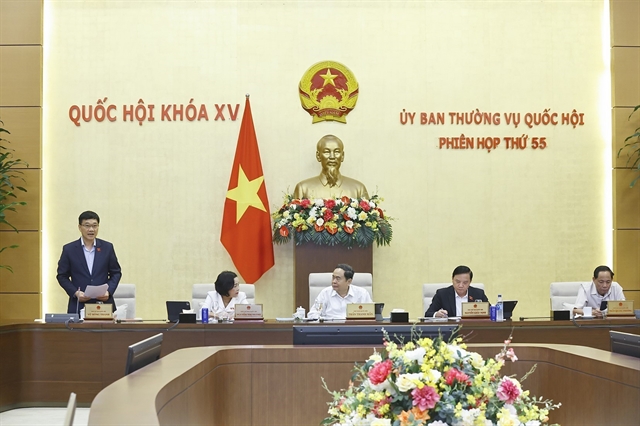
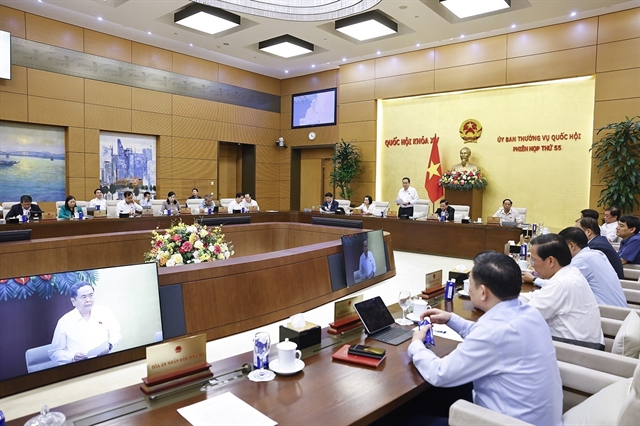
| National Assembly Vice Chairman Vũ Hồng Thanh speaks at the session. — VNA/VNS Photo Doãn Tấn |
HÀ NỘI — The National Assembly (NA) Standing Committee on Thursday reviewed a draft resolution on coordination mechanisms and special policies for the prevention and settlement of international investment disputes, continuing discussions from its 55th session.
Presenting the explanatory memorandum, Minister of Justice Nguyễn Hải Ninh said the draft comprises six chapters and 22 articles, covering coordination mechanisms, resource assurance policies, and the organisation and operation of the Centre for Prevention and Settlement of International Investment Disputes.
The resolution aims to improve existing mechanisms and address current shortcomings, as international investment disputes are increasing in both number and value, posing risks to the economy and investment environment if coordination is ineffective.
The draft also proposes preferential policies to attract high-quality personnel. Public employees working in dispute prevention and settlement, as well as those seconded to the centre, would receive a monthly allowance equivalent to 100 per cent of their current salary. Those directly involved in handling cases, as decided by the Minister of Justice, could receive an additional allowance of up to 300 per cent.
Salaries for contracted experts would be set at market levels, capped at no more than 100 times the base salary.
In its preliminary review, Chairman of the Economic and Financial Committee Phan Văn Mãi said most opinions support issuing the resolution under an expedited procedure to institutionalise Party policy and establish a proactive legal basis for early warning and the protection of national interests. The reviewing body also recommended avoiding duplication of provisions already covered in existing laws to minimise procedural and administrative burdens.
Chairman Mãi suggested reconsidering the designation of the sued agency as the lead agency, warning that this could result in fragmented legal approaches and undermine objectivity. Instead, he proposed strengthening the coordinating role of the Legal Representative Agency. He also stressed that the centre’s remuneration mechanisms should be reviewed to ensure alignment with its functions and duties, while avoiding unjustified disparities within the public sector.
Members of the NA Standing Committee emphasised the need to prioritise prevention. NA Vice Chairman Trần Quang Phương proposed establishing a robust preventive legal framework, requiring legislation to minimise conflicts involving foreign investment. He highlighted the importance of an early warning mechanism, with clearly defined responsibilities for risk assessments of FDI projects by ministries, sectors and localities, and called for prioritising negotiation and mediation to reduce costs and prevent escalation to international arbitration.
Regarding the model of the Centre for Prevention and Resolution of Disputes, Vice Chairman Phương said it should focus on early warning and procedural support, rather than act as an adjudicating body. Supporting this view, Chairman of the NA’s Law and Justice Committee Hoàng Thanh Tùng proposed introducing mandatory risk assessment procedures for investment contracts and clarifying centralised, professional mechanisms for receiving and handling initial complaints.
On assigning the lead agency, Tùng raised concerns.
He said: “In practice, disputes mainly stem from local decisions. If provincial or city authorities are assigned as the lead agency for resolution, will they have sufficient capacity to handle complex international cases effectively?”
He proposed closely linking the roles of the Legal Representative Agency and the state investment management agency in the handling process.
Minister of Justice Nguyễn Hải Ninh clarified that the proposed special remuneration addresses the severe brain drain reality. Due to vast pay disparities compared with the international legal market, around 50 per cent of ministry staff knowledgeable in international law have moved to the private sector. On the lead agency, Ninh said the drafting team will absorb delegates’ opinions and coordinate with the Government to report in a way that does not assign courts, procuracies or investigative agencies as lead agencies, ensuring independence.
In concluding remarks, NA Vice Chairman Vũ Hồng Thanh affirmed that the draft resolution meets the conditions for submission to the NA for consideration and passage via expedited procedures at the first session of the 16th term. The NA Standing Committee requested the Government continue reviewing the dossier, supplement robust mechanisms and policies to meet early and distant prevention requirements, and rigorously review the organisational model and strategic coordinating role of the Legal Representative Agency to ensure unity and efficient use of state resources in resolving international investment disputes. — VNS
Politics & Law
 Politics & Law
 Politics & Law
 Politics & Law
 Politics & Law
 Politics & Law
 Politics & Law
 Politics & Law
 Politics & Law
 Politics & Law
 Politics & Law
 Politics & Law
 Politics & Law
 Politics & Law
 Politics & Law