 Politics & Law
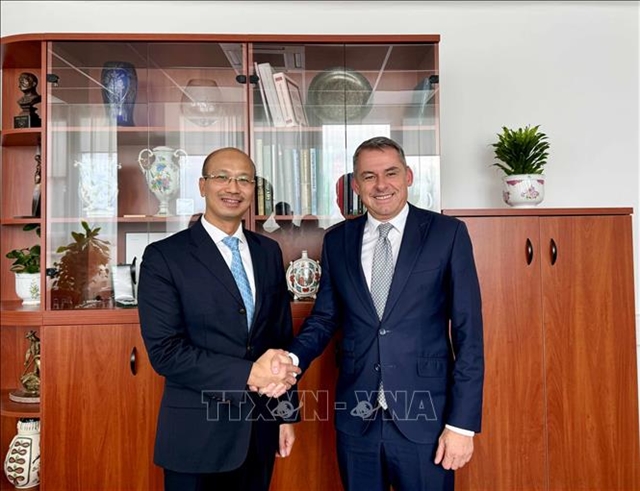
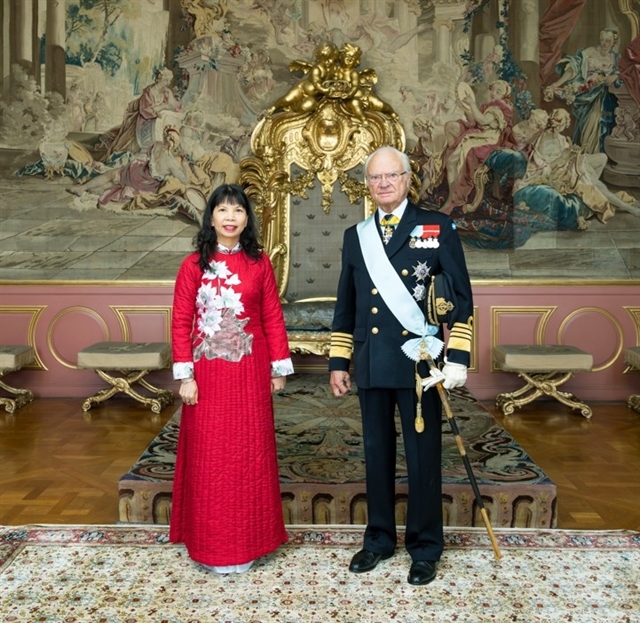
Ambassador pledges every effort to promote Việt Nam–Sweden ties
1.

|
| Deputy Prime Minister Bùi Thanh Sơn (right) and Chinese Foreign Minister Wang Yi in Hà Nội on Tuesday. — VNA/VNS Photo An Đăng |
HÀ NỘI — Deputy Prime Minister Bùi Thanh Sơn has called on Việt Nam and China to accelerate the establishment of intergovernmental working groups in key areas, while giving top priority to railway cooperation.
Deputy PM Sơn urged the early completion of three standard-gauge railway projects linking the two countries, alongside the provision of preferential loans to Việt Nam, as well as technology transfer and workforce training in the railway sector.
He also proposed facilitating the opening of additional Vietnamese trade promotion offices in China, further opening the Chinese market to Vietnamese agricultural and aquatic products like pomelos and wild-caught seafood, and the resumption of imports of Vietnamese spiny lobsters, along with enhanced cooperation on standards.
The proposals were made on Tuesday morning at the Government headquarters, where Deputy PM Sơn co-chaired the 17th meeting of the Việt Nam-China Steering Committee for bilateral cooperation with China's Minister of Foreign Affairs Wang Yi, who is also director of the Office of the Central Commission for Foreign Affairs and a member of the Political Bureau of the Communist Party of China Central Committee.
Representatives from numerous ministries, sectors and relevant agencies attended the meeting, as well as delegates from border localities and several provinces and cities in both countries.
Deputy PM Sơn also expressed his hope that the two sides would promote high-quality, high-tech Chinese investment in Việt Nam, expedite the resolution of bottlenecks in several aid-funded projects and strengthen cooperation on energy infrastructure and border gates.
This includes increasing the capacity and volume of electricity imports from China, ensuring fuel supply, expanding the smart border gate model and advancing the development of cross-border economic cooperation zones.
The Government leader further called for enhanced cooperation in agriculture, environment, finance and banking, science and technology, health care and people-to-people exchanges.
He stressed the importance of promptly identifying and implementing activities for the Việt Nam-China Tourism Cooperation Year 2026-27, and increasing the number of scholarships for Vietnamese students in China.
Minister of Foreign Affairs Wang Yi agreed with Sơn’s proposals, stating that China places great importance on mutually beneficial cooperation with Việt Nam and is ready to share development opportunities, support Việt Nam in building an independent and self-reliant economy, expand imports of high-quality goods, particularly agricultural products, and promote more balanced trade.
He said that China would actively accelerate the implementation of the three railway projects, including cooperation on financing, technology and workforce training, while encouraging Chinese enterprises to expand investment in Việt Nam.
Wang Yi also proposed strengthening cooperation in emerging areas such as high technology, innovation and clean energy, and expressed a desire to further promote people-to-people exchanges and cooperation in culture, health care and education.
He added that China would provide more scholarships for Vietnamese students in diverse forms.
The two sides held frank discussions on maritime issues and agreed to continue seriously implementing high-level common perceptions, better manage and resolve differences, and maintain peace and stability in the East Sea (internationally called the South China Sea).
Sơn called on both sides to adopt a perspective of mutual understanding and respect each other’s sovereignty and legitimate interests in accordance with international law, particularly the 1982 United Nations Convention on the Law of the Sea.
The deputy PM also urged the continued promotion of maritime negotiation mechanisms and efforts to achieve an effective and substantive Code of Conduct in the East Sea at an early date.
Positive momentum
In a sincere, friendly and open atmosphere, the two sides expressed satisfaction with the positive momentum in bilateral relations between the two Parties and countries since their 16th meeting in December 2024.
They held in-depth discussions and reached a consensus on a range of measures to effectively implement collaboration between high-level leaders and to advance bilateral ties into a new phase of increasingly effective and substantive development.
Congratulating each other on their respective development achievements and underscoring the importance and priority of bilateral relations in the two countries' foreign policies, both sides agreed that Việt Nam-China ties have undergone notable recent progress.
Key highlights include close high-level strategic exchanges and contacts, increasingly well-developed cooperation mechanisms and strengthened collaboration across Party channels, the National People's Congress and the Chinese People's Political Consultative Conference, as well as among ministries and sectors.
Economic, trade, investment and tourism cooperation has seen robust growth, with China remaining Việt Nam’s largest trading partner, while Việt Nam is China’s fourth-largest trading partner, with a wide range of high-value agricultural exports.
Strategic connectivity, particularly in railways, has made significant progress, while local-level cooperation and people-to-people exchanges have become increasingly vibrant.
Multilateral coordination has also been strengthened.
Looking ahead, the two sides agreed to continue consolidating strategic trust, enhance high-level and multi-level exchanges, effectively leverage the coordinating role of the Steering Committee, improve the efficiency of practical cooperation across sectors, expand local collaboration and people-to-people exchanges and strengthen coordination at multilateral forums. — VNS
Politics & Law
 Politics & Law
 Politics & Law
 Politics & Law
 Politics & Law
 Politics & Law
 Politics & Law
 Politics & Law
 Politics & Law
 Politics & Law
 Politics & Law
 Politics & Law
 Politics & Law
 Politics & Law
 Politics & Law