 Politics & Law
SACOMBANK diversifies funding sources to drive long-term growth
1.
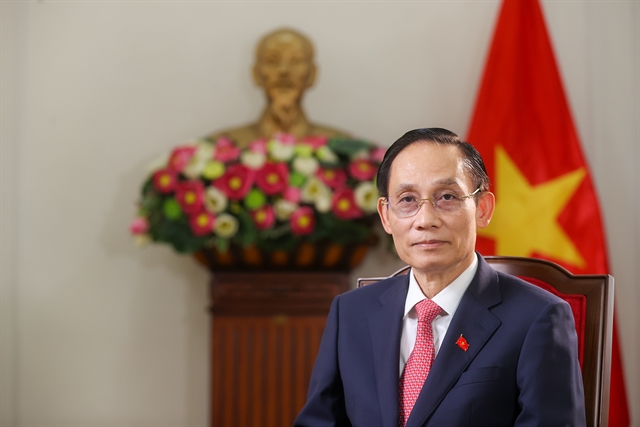 |
| Politburo member and Minister of Foreign Affairs Lê Hoài Trung. — Photo courtesy of the Ministry of Foreign Affairs. |
Politburo member and Minister of Foreign Affairs Lê Hoài Trung spoke to the press ahead of the 33rd Diplomatic Conference and the 22nd National Conference on Foreign Affairs, scheduled to open in Hà Nội on Saturday morning, about the significance of the 33rd Diplomatic Conference and the key priorities and strategic directions to be discussed.
The 33rd Diplomatic Conference takes place as Việt Nam enters a new stage of development following the success of the 14th National Party Congress, while the regional and global landscape continues to evolve rapidly in increasingly complex and unpredictable ways. Could you explain the significance of the conference?
The Diplomatic Conference has been a key forum for Việt Nam's diplomatic sector since it was first convened in 1957. Held on a regular basis, it provides an opportunity for diplomatic officials serving both at home and abroad to thoroughly grasp the Party's foreign policy guidelines, assess developments in the international environment and the country's external relations, and agree on priorities and tasks for the next phase. President Hồ Chí Minh, the country's first Minister of Foreign Affairs, together with successive Party and State leaders, attached great importance to the conference and personally guided its work.
The 33rd Diplomatic Conference is being held at a particularly significant moment. It is the first diplomatic conference since the successful conclusion of the 14th National Party Congress and follows the completion of the country's leadership apparatus after the election of the 16th National Assembly and People's Councils at all levels, laying a solid foundation for implementing the major decisions of the new term.
It is also the first Diplomatic Conference to take place in the new era of national development defined by the 14th National Party Congress, as Việt Nam works towards its strategic development goals for 2030 and its vision for 2045. The Party Central Committee's third plenum recently adopted a resolution on a new development model, identifying science, technology and innovation as the principal drivers of economic growth, while setting out new requirements for both national development and foreign affairs.
Against this backdrop, the 33rd Diplomatic Conference is tasked with thoroughly implementing and translating into concrete action the foreign policy set out by the 14th National Party Congress, ensuring unity in both understanding and implementation across the diplomatic sector in response to the new demands placed on foreign affairs, building on the country's achievements and growing capabilities after four decades of Đổi mới (Renewal).
One particularly significant development is that, for the first time, the 14th National Party Congress has defined foreign affairs and international integration as a core, regular responsibility of the entire Party, the entire people and the entire armed forces. This marks a new step forward in the Party's foreign policy thinking, while consistently building upon the principles reaffirmed at the 13th National Party Congress regarding the pioneering role of diplomacy in safeguarding a peaceful environment, protecting national independence, sovereignty, unity and territorial integrity, mobilising external resources for national development, and enhancing Việt Nam's international standing and prestige.
From President Hồ Chí Minh's conception of diplomacy as a vital front to the evolution of the Party's foreign policy through successive Party Congresses, the role of foreign affairs has been continuously refined, strengthened and elevated to meet the demands of each stage of the country's revolutionary development. The decision of the 14th National Party Congress to designate foreign affairs and international integration as a core and permanent task therefore represents a milestone, reflecting the Party's heightened expectations for diplomacy in this new era of national development.
The conference also takes place against the backdrop of a regional and international environment that continues to evolve rapidly in increasingly complex and unpredictable ways, creating both fresh opportunities and significant challenges for Việt Nam's foreign affairs. As the country moves to implement the Resolution of the 14th National Party Congress, Party General Secretary and President Tô Lâm has repeatedly stressed the importance of fully understanding the Party's policies, implementing them correctly, delivering tangible results and seeing every task through to completion.
In light of these new requirements, we have identified the most important objective of the conference as thoroughly understanding the Party's guidelines and policies; unifying understanding of the new situation and tasks; and on that basis, innovating thinking and methods, improving the effectiveness of foreign affairs work, while strengthening coordination between the Ministry of Foreign Affairs and other ministries, departments, and localities under the unified leadership of the Party and the management of the State.
What message does the Ministry of Foreign Affairs hope to convey through the 33rd Diplomatic Conference, given the significance you have outlined?
The central message we wish to convey through the conference is that Việt Nam's diplomatic sector will continue to fully uphold its pioneering role while faithfully fulfilling the core and enduring responsibilities entrusted to it by the Party and the State.
In doing so, the diplomatic sector will contribute to the successful implementation of new tasks in the new era, first and foremost during the term of the 14th National Party Congress, creating a foundation for the country to achieve its development goals by 2030 and its vision to 2045.
What are the key priorities and strategic directions that will dominate discussions at the conference?
The 33rd Diplomatic Conference was built on the spirit of thoroughly understanding and effectively implementing the guidelines of the 14th National Party Congress, especially the foreign policy guidelines in the new era of national development.
The first priority is to ensure a comprehensive understanding of the Party's and the State's major policies and strategic directions concerning national development, Party building, the continued improvement of the political system and foreign affairs. The 14th National Party Congress introduced a number of new policy directions, making it essential for the entire diplomatic sector, especially heads of Việt Nam's overseas representative missions and officials preparing to take up postings abroad, to grasp them thoroughly in order to ensure consistent and effective implementation.
Following the directives of the Party General Secretary and President Tô Lâm, the important thing is not merely to understand policies correctly, but to implement them properly, deliver tangible results and see every task through to completion. To that end, the conference will have the honour of receiving guidance from key Party and State leaders, together with leaders of central Party bodies, ministries and agencies, who will directly explain the key policy orientations.
The second priority is to undertake a comprehensive assessment of regional and global developments across politics, security, strategic affairs, the economy, science and technology. This is also a requirement set by the 14th National Party Congress for strategic research and advisory work to ensure that the country is never caught off guard by international developments.
As Party General Secretary and President Tô Lâm has stressed, the task today extends beyond simply responding to events or resolving problems. We must be able to anticipate developments, identify emerging trends and actively help shape future outcomes. In this regard, deeper analysis of the international landscape will improve the quality of policy advice provided to the Party and the State, while equipping every diplomat with the knowledge needed to carry out their responsibilities more effectively.
The third priority concerns the major tasks facing Việt Nam's foreign affairs in the years ahead. Alongside continuing to help safeguard a peaceful and stable environment, strengthen relations with other countries and enhance Việt Nam's international standing, diplomacy must make an even more practical and effective contribution to the country's socio-economic development, particularly in supporting the goal of achieving double-digit economic growth.
In pursuing this objective, the role of the Ministry of Foreign Affairs and Việt Nam's overseas representative missions goes far beyond building connections. They must proactively help create favourable conditions for development by securing greater access to scientific and technological resources, knowledge and expertise, expanding export markets, promoting Vietnamese investment abroad and attracting more foreign investment into Việt Nam. These are among the major challenges facing diplomacy in the new context.
Another overarching theme of the conference is improving implementation. As Party General Secretary and President Tô Lâm and Prime Minister Lê Minh Hưng have repeatedly emphasised, effective execution is now the decisive factor. Once policies have been correctly understood and priorities clearly identified, attention must turn to how they are implemented, how overseas representative missions should modernise their operations, and how the ministry itself should adapt its organisational model to meet new demands. Digital transformation will be a particularly important component of the process.
In recent years, the ministry has implemented a wide range of digital transformation initiatives, administrative reforms and technological applications to improve services for citizens and businesses. However, today's challenge goes well beyond using technology to streamline administrative procedures. Digital transformation must fundamentally reshape organisational structures, modernise working methods and enhance the overall effectiveness of the diplomatic sector. This is one of the ministry's most significant tasks.
Another priority is strengthening the ministry's organisation and developing a highly capable diplomatic workforce, both through Party building and by enhancing officials' professional expertise, knowledge, political integrity and sense of responsibility.
A particularly important feature of this year's conference is the strengthening of coordination mechanisms between the ministry and central Party bodies, ministries, sectors and local authorities under the unified leadership of the Party and the administration of the State. This represents one of the conference's most notable innovations.
For the first time, the Central Steering Committee on Foreign Affairs and International Integration, headed by Party General Secretary and President Tô Lâm, is operating within the new context. As the committee's standing agency, the Ministry of Foreign Affairs will continue refining coordination mechanisms and providing policy advice to ensure that the committee operates effectively.
The conference will also, for the first time, include a joint session co-chaired by the Ministers of National Defence, Public Security and Foreign Affairs to strengthen coordination among the three sectors in fulfilling their core and enduring responsibilities.
In addition, specialised sessions will focus on development-oriented diplomacy, Party diplomacy, people-to-people diplomacy, parliamentary diplomacy and local-level diplomacy, with the participation and guidance of key Party and State leaders. These discussions reflect the need to harness the collective strength of the entire political system in advancing foreign affairs and international integration to meet the country's development objectives in the new era.
Based on the assessment of the situation and the identification of directions and solutions, a very important task of the conference is to develop a specific action programme for the entire diplomatic sector, including units within the ministry as well as Việt Nam's overseas representative missions.
Việt Nam currently maintains 99 overseas representative missions. Under the master plan approved by the Government and the Prime Minister, the network will expand to 115 missions by 2030 and is expected to reach around 130 by 2045.
This reflects the Party's and the State's strategic vision regarding the role of foreign affairs and international integration, as well as their determination to realise the objectives set by the 14th National Party Congress and Party General Secretary and President Tô Lâm: enabling Việt Nam to participate more deeply and substantively in global political affairs, the international economy and human civilisation.
To realise these ambitions, as Prime Minister Lê Minh Hưng has emphasised, every overseas representative mission must be assigned clear and measurable responsibilities across each area of its work. Each mission should define specific objectives, expected outcomes, implementation roadmaps and completion deadlines.
The same principle applies in the economic sphere. Every mission should establish concrete targets for expanding markets, promoting cooperation in science, technology and innovation, attracting investment, and effectively carrying out tasks tailored to the particular characteristics of its host country.
In the cultural sphere, the Politburo has recently adopted a resolution on the development of Vietnamese culture. This places renewed emphasis on ensuring that foreign affairs and international integration become a genuine source of strength for the country's cultural development. This is another major responsibility for the diplomatic sector, with Việt Nam's overseas representative missions playing a particularly important role.
At the same time, we fully recognise that many of our overseas representative missions continue to operate under challenging conditions, particularly in conflict zones or other highly complex environments such as Ukraine, Iran and several countries in the Middle East. Accordingly, while ensuring the consistent implementation of the Party's overarching policies and objectives, it is equally important to adopt flexible approaches that take into account of the specific circumstances and challenges facing each overseas posting.
As you have noted, effective implementation will be crucial to carrying out the directions of the Party General Secretary and President Tô Lâm. With the diplomatic sector set to accelerate digital transformation, strengthen its workforce, what should be the top priorities to ensure the Party's foreign policy is implemented effectively?
We believe that the foremost requirement for effectively carrying out the tasks entrusted to the diplomatic sector is, as repeatedly emphasised by both the Standing Board of the Ministry of Foreign Affairs' Party Committee and the ministry's Party Executive Committee, to thoroughly understand and correctly grasp the Party's and the State's policies and strategic directions.
This is decisive because only by understanding policies correctly can they be implemented properly, effectively and through to completion.
Equally important are a strong sense of responsibility and wholehearted dedication to public service.
The diplomatic sector enjoys the unique honour of having President Hồ Chí Minh as the first Minister of Foreign Affairs. He devoted immense effort to building the diplomatic sector not merely as a state institution, but as an organisation representing the Vietnamese nation, wholeheartedly serving the Fatherland, the people and the Party's revolutionary cause.
Throughout his life, President Hồ Chí Minh attached special importance to foreign affairs and the diplomatic service. Whenever circumstances permitted, he personally attended and guided Diplomatic Conferences. Even during the most difficult years of the resistance wars, he always spent time to meet diplomats whenever the conference was held. His guidance covered every aspect of diplomacy, from caring for officials' welfare and cultivating their professional ethics and working style, to methods of conducting foreign affairs, the art of international engagement, diplomatic training and the practice of diplomacy itself. Those teachings remain just as relevant today and continue to serve as guiding principles for Việt Nam's diplomatic service.
This demonstrates President Hồ Chí Minh's strategic vision of the role of diplomacy and foreign affairs in the country's revolutionary cause.
Experience has consistently shown that a sound understanding of the Party's policies is the indispensable starting point. However, correct understanding alone is not enough. Without responsibility, determination and a strong commitment to implementation, even simple tasks can prove difficult, while more complex and demanding missions become even harder to accomplish. At a time when expectations of Việt Nam's diplomacy continue to grow, the entire sector must demonstrate the highest levels of responsibility, political resolve and determination to fulfil every task entrusted to it.
To achieve these objectives, we must first organise our workforce in a scientific and efficient manner, particularly as the entire political system is implementing reforms to streamline organisational structures and optimise staffing.
The 33rd Diplomatic Conference is taking place under particularly special circumstances. It is the first conference since the Ministry of Foreign Affairs was merged with the Party Central Committee's Commission for External Relations and assumed additional responsibilities previously undertaken by the National Assembly's Committee for External Relations.
The ministry was established in 1945, while the Commission for External Relations was formed later and accumulated decades of experience. Bringing these two institutions together requires us to reorganise our workforce in a rational manner, maximise the strengths of both organisations, and ensure that increasingly demanding responsibilities can be fulfilled despite a leaner staffing structure.
Another major priority is to continuously enhance the expertise and knowledge of our officials while accelerating the application of science, technology and digital transformation across the entire diplomatic service.
Without making full use of digital transformation, it will be difficult not only to improve productivity, quality and efficiency, but also to avoid falling behind. However, this is a long-term undertaking that requires strong determination, a systematic approach and an appropriate roadmap. It cannot be accomplished overnight.
We must also strengthen coordination between the ministry and other ministries, sectors and local authorities. In today's context, diplomacy can only achieve the greatest possible effectiveness when it operates under the Party's unified leadership, the State's centralised management and close coordination across all levels of authorities. Existing coordination mechanisms should therefore continue to be strengthened, particularly the work of the Central Steering Committee on Foreign Affairs and International Integration.
At the same time, continued investment is needed to improve facilities, equipment and working conditions at both the ministry and Việt Nam's overseas representative missions. Equal attention must also be given to training, professional development and retraining so that our diplomatic workforce is fully equipped to meet the demands of the country's new stage of development.
Party General Secretary and President Tô Lâm has repeatedly stressed, and the documents adopted by the 14th National Party Congress, together with resolutions of the Politburo, have reaffirmed, the need to build a learning society and foster a culture of lifelong learning.
For the diplomatic sector, this is not simply a general aspiration, it is a fundamental prerequisite for building a workforce with strong political conviction, high professional competence, modern thinking and the capacity to meet the increasingly demanding requirements of diplomacy in the new era of national development.
As regional and global developments continue to evolve rapidly in increasingly complex and unpredictable ways, the diplomatic agenda is expanding while expectations continue to rise. Every diplomat must therefore continuously update their knowledge and strengthen their professional capabilities. Given the heavy workload, it is not always possible for officials to attend formal training programmes. Therefore, the spirit of self-study, self-research, and lifelong learning must become a constant requirement for every diplomatic officer to meet the demands of the new era. Ultimately, to meet the country's development needs in the new era and successfully realise the goals set by the 14th National Party Congress, the most important task is to renew our thinking, modernise our methods and improve the effectiveness of implementation.
With that objective in mind, we are developing a common motto to guide the entire diplomatic service: "Right Direction – Strict Discipline – Excellent Expertise." — VNS
Politics & Law
 Politics & Law
 Politics & Law
 Politics & Law
 Politics & Law
 Politics & Law
 Politics & Law
 Politics & Law
 Politics & Law
 Politics & Law
 Politics & Law
 Politics & Law
 Politics & Law
 Politics & Law
 Politics & Law