 Opinion

Visit Vietnam app to showcase AI-powered platform at ITB Asia 2026
1.
 |
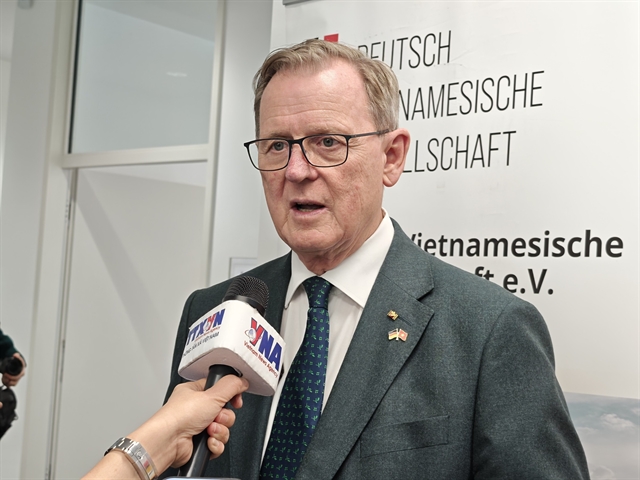
| Dr Ưng Quốc Hùng, chief engineer at France’s Setec Nucléaire group and vice chairman of the network of overseas Vietnamese nuclear energy experts (VietNuc). — VNA/VNS Photo |
PARIS — The 14th National Party Congress is expected not only to define Việt Nam’s internal development orientations but also to position the country in a rapidly changing and unpredictable international environment, thereby consolidating national standing, strengthening strategic autonomy and promoting selective international integration.
Talking to Vietnam News Agency correspondents in Paris ahead of the congress, Dr Ưng Quốc Hùng, chief engineer at France’s Setec Nucléaire group and vice chairman of the network of overseas Vietnamese nuclear energy experts (VietNuc), said the congress carries particular significance as Việt Nam enters a new development phase amid complex global and regional situation.
He stressed that strategic orientations should build on the achievements of nearly four decades of Đổi mới (Renewal), while placing stronger emphasis on sustainable development driven by science and technology, green transition promotion, and strategic autonomy enhancement.
According to Hùng, key expectations include building a clean, strong and capable leadership contingent; reforming the growth model to improve competitiveness and innovation capacity; pursuing sustainable development goals and carbon neutrality targets in line with international commitments; accelerating institutional reform to improve national governance; creating a more favourable environment for investment and international cooperation; and developing high-quality human resources.
Reflecting on major historical milestones, Hùng highlighted the sixth National Party Congress in 1986 as a turning point that launched the Đổi mới policy and marked a fundamental change in leadership and governance mindset, transitioning the economy from a centrally planned model to a socialist-oriented market economy. That laid a solid foundation for international cooperation, foreign investment attraction, export expansion, and deeper integration into the regional and global economy.
Việt Nam’s integration was marked by milestones such as the development of economic and industrial zones from the late 1980s, accession to the Association of Southeast Asian Nations (ASEAN) in 1995, and full membership of the World Trade Organisation (WTO) in 2007. These steps, Hùng said, have helped sustain stable growth for many consecutive years and enhanced Việt Nam’s international standing as a dynamic, open, peace-loving and responsible nation.
Domestically, a series of landmark policies and projects have reshaped the socio-economic landscape. From agricultural reforms under Politburo Resolution 10, known as “Khoán 10” (Contract 20), and poverty reduction programmes to major infrastructure projects such as Thăng Long Bridge, Hoà Bình Hydropower Plant, the North – South 500kV power transmission line and the Hồ Chí Minh Highway, these achievements demonstrate Việt Nam’s will, wisdom, and determination in industrialisation and modernisation.
Hùng also highlighted overseas training initiatives such as Programmes 322 and 911, implemented in the 1990s and 2000s, describing them as forward-looking policies that helped form a intellectual and expert community capable of integrating into the world, many of whom have continued to contribute to national development.
From the perspective of the overseas Vietnamese (OVs) community, he said OVs have grown significantly in expertise, experience and networks of international relations, forming a valuable “extended arm” of the nation, particularly as science – technology and innovation are identified as a key driver of growth.
As Việt Nam continues to strengthen its capacity in education, infrastructure and governance, it is creating an increasingly trustworthy environment for OVs and international experts to contribute in a substantive and long-term manner, Hùng concluded. — VNA/VNS
Opinion
 Opinion
 Opinion
 Opinion
 Opinion
 Opinion
 Opinion
 Opinion
 Opinion
 Opinion
 Opinion
 Opinion
 Opinion
 Opinion
 Opinion