 Opinion

Việt Nam fosters comprehensive cooperation with Uruguay
1.

|
| Aerial view of Hà Nội. — VNA/VNS Photo |
Hà Nội is on the right track in institutional reform and urban infrastructure development, particularly in transport, and these efforts are already yielding results, Hoàng Thị Thu Phương, an economic expert, told Kinh tế & Đô thị (Economic and Urban Affairs) newspaper. She said the progress is laying a solid foundation for strong and sustainable socio-economic growth in the capital.
How do you view Hà Nội’s recent development, especially following major institutional and policy shifts?
The 2021–2025 term has been a particularly impressive period in Hà Nội’s development, with many long-standing problems finally resolved. Backed by strong attention from the Party Central Committee, the Government and the National Assembly, and driven by determined efforts from local authorities and residents, the capital has emerged as a national highlight of renewal.
A key visible change has been improved administrative discipline and working practices. Under the close guidance of the municipal Party Committee, People’s Council and People’s Committee, the entire political system has acted in concert to remove bottlenecks, clear backlogs, and stimulate comprehensive socio-economic development.
In terms of infrastructure, several large-scale projects once considered too difficult and left idle for many years have now been launched or resumed. These include Ring Road 4 of the Capital Region, Ring Road 1 and urban railway line 2 project (Nam Thăng Long-Trần Hưng Đạo section) and line 5 (Văn Cao-Hòa Lạc section).
Particularly significant is the launch of the Red River landscape boulevard, one of the city’s largest projects, which marks the first concrete step towards realising the long-envisioned 'Red River miracle'.
What factors have enabled Hà Nội to achieve these results?
From a research standpoint, institutional reform has been both the decisive condition and the strongest driving force. For many decades, shortcomings and rigidities in mechanisms and policies were the main obstacles constraining the capital’s development.
Previously, projects with total investment exceeding VNĐ10 trillion required National Assembly approval, often prolonging preparation for many years. Limitations on public–private partnership models, especially BT contracts, also reduced the city’s ability to mobilise private investment. At the same time, complicated compensation frameworks, site clearance procedures and conditions for resettlement and old apartment redevelopment caused some projects to stall for more than a decade.
These barriers have largely been removed through key policy changes, including the amended Capital Law 2024, the Land Law 2024, the National Assembly resolution on urban railway development, and the resolution piloting special mechanisms for Hà Nội. With clearer legal foundations, the city now has greater autonomy over major projects, from approving investment policies to selecting contractors, and can once again apply public–private partnership models.
As a result, preparation times have been cut dramatically, from several years to just a few months, while social capital has been mobilised more effectively. Major projects are progressing rapidly, gradually shaping a modern urban landscape befitting the capital’s national role.

|
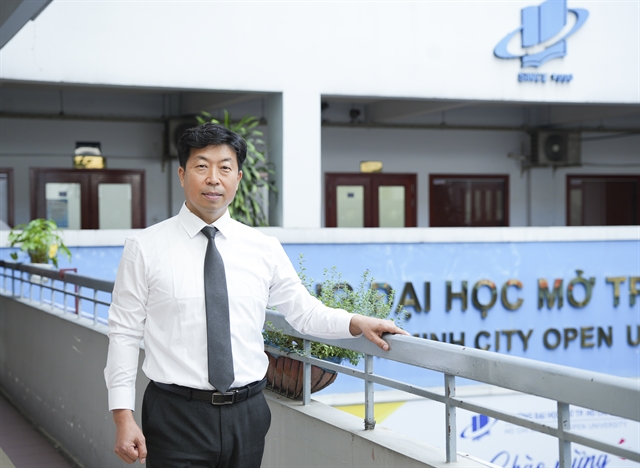
| Hoàng Thị Thu Phương, an economic expert. — Photo kinhtedothi.vn |
Do you believe Hà Nội can sustain this momentum over the long term?
The initial outcomes of institutional reform have been positive and convincing, demonstrating the soundness of current urban governance policies. Once their effectiveness is proven, such policies are likely to be maintained and to serve as enduring resources for sustainable development. They also function as valuable policy pilots, providing lessons that can later be applied nationwide.
At the same time, Hà Nội is undergoing a significant internal transformation. The political system has become more proactive and service-oriented, contributing to the city’s all-round development. Political resolve is no longer abstract but is reflected in concrete actions and measurable results. This spirit is also spreading among residents. With appropriate policies, strong human resources and the capacity to absorb scientific and technological advances, the capital is well placed to maintain its current pace of development and strengthen it further in the years ahead.
What challenges does Hà Nội still face?
While the city’s growing vitality is encouraging, challenges remain considerable. Hà Nội is drafting a 100-year master plan, setting out a long-term development vision, and the volume of work needed to complete urban infrastructure is immense. Even individual projects face uncertainties, particularly large-scale ones such as the Red River landscape boulevard and urban railway lines. These include technological challenges, legal gaps or ambiguities, and, above all, funding pressures.
Rapid urban transformation also requires a workforce with modern governance thinking aligned with practical demands. The city needs highly qualified personnel with strong scientific and technological expertise to manage and implement complex infrastructure projects. Developing such a high-calibre workforce in a short time is difficult, making it essential to adopt policies that both attract and train talent.
On financing, with investment needs amounting to millions of billions of đồng over the next 10 to 20 years, the state budget alone is insufficient. Mobilising private-sector capital is therefore crucial. To achieve this, Hà Nội must continue to seek strong backing from the Government and the National Assembly for investor-friendly mechanisms, while strengthening oversight of public–private partnership projects to minimise risks and ensure efficiency and sustainability.
Overall, Hà Nội has invested in the right priorities – not only physical infrastructure but also institutional reform, the removal of structural barriers, and the building of a capable and dedicated workforce. Maintaining a spirit of innovation, creativity and decisive action will be essential if the capital is to consolidate its gains and move steadily towards a more civilised and prosperous future. — VNS
Opinion
 Opinion
.jpg) Opinion
Opinion
 Opinion
 Opinion
 Opinion
 Opinion
 Opinion
 Opinion
 Opinion
 Opinion
 Opinion
 Opinion
 Opinion
 Opinion