 Opinion

Public security ministry proposes new law to tackle online fraud, deepfake identity abuse
1.
 |
| Sinwon Park, Country Director of International Labour Organisation Country Office for Việt Nam.— Photo courtesy of the International Labour Organization Country Office for Việt Nam |
Sinwon Park, Country Director of the International Labour Organisation Country Office for Việt Nam, talks to Việt Nam News reporter Nguyễn Hằng about the achievements as well as fixing remaining challenges related to child labour in Việt Nam.
Could you please provide your assessment of the achievements Việt Nam has made in recent years in eliminating child labour and promoting children’s rights?
In recent years, Việt Nam has achieved steady progress regarding the elimination of child labour and the promotion of children’s rights. This success is the result of 25 years of sustained commitment and strong coordination between the Government of Việt Nam, social partners, UN agencies and development partners.
Regarding legislation, Việt Nam established a strong foundation for action by becoming the first country in Asia and the second in the world to ratify the UN Convention on the Rights of the Child (CRC) in 1990, and by subsequently ratifying ILO Convention No. 182 on the Worst Forms of Child Labour in 2000.
In 2016, Việt Nam passed the Law on Children, which operationalises CRC principles in national law by affirming children’s rights to protection, care, participation and development. In addition, the legal framework was revised, notably through the Labour Code 2019, ensuring alignment with international labour standards by strictly defining prohibited hazardous work, enforcing mandatory reporting and prioritising the child’s right to education.
One of the turning points that has enabled Việt Nam to significantly reduce child labour is the robust data collection system, which established the evidence base for targeted interventions. The First National Child Labour Survey was completed in 2012, with ILO's technical support under Enhancing the National Capacity to Prevent and Reduce Child Labour in Việt Nam (ENHANCE) project. At the time of the initial survey, 2.83 million children (nearly 1/6 of the total child population of more than 18.3 million) were engaged in economic activities. Since then, ILO continued to provide technical assistance to Việt Nam to conduct another two national child labour surveys.
In addition, Việt Nam also developed and included a dedicated national statistical indicator on working children and child labour (Indicator 0207) in the National Statistical Indicator System in 2023, integrating child labour monitoring indicators into the national statistics system, which ensures regular and sustainable data collection. This is an important achievement that Việt Nam and the ILO are already sharing as a good practice with other countries.
Furthermore, child labour has been integrated into various national policies. This includes the National Programme on the Prevention and Reduction of Child Labour 2016-20 and its successor National Programme 2021-25 with a vision to 2030, which Việt Nam is implementing with technical support from the ILO and other UN partners. Experience confirms this: where the National Programme is backed by clear responsibilities and adequate budgets at provincial level, we see faster reductions in child labour.
All together, these sustained efforts have led to dramatic reductions: latest data in 2023 indicates that the number of children in economic activities has decreased to approximately 731,600 (equal to 3.5 per cent of the child population).
Child labour in Việt Nam continues to present a number of challenges such as 76.4 per cent of cases are concentrated in rural areas; 35 per cent of children are engaged in hazardous work; and 18.6 per cent work at night (from 10pm to 6am). Nearly 39 per cent of child labourers are employed in agriculture, forestry and fisheries, and more than 12 per cent are reported to have at least one health problem. What additional policies and concrete actions should be adopted to address the challenges?
To effectively address the concentration of child labour in rural areas and the continued risks associated with hazardous work, the next National Programme on the Prevention and Reduction of Child Labour should place stronger emphasis on high-risk sectors and locations. This can be achieved by integrating more targeted indicators that reflect rural livelihoods, seasonal work patterns and the realities of agricultural production.
Strengthening linkages with existing service systems, particularly the health and agriculture sectors, will be essential. Capacity building and awareness-raising efforts should focus on professionals who already work regularly in remote and mountainous areas, such as health workers, agronomists, and extension officers.
With simple tools and clear referral guidance, these frontline actors can help identify situations of potential child labour and connect families with appropriate support services, without assuming an inspection or enforcement role. This approach is especially important for monitoring seasonal labour migration among ethnic minority communities, where families may move together during peak harvest periods.
In such contexts, monitoring efforts should focus on ensuring that children accompanying their parents are not drawn into work that is inappropriate for their age, health or physical development.
Interventions should be implemented through an integrated area-based approach that engages local authorities, community structures, schools and existing child labour monitoring mechanisms. Grounding actions at the community level helps prevent the displacement of child labour into more hidden sectors, such as domestic work or exploitation and strengthens local ownership of prevention efforts.
Educators play a particularly important role, as they are well placed to identify children who are at risk of dropping out of school or being engaged in work. When children are withdrawn from child labour, timely referral to education, health or psychosocial support services is critical, especially in cases where children may have experienced stress or harm related to work.
Furthermore, addressing the root causes of the phenomenon requires a transition from individual household accountability toward a shared supply chain responsibility framework. The framework emphasises the role of international buyers under trade cooperation framework of free trade agreements.
Through supply chain due diligence, buyers are encouraged to move beyond punitive 'zero-tolerance' measures, which can inadvertently hide the problem, toward proactive remediation. By investing in the supply chain's enabling environment, buyers help remove the logistical and economic pressures that lead to children’s presence in agricultural production areas.
By ensuring children remain outside of hazardous production environments, the collaborative approach translates global trade standards into Decent Work for adults and a guaranteed right to education for every child.
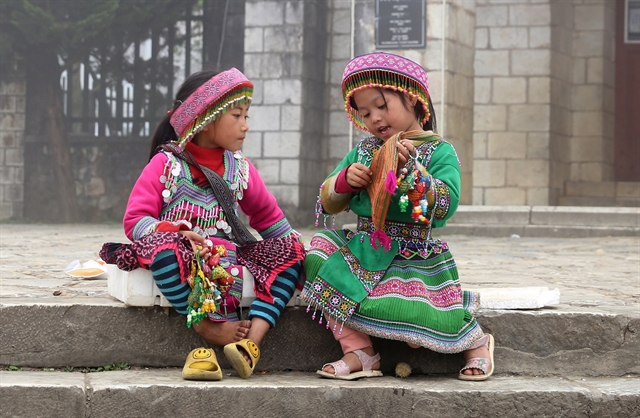 |
| Children selling goods on a local street in the northern mountainous province of Lào Cai.— VNA/VNS Photo Quốc Khánh |
Could you please share some international experience or best practices in addressing the issues outlined above?
International best practices offer various models for addressing child labour. In the agricultural sector, extensive work has been conducted in the cocoa sector in West Africa, involving governments, workers, employers, civil society and multinational enterprises. Good practices for enterprises include child labour due diligence, which requires steps like identifying the problem, addressing the situation, and ensuring a publicly available child labour policy that prohibits the employment of those below the minimum age or those under 18 in hazardous work.
Furthermore, Vietnamese businesses should consider engaging with the Child Labour Platform, an ILO-secretariat space for businesses to collaborate on due diligence, address challenges in their supply chains, and conduct deep-dive sessions in specific sectors such as fishing or sugar.
There is also the concept of 'child labour free sectors' which requires robust monitoring systems to provide reliable data. In Nepal, the 'green flag campaign' in urban areas aimed to ensure households were free of child labour, publicly displaying a green flag to signify commitment. The ENHANCE project in Việt Nam has drawn on these global experiences to design community-based monitoring and referral systems and to promote child labour-free value chains in sectors such as agriculture.
Partnerships are critical, particularly in agriculture. Among the UN System, Việt Nam should consider collaborating with agricultural specialists, such as the FAO, for support in child labour risk assessments, leveraging their technical expertise and resources. The ILO would provide the child labour support, but collaboration is essential.
Key partner agencies include UNICEF for child protection and IOM for migration issues, ensuring that the ILO provides the anchoring expertise on child labour while other specialised expertise is incorporated. As an Alliance 8.7 Pathfinder Country, Việt Nam is well placed to benefit from and contribute to these global partnerships, including sharing lessons from ENHANCE project and the National Programmes with other countries in the region.
What plans does the International Labour Organisation intend to implement to support Việt Nam in addressing the remaining challenges related to child labour?
The ILO continues to stand alongside Việt Nam in a focused and practical manner, building on the priorities identified in the Government’s recent review of the National Programme on the Prevention and Reduction of Child Labour. While Việt Nam has achieved meaningful progress over the past years, the review also underscores the importance of sustained commitment and continued efforts to address remaining challenges.
Looking ahead, the upcoming Decent Work Country Programme (DWCP) cycle provides an important opportunity to reaffirm child labour elimination as a continued national priority, fully aligned with the United Nations Cooperation Framework. In this next phase, the ILO will work closely with its tripartite partners to support the development of a strengthened National Programme for 2026-30.
ILO support will continue to focus on strengthening local capacities, particularly among commune-level child protection workers, teachers and labour inspectors, piloting practical prevention models in agriculture, fisheries and craft villages, and accompanying enterprises in promoting responsible labour practices in line with Việt Nam’s commitments under ILO Conventions No. 138 and No. 182, the Sustainable Development Goals and relevant trade frameworks.
As Việt Nam advances in the digital age, new risks such as online exploitation intersect with existing vulnerabilities such as poverty, migration and informal work. Addressing these challenges requires child protection systems that are responsive both offline and online, grounded in prevention, education and effective law enforcement.
Through these continued and coordinated efforts, the ILO reaffirms its long-term commitment to accompanying Việt Nam in closing remaining gaps and advancing steadily toward the elimination of child labour in all its forms.— VNS
Opinion
 Opinion
 Opinion
 Opinion
 Opinion
 Opinion
 Opinion
 Opinion
 Opinion
 Opinion
 Opinion
 Opinion
 Opinion
 Opinion