 Expat Corner

Flash flood, landslide warnings issued for four northern mountainous provinces
1.
Dr Trần Quốc Huy*
What is tinnitus?
Tinnitus is the perception of sound when there is no external sound present. People may hear ringing, buzzing, hissing, humming or clicking. The sound may seem to come from one ear, both ears or inside the head.
Tinnitus can be continuous or intermittent. It may also be pulsatile, meaning it beats in time with the heartbeat, or non-pulsatile.
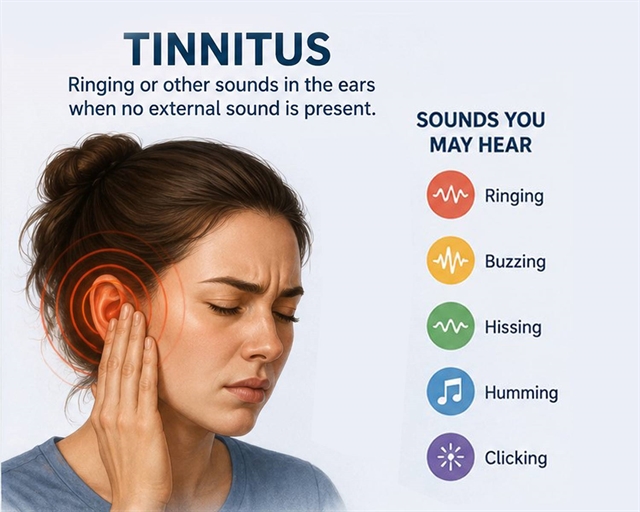 |
| People with tinnitus may hear ringing, buzzing, hissing, humming or clicking. — Photos courtesy of Family Medical Practice |
How common is tinnitus?
Tinnitus is very common. It affects about 20 per cent of adults and is more common among older adults and people exposed to loud noise. Smoking is also associated with tinnitus.
Some people only notice mild symptoms, while others may have sleep problems, stress, or difficulty concentrating.
Why does tinnitus happen?
Most tinnitus happens because of changes in the hearing system or brain pathways related to hearing.
When the ear does not send normal sound signals, the brain may create abnormal sound signals that the person hears as tinnitus.
This is similar to “phantom pain”, where the brain senses something that is not really there.
Common causes of tinnitus
Hearing loss
Hearing loss is the most common cause of tinnitus. It may be related to ageing, noise damage or inner ear disease.
Loud noise exposure
Long-term exposure to loud music, machinery, or explosions can damage the cochlear hair cells and lead to tinnitus.
Medications
Some medications can damage the inner ear or cause tinnitus. Examples include certain antibiotics, chemotherapy drugs and high doses of aspirin.
Ear disorders
Conditions such as Meniere’s disease, ear infections, fluid behind the eardrum and otosclerosis may contribute to tinnitus.
Tumours
Vestibular schwannoma, a usually benign tumour affecting the hearing and balance nerve, may cause one-sided tinnitus, hearing loss and balance problems.
Blood vessel problems
Pulsatile tinnitus may be caused by abnormal blood flow near the ear. People may hear whooshing or pulsing sounds, or sounds resembling their heartbeat.
Jaw and neck problems
Temporomandibular joint (TMJ) disorders and neck injuries may also trigger or worsen tinnitus.
Symptoms that need medical attention
See an ENT doctor if tinnitus is associated with sudden hearing loss, symptoms affecting only one ear, dizziness, facial weakness, a continuous pulsing sound or a severe headache.
Sudden hearing loss, particularly when accompanied by tinnitus, requires urgent medical assessment.
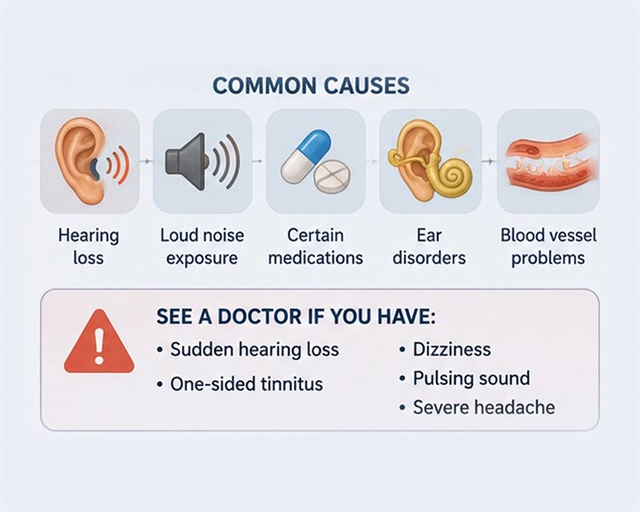 |
| If you experience ringing in your ears, especially alongside sudden hearing loss, dizziness, or persistent pulsing sounds, don't hesitate to consult an ENT doctor for proper assessment. |
How Doctors Diagnose Tinnitus
Medical history and physical examination
Doctors ask about hearing loss, noise exposure, medications, dizziness, ear pain, sleep problems, anxiety and stress. They examine the ears, head and neck, and cranial nerves. They may also listen around the neck and ear for abnormal blood flow sounds.
Hearing tests
Common tests include audiograms, tympanometry and speech testing. These help identify hearing loss and problems affecting the middle or inner ear.
Imaging tests
Some patients may need imaging tests, such as MRI, CT scans or MR angiography. These may be recommended particularly when tinnitus is pulsatile, affects only one ear or is associated with neurological symptoms.
Important point
Most tinnitus is not dangerous, but some underlying causes require further evaluation. Pulsatile tinnitus and tinnitus affecting only one ear should be assessed carefully to identify any underlying condition that may require treatment. — Family Medical Practice
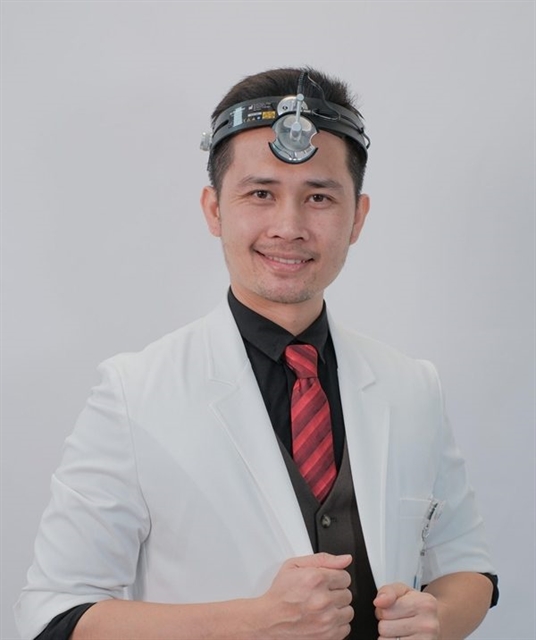 |
| Dr Trần Quốc Huy. |
*Dr Trần Quốc Huy is an experienced Ear, Nose and Throat (ENT) specialist with extensive training and expertise in diagnosing and treating conditions affecting both children and adults. He provides comprehensive consultations and management for a wide range of ENT disorders, from common ear infections and allergies to more complex conditions requiring surgical intervention. Dr Huy is known for his meticulous approach, clear communication, and patient-centred care, ensuring that each patient receives personalised treatment tailored to their individual needs. His commitment to evidence-based medicine and high-quality care has made him a trusted partner in helping patients maintain optimal ear, nose and throat health.
FMP Healthcare Group operates medical centres in major cities including HCM City, Hà Nội and Đà Nẵng, offering consultations with international doctors, check-up centers and emergency ambulance services.
Visit FMP Thảo Điền in HCM City to consult with Dr Trần Quốc Huy.
To book an appointment, please call (028) 3744 2000 (FMP - Thảo Điền), or email d2.reception@vietnammedicalpractice.com.
Expat Corner
 Expat Corner
 Expat Corner
 Expat Corner
 Expat Corner
 Expat Corner
 Expat Corner
 Expat Corner
 Expat Corner
 Expat Corner
 Expat Corner
 Expat Corner
 Expat Corner
 Expat Corner
 Expat Corner