 Expat Corner
Ambassador pledges every effort to promote Việt Nam–Sweden ties
1.
By Dr Agnes R Viay*
Every parent has faced that moment, a late-night fever, a sudden cough or a minor fall that needs quick attention. Having a well-prepared home medical kit can make these situations easier to manage calmly and safely.
A children’s medical kit is not meant to replace professional care, but it can help you manage common symptoms at home and recognise when medical attention is needed.
Why every home needs a medical kit for children
Children are more prone to minor illnesses and injuries, especially during their early years. Having essential items ready allows parents to:
Preparedness helps parents feel more confident, especially during unexpected situations.
Essential items for a child’s medical kit
A good medical kit focuses on simple, safe, and commonly needed items.
1. Basic monitoring tools
These help you assess your child’s condition:
Monitoring is often the first step in deciding what to do next.
2. Fever and pain relief medication
Fever is one of the most common concerns in children.
Always use age-appropriate dosing and avoid giving medications without guidance if you are unsure.
3. Hydration and recovery support
When children are unwell, maintaining hydration is important.
These are especially helpful during fever, vomiting or diarrhea.
4. Wound care supplies
Minor cuts and scrapes are part of childhood.
These items help clean and protect small wounds.
5. Allergy and skin care
Children may develop rashes or mild allergic reactions.
For children with known allergies, follow your doctor’s specific guidance.
6. Nasal and respiratory care
Respiratory symptoms are common, especially in younger children.
These can help relieve congestion and improve comfort.
7. Other useful items
A few additional items can be helpful:
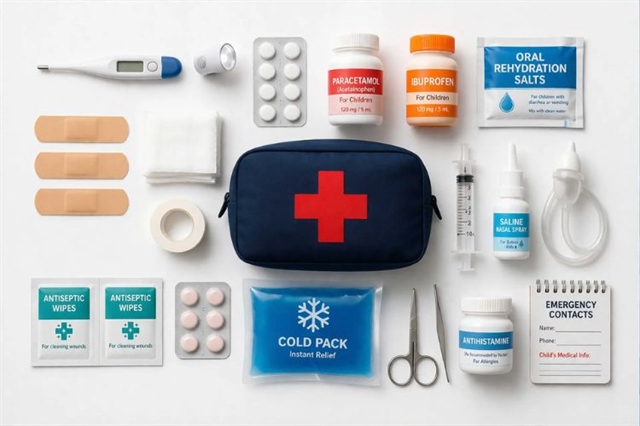 |
| A children’s medical kit can help you manage common symptoms at home and recognise when medical attention is needed. — Photo courtesy of Family Medical Practice |
What should NOT be included without medical advice
Some medications or treatments should not be used unless specifically recommended by a doctor, including:
When in doubt, it is always safer to seek medical advice.
Keeping your medical kit safe and up to date
A medical kit is only useful if it is well maintained.
It is also helpful to review the kit as your child grows, as their needs change.
When home care is not enough
While a medical kit is helpful, it is important to recognize when professional care is needed.
Seek medical advice if your child has:
Trusting your instincts as a parent is important, if something feels wrong, it is always better to have your child assessed.
A final thought
A well-prepared home medical kit provides reassurance and helps parents respond confidently to everyday health concerns. It does not replace medical care, but it supports timely and appropriate action when your child needs it most.
Being prepared is one of the simplest ways to care for your child’s health, both in everyday situations and unexpected moments.
 |
| Dr Agnes R. Via. — Photo courtesy of Family Medical Practice |
*Dr Agnes R. Viay is an experienced paediatrician at Family Medical Practice, dedicated to providing comprehensive healthcare for infants, children and adolescents. With international training and a strong background in evidence-based medicine, she manages a wide range of paediatric conditions, from routine check-ups and vaccinations to the diagnosis and treatment of acute and chronic illnesses. Dr Agnes is known for her gentle, patient-centred approach and clear communication, helping both children and parents feel comfortable and well-supported throughout their care.
FMP Healthcare Group operates medical centres in major cities including HCM City, Hà Nội and Đà Nẵng, offering consultations with international doctors, check-up centres and emergency ambulance services.
Visit Family Medical Practice to consult with Dr Agnes R. Viay.
To book an appointment, please call (028) 3744 2000 (FMP - Thảo Điền), or email d2.reception@vietnammedicalpractice.com.
Expat Corner
 Expat Corner
 Expat Corner
.jpg) Expat Corner
Expat Corner
 Expat Corner
 Expat Corner
 Expat Corner
 Expat Corner
 Expat Corner
 Expat Corner
 Expat Corner
 Expat Corner
 Expat Corner
 Expat Corner
 Expat Corner