 Expat Corner

LOAN Foundation awards scholarships to disadvantaged students on 10th anniversary
1.
 |
By Tony Kuschert*
Long Thành Airport has long been seen as a cornerstone of a new and prosperous economy in Việt Nam, but there are hidden factors behind the project that go far beyond international travel, tourism and additional income for the economy.
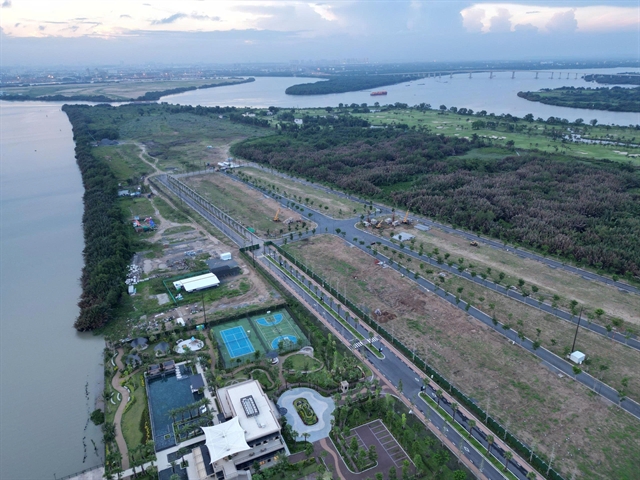
Last weekend, I watched a man move into my apartment building. He is married, with a young child. I live in a small commune called Đại Phước in Đồng Nai Province, just outside HCM City in southern Việt Nam. My home sits on a direct line between Long Thành Airport and the centre of HCM City. I began talking to this man and asked him why he had moved so far away from the city.
A commute cut in half
When I first moved here more than a year ago, the trip to the centre of HCM City exceeded 40 kilometres. The roads were poor quality, and the average journey would take anywhere from 90 minutes to two hours.
So bad were the roads that I chose to use a small ferry to get across the river in the town rather than commute the 20km on dangerous roads. I paid to park my bike on the town side of the river and not use the roads.
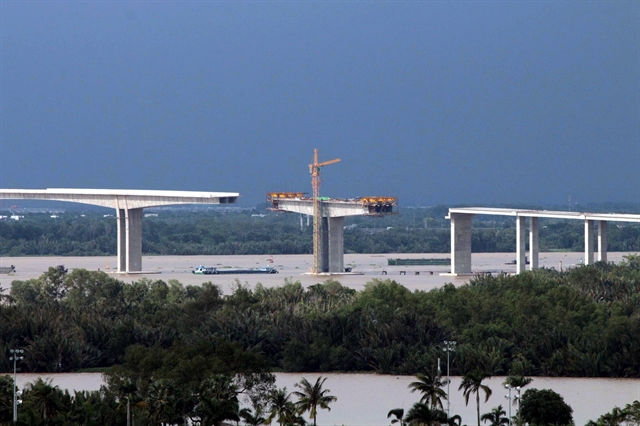
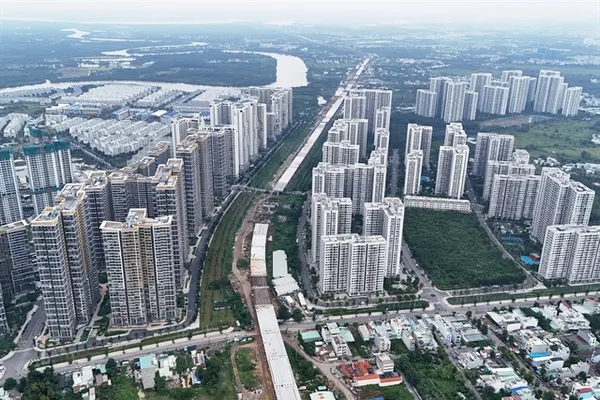
Over the past two years, numerous roads have been built, infrastructure has improved and the commute time to HCM City for many people has more than halved.
The reason? 30km to the east is Long Thành Airport. This airport has driven the construction of roads and is also the motivation of future public transport corridors such as the Metro that, I hope, will pass close by my village.
Without the associated airport infrastructure in my ward and province being constructed, people of Nhơn Trạch and Đại Phước, plus many other locations of Đồng Nai, would never have seen improvements of this scale. It is world class in so many ways and will not only welcome people to this wonderful country but also deliver a new and improved lifestyle for endless numbers of local factory workers, farmers, and professionals choosing to not live in HCM City.
I can remember, about eight years ago, riding my bicycle from HCM City to Vũng Tàu, navigating main roads of this district that looked like they hadn't been touched for years. They were riddled with broken potholes, and the riding was treacherous. That same road today is a high-speed, multi-laned thoroughfare, carrying thousands of cars and bikes per hour to destinations both within Đồng Nai and across the river in HCM City.
 |
Why families are moving out
That is exactly what my new neighbour explained to me. He works close to Landmark 81 in HCM City and, until recently, he also lived in the city. But a change of lifestyle and a change of purpose with a young family motivated him to move out of the polluted, bustling metropolis. He found my community, Đại Phước.
His motivation was simple: the commute to his work in Bình Thạnh District had shrunk to the point that living here became an economic possibility. The time spent commuting was not far in excess of travelling four or five kilometres to work within the city, sitting in traffic the whole way.
I can recall, six years ago, living north of HCM City in Thủ Đức, where my commute to work was 10km. That 10 km used to take me between 45 minutes and one hour. I now live in Đồng Nai, and while my commute is somewhere around 30 to 35km, I can do it in around the same time as that 10km trip within the city. That is what good infrastructure does.
A forgotten pocket, transformed
While these big roads have been built to carry thousands of buses, trucks, cars, pilots and flight attendants to the new Long Thành Airport, they have also helped many working-class people. Once a forgotten little pocket of Đồng Nai Province, Nhơn Trạch and Đại Phước are now seeing massive infrastructure improvements. It is improving lifestyles, improving productivity, and improving opportunities for factories in the region. And, like me, it is bringing in people who never would have chosen to live here had this infrastructure not been built.
Already, just over two years of observing this small pocket of Đồng Nai, I have seen occupancy rates move from less than 10 per cent to around 22 per cent as people see the benefits of moving to already constructed housing and apartments in a quiet location but now serviced by quality high speed roads.
After living in Việt Nam for 13 years, 12 of them in HCM City, I can now say I absolutely adore living in Đồng Nai Province. Moving here a year ago was a great choice, and I am exceptionally excited about the prospects of further development as we move through the opening of Long Thành Airport and towards 2030, when the entire region will be developed far beyond anyone's dreams.
It is an exciting time for Việt Nam, and an exciting time for Đồng Nai. I am so thankful to be part of it.
* Tony Kuschert is a freelancer, teacher and YouTuber living in the south of Việt Nam since 2013.
Expat Corner
 Expat Corner
 Expat Corner
.jpg) Expat Corner
Expat Corner
 Expat Corner
 Expat Corner
 Expat Corner
 Expat Corner
 Expat Corner
 Expat Corner
 Expat Corner
 Expat Corner
 Expat Corner
 Expat Corner
 Expat Corner

.jpg)