 Expat Corner

Sơn La holds second coffee festival, targeting stronger businesses in future
1.
 |
by Tony Kuschert*
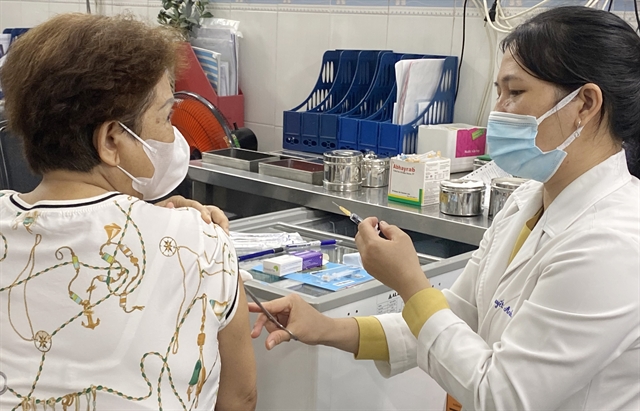
You have just planned the biggest career change or holiday of your life. You are coming to Việt Nam! A regular visit to your doctor, and sharing the great news, ends up with a request to obtain a plethora of vaccinations because Việt Nam is considered an unsafe country. But do you really need to get vaccinations before coming to Việt Nam?
I have vivid memories from before the turn of the century, when a family member planned to travel in Asia — a visit to the doctor for a full vaccine update was an essential part of travel. But things have changed.
Today, the global position of regional risk factors tells a very different story. While there are risks, and some locations do run a higher risk of some diseases than others, there are now many more factors that go into making the decision to vaccinate before arriving in Việt Nam.
What diseases are found in Việt Nam?
This is not a look at Việt Nam through rose-coloured glasses. There are a number of preventable and high-risk diseases present in the community that are just not seen, or hardly seen, in many western countries. But it is more about their location, contagiousness and frequency of contraction that matters most.
The WHO carries full sets of statistics on communicable diseases in Việt Nam, and if you have any concerns, you should consult their website for more information.
Here is an overview of the most common diseases that may be found in Việt Nam and how they affect the community.
Rabies is an animal disease that kills an average of 80 people per year in Việt Nam. Most cases come from dog and cat bites, but there are also cases where people die from eating dog meat at dog restaurants or from killing stray or stolen dogs. As far as I can see, no westerners have died from rabies in recent times in Việt Nam.
Hepatitis A and B are both very present in the community, with a reported 26,000 deaths from Hep B in 2022. There are no recorded statistics on Hep A, but it is considered the lesser of the two strains and not essentially life-threatening like its B and C cousins.
Hepatitis A is the most common strain that travellers and expats may be exposed to, as it is typically found in poorly prepared food and in generally unsanitary conditions around restaurants.
 |
Typhoid has also been a significant issue over the past few decades. However, the Government's attention to this problem has seen the rate of infection drop significantly in recent years. There are still low levels of new infection, albeit rarely experienced by travellers or expats.
Japanese Encephalitis and dengue fever are both mosquito-borne diseases present in Việt Nam. While the numbers of infections fluctuate greatly, the significant issue is that these diseases are much more prevalent in the countryside and are also seasonal.
Tuberculosis (TB) is also present in Việt Nam. TB affects a little over 100,000 people each year, and if you think it couldn't happen to you, you might be wrong — my own family member contracted it recently.
This communicable disease is a little different from most. TB has two distinct phases: initial infection (which is usually latent and symptom-free) and active disease. The latent period can last anything from months to decades.
An airborne disease, TB is transferred through close speaking, coughing and singing, and is much more prevalent in poorer communities around the country.
As an interesting side note, while no longer considered a significant issue in Việt Nam, leprosy is still present in the country. In fact, I have even visited a leprosy community (formerly called leper colonies) in the past. Statistics show that as of 2025, this disease has been almost eliminated nationwide.
But what choice should I make about vaccinations?
Vaccinations have recently become a contentious issue in modern society. There are extreme views and beliefs on both sides of the fence. Having been alive in the 1970s, I have seen firsthand the lives that vaccines have saved around the world. They have made the world a safer place to live.
On the other side, I have also lived through the Covid era and seen the questions raised about vaccinations at that time. And there are those who, through personal choice, prefer to live without obtaining vaccinations for a variety of reasons. It is all part of the world we live in.
My personal choice is both yes and no.
How many vaccinations have I had since moving to Việt Nam 13 years ago? Apart from the mandated Covid vaccine in 2021, I have not had any vaccinations for anything.
I am, however, fully vaccinated under the standards of the Australian legal framework as a child. I received all the required vaccines for a range of conditions from birth to about 14 years of age.
Prior to my relocation to Việt Nam in 2012, my Australian doctor did suggest getting a Hepatitis vaccine, but I suppose I got a bit lazy and simply forgot about it. I can still get it, but after 13 years I question whether I really need it.
My position on vaccinations is fairly straightforward. I will get any required vaccine if the conditions of my environment mean that I am clearly safer getting it than not. At this time, I don't see any disease in Việt Nam at a sufficient level of risk to warrant going out of my way to get a vaccination.
It's simple for me. If the Government of Việt Nam or another reputable agency, like the WHO, issues advice to obtain a vaccine, I will consider it. Until then, I am living happily and healthily in Việt Nam and believe that no exceptional vaccinations are required to live here or visit as a tourist.
But at the end of the day, follow these simple rules: speak to your doctor before coming to Việt Nam, get informed, and make your own personal choice. That way you will do what is best for your situation. — VNS
* Tony Kuschert is a freelancer, teacher and YouTuber living in the south of Việt Nam since 2013.
Expat Corner
 Expat Corner
.jpg) Expat Corner
Expat Corner
 Expat Corner
 Expat Corner
 Expat Corner
 Expat Corner
 Expat Corner
 Expat Corner
 Expat Corner
 Expat Corner
 Expat Corner
 Expat Corner
 Expat Corner
 Expat Corner