 Expat Corner

Vietnamese Prime Minister meets Cambodian National Assembly President
1.
Vu Van Anh, LL.M.
 |
| Foreign individuals are permitted to own residential property in Việt Nam, subject to certain conditions. Photo cafeland.vn |
Vietnamese law permits foreign individuals to own residential property under certain conditions. The following questions and answers outline the key legal framework.
I am a foreign national planning long-term residence in Việt Nam. Am I eligible to own a house in the country?
Yes. Under Article 17 of the 2023 Housing Law (the Law), foreign individuals are permitted to own residential property in Việt Nam, subject to certain conditions.
Foreign individuals may only own apartments and detached houses developed under commercial housing projects located in areas not subject to national defence and security restrictions. They may acquire such property through purchase or lease-purchase from project developers or from existing foreign owners. In addition, ownership may arise through inheritance or gifts from eligible entities.
However, individual houses located in existing residential areas are not eligible for transactions with foreign individuals.
It is also worth noting that foreign nationals married to Vietnamese citizens residing in Việt Nam are entitled to ownership rights equivalent to those of Vietnamese citizens. Meanwhile, those married to Vietnamese citizens residing overseas and permitted to enter Việt Nam may enjoy ownership rights similar to overseas Vietnamese.
What conditions must foreign individuals meet to own residential property?
Pursuant to Article 3.2 of Government Decree No. 95/2024/ND-CP (Decree 95), a foreign individual must:
- Hold a valid foreign passport; and
- Provide written confirmation that he/she is not entitled to diplomatic or consular privileges and immunities.
The passport must bear a valid entry stamp or be accompanied by equivalent legal documentation and must remain valid at the time of entering into the housing transaction.
 |
| Foreign individuals are permitted to own residential property in Việt Nam, subject to certain conditions. Photo cafeland.vn |
Are there any restrictions on foreign house ownership in Việt Nam?
Yes. Decree 95 imposes quantitative limits on foreign ownership.
For apartments, foreign ownership must not exceed 30 per cent of the total number of residential units in a condominium building, regardless of whether it is a residential or mixed-use building. In case a building comprises multiple blocks sharing a common basement, the 30 per cent cap applies to each block.
For detached houses, the cap is 250 houses within an area with a population of 10,000. Specifically, if there is only one housing project in such an area, foreign entities may own no more than 250 houses in that project and where there are multiple projects, the total number of houses owned by foreign entities across all projects must not exceed 250. Once the cap is reached, foreign individuals may not acquire additional houses in that area.
Transactions exceeding these limits or involving projects not eligible for sale to foreign entities will be deemed invalid, and no certificate of land use rights and ownership of houses and other land-attached assets (Certificate) will be issued. In such cases, the seller or lessor must compensate the buyer or lessee for any damage incurred.
 |
| HOUSING LESSONS: Expats study the procedures for house ownership in Việt Nam at a project in Hải Phòng City. |
Are there limits on how long I can own a house, and can this period be extended?
Foreign individuals may own a house for a maximum period of 50 years from the date of issuance of the Certificate. This period may be extended once for up to an additional 50 years.
To apply for an extension, the owner must submit a dossier comprising:
- An application for extension of the ownership period;
- A certified copy (or a copy presented with the original for verification) of the Certificate; and
- A valid passport with an entry stamp or equivalent legal document.
The application must be submitted to the provincial-level People’s Committee where the property is located at least three months prior to the expiry of the ownership period.
Within 30 days of receiving a valid dossier, the competent authority will review the application. If the conditions continue to be satisfied, written approval for the extension will be granted; otherwise, a written refusal stating the reasons will be issued.
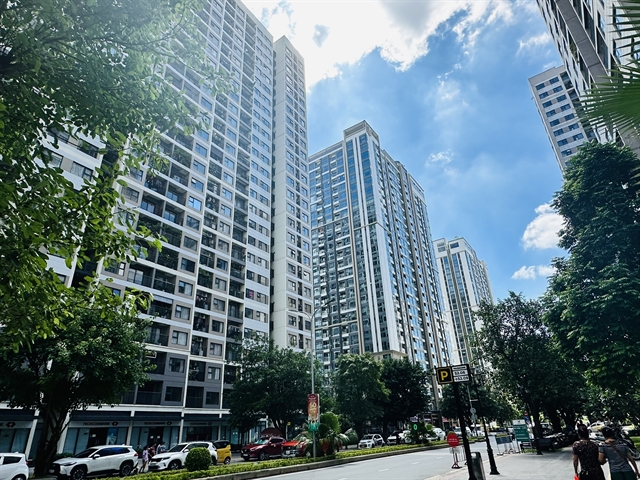 |
| Foreign ownership must not exceed 30 per cent of the total number of residential units in a condominium building. Photo: laodong.vn |
What happens if the ownership period is not extended?
If the ownership period is not extended, the handling of the property depends on the specific circumstances:
If the ownership period has not yet expired, the owner may sell or donate the property to an eligible transferee;
If the ownership period expires and no transfer has been made, the property will become state property;
If the owner is required to leave Việt Nam due to violations relating to the use of housing, the handling of the property will be decided by competent authorities on a case-by-case basis. VNS
Expat Corner
 Expat Corner
.jpg) Expat Corner
Expat Corner
 Expat Corner
 Expat Corner
 Expat Corner
 Expat Corner
 Expat Corner
 Expat Corner
 Expat Corner
 Expat Corner
 Expat Corner
 Expat Corner
 Expat Corner
 Expat Corner