 Life & Style
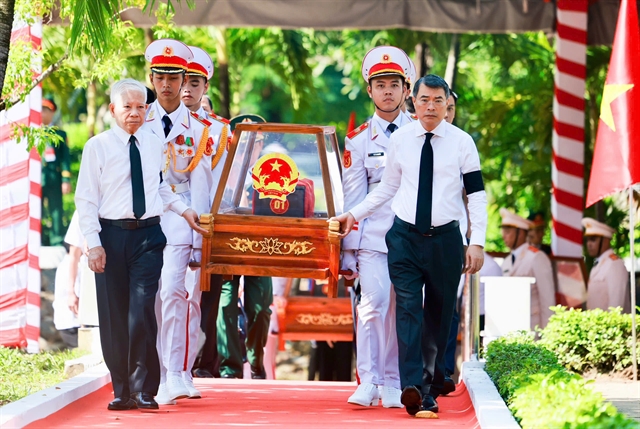
PM attends memorial service for 731 fallen soldiers in Hồ Chí Minh City
1.
|
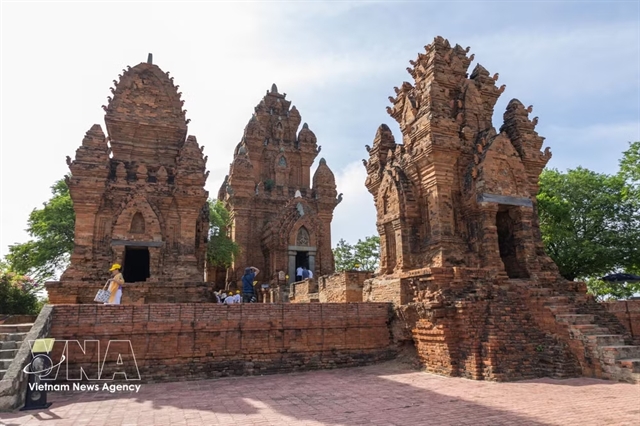
| The Pô Klông Garai tower complex on Trâu Hill in Đô Vinh ward, Khánh Hòa Province, is one of the finest examples of Chàm architecture preserved to this day. — VNA/VNS Photos |
KHÁNH HÒA — Rising above Trâu Hill in Đô Vinh ward, Khánh Hòa Province, the red-brick Pô Klông Garai towers preserve centuries of Chăm architectural artistry and remain a sacred site where the Chăm community maintains traditional rituals and cultural heritage.
The complex comprises three main structures: the Chính (Main) Tower, Cổng (Gate) Tower and Lửa (Fire) Tower. The Main Tower stands about 20.5m tall, featuring a square base and tiered roofs that narrow towards the top. The Fire Tower, with its distinctive boat-shaped curved roof, adds a contrasting feature to the ensemble. Columns, niches, lotus motifs and decorative patterns adorn the brick walls.
Nguyễn Thị Thu, former director of the Ninh Thuận Chăm Cultural Research Centre, said the site's significance extends beyond its architecture to the religious symbolism of its sacred images. Notably, the Mukhalinga combines the linga symbol with the face of the king being worshipped, reflecting the Chăm people's adaptation of Indian religious beliefs by associating Shiva with King Pô Klông Garai.
Historical records indicate that the complex was built in the late 13th or 14th century, initially for the worship of Shiva before becoming a place of worship for King Pô Klông Garai, who is credited with advancing agriculture and irrigation.
Unlike many other ancient structures, Pô Klông Garai remains closely connected to the Chăm community's daily and spiritual life. Traditional ceremonies continue to be held there to honour the king and pass cultural practices down through generations. The annual Kate festival is among the most prominent events, attracting large numbers of residents and visitors.
Dương Ngọc Khả Quyên, a Chăm woman from Phước Hậu Commune in Khánh Hòa Province, said preserving Pô Klông Garai means safeguarding not only an ancient architectural complex but also the Chăm people's history and cultural values. She hoped the site would be protected so younger generations could better understand their roots and take greater pride in preserving their cultural identity.
Recognised as a special national relic in 2016, Pô Klông Garai requires comprehensive conservation covering both its architecture and the cultural values associated with the Chăm community.
According to Thu, restoration work should be based on scientific research and respect the site's original features, while ensuring that Chăm community members are consulted in its management, conservation and promotion.
Amid the sun and winds of the central region, the towers on Trâu Hill stand as enduring reminders of Chăm history and architectural achievement. Beyond their historical significance, they remain a living symbol of cultural and religious identity, deeply rooted in the life of the Chăm community today. — VNA/VNS
Life & Style
 Life & Style
 Life & Style
 Life & Style
 Life & Style
 Life & Style
 Life & Style
 Life & Style
 Life & Style
 Life & Style
 Life & Style
 Life & Style
 Life & Style
 Life & Style
 Life & Style