 Life & Style

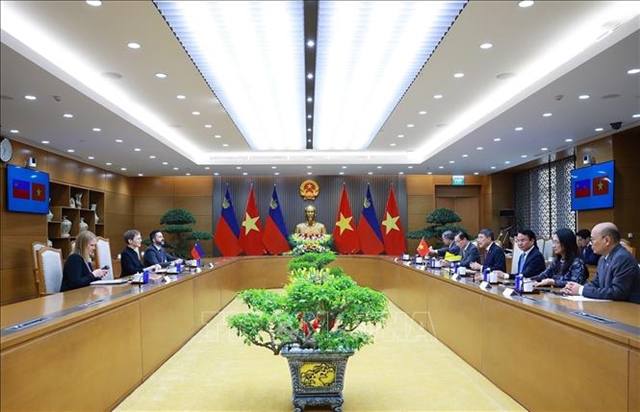
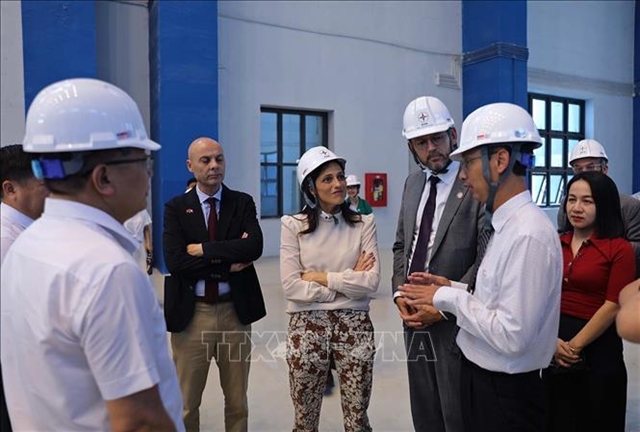
Việt Nam, Switzerland seek to deepen parliamentary cooperation
1.
|
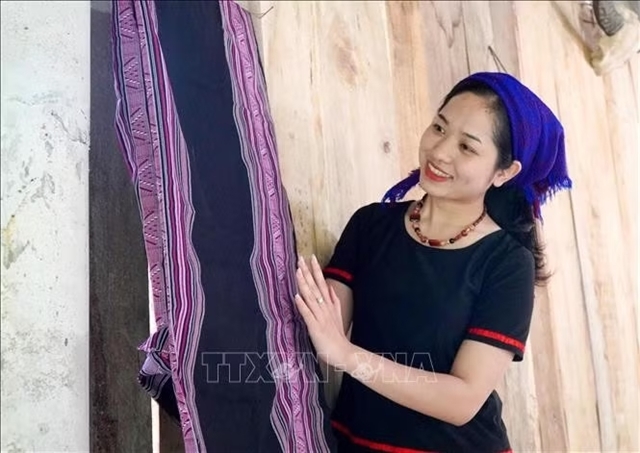
| Trinh Sơn Uyên showcases traditional brocade products of the Hrê ethnic minority group. — Photo dantocmiennui.baotintuc.vn |
QUẢNG NGÃI — In the mountain village of Sơn Hà in Quảng Ngãi Province, a groundbreaking start-up is reshaping how ethnic heritage is preserved and valued.
Trinh Sơn Uyên, a dynamic young woman from the Hrê ethnic group, has successfully established Plây Hrê (Hrê Village), an eco-tourism and culinary model that converts traditional daily life into stable economic value.
By transforming ancestral knowledge into community-based services, her project not only creates immediate jobs for local artisans, but also opens a viable blueprint for sustainable livelihoods across the region.
The start-up creates a dynamic space where ancient traditions are transformed into high-value tourism products, paving a fresh path for local youths and generating sustainable livelihoods. Uyên’s vision recently earned her the Third Prize at the prestigious National Rural Youth Startup Project Competition 2026, organised by the Central Committee of the Hồ Chí Minh Communist Youth Union in Đắk Lắk Province.
From deep roots to vibrant products
|
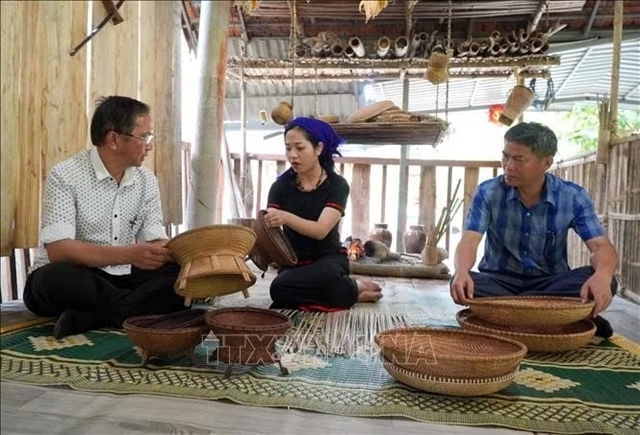
| Uyên introduces traditional local products to visitors. — Photo dantocmiennui.baotintuc.vn |
Spanning an area of one hectare, Plây Hrê is modelled after a traditional ethnic village. It features rustic stilt houses, fresh fish ponds, flower and vegetable gardens, a communal living house and a dedicated open-air stage for gong and folk song performances.
Instead of merely viewing objects from afar, visitors enjoy fully interactive experiences. Guests can harvest fresh vegetables, cook traditional mountain dishes, learn the delicate art of bamboo weaving, try their hand at playing the gongs or bamboo musical instruments, and stay overnight at authentic homestays.
Traditional cuisine serves as a major highlight of Plây Hrê. Rustic dishes are crafted from local, organic ingredients and served as communal village meals or outdoor banquets. Specialties like river catfish, black pork, buffalo meat, dried beef and wild smoked fish seasoned with local lemongrass and indigenous chilli peppers are prominently showcased and sold to visitors.
Residents and respected artisans are the driving force behind daily operations. Elderly masters perform in traditional gong ensembles and guide weaving workshops, while culinary enthusiasts prepare authentic meals. By converting daily cultural practices into structured services, the model creates stable jobs and extra income for the villagers outside their regular farming hours.
Keeping heritage alive
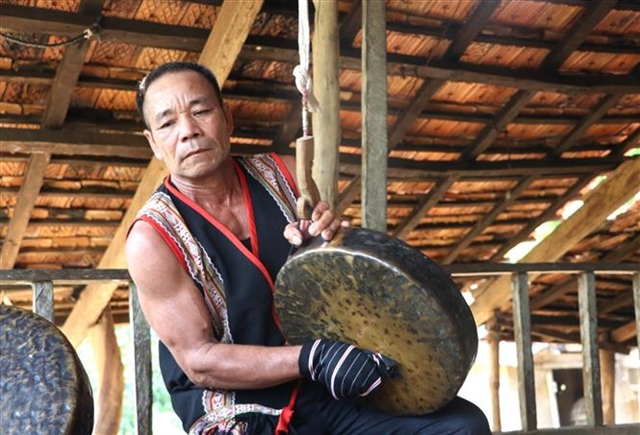
|
| Phạm Văn Đúi (born in 1968) from Ba Vinh Commune is one of the artisans quietly preserving the soul of the Hrê people's traditional culture. — Photo thethaovanhoa.vn |
Monetising culture is an uphill battle. Uyên admits she faced numerous challenges during the trial phase, occasionally feeling discouraged by the fierce competition in the eco-resort and experiential tourism markets. Through trial and error, she realised that the key to success lies in preserving the absolute core values of traditional heritage while remaining flexible in service delivery.
"When travellers seek out an indigenous cultural space, they are looking for more than just a hot meal or a bed," Uyên said. "They crave authentic, real-life experiences rooted in history and depth. Culture does not fade away simply because it is forgotten. It disappears when we do not know how to help it live again."
Unlocking cultural governance
Plây Hrê currently attracts a wide range of visitors, from students on educational field trips to independent travellers and cultural researchers. Partnerships with professional travel agencies are also expanding to bring Hrê culture closer to domestic and international markets.
Vice Chairman of the Sơn Hà Village People's Committee Giáp Hùng Vương praised Uyên’s bold, pioneering spirit. To support the project, local authorities plan to allocate resources to transform Plây Hrê into a recognised cultural conservation centre.
The commune will also assist the start-up in securing preferential loans from the State budget, registering for national 3- to 4-star OCOP (One Commune One Product) certification, and integrating the venue into official regional tourism events.
This strategic development aligns seamlessly with the spirit of the Politburo’s Resolution 80-NQ/TW on the development of Vietnamese culture. By shifting the focus from static cultural management to proactive cultural governance, the landmark resolution encourages the commercialisation of creative assets and champions a dynamic balance between conservation and economic growth.
With this robust institutional backing, Uyên is determined to expand her lodging options and further cultivate core cultural values. For the young entrepreneur, building a start-up is not just about establishing a profitable business model. It is about ensuring that the soul of the Hrê people continues to be passed down, experienced and lived fully alongside the community. — VNS
Life & Style
 Life & Style
 Life & Style
 Life & Style
 Life & Style
 Life & Style
 Life & Style
 Life & Style
 Life & Style
 Life & Style
 Life & Style
 Life & Style
 Life & Style
 Life & Style
.jfif) Life & Style
Life & Style