 Life & Style
Việt Nam, EU and Belgium seek deeper, practical cooperation
1.
|
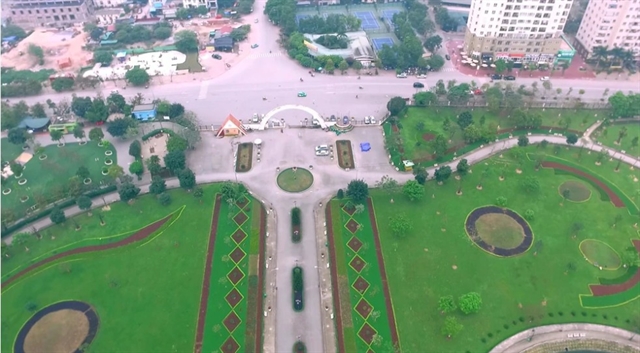
| Cầu Giấy Park with its main gate on Thành Thái Street will be part of the cultural space and the pedestrian street. — Photo thethaovanhoa.vn |
HÀ NỘI — Thành Thái Street in Cầu Giấy Ward is scheduled to become Hà Nội's first smart and creative pedestrian street starting in October to celebrate the city's Liberation Day (October 10).
The street will operate from Friday evening through Sunday every week and is designed as part of a pilot project to build a cultural space combined with a pedestrian zone and a creative streetscape that integrates smart technology and reflects the unique identity of Cầu Giấy.
Under the pilot project released by the Hà Nội People's Committee following the Decision No. 3905/QĐ-UBND dated July 31, 2026, the city will establish this cultural and pedestrian area along Thành Thái, with operations scheduled for weekend evenings, on special national holidays and peak celebrations.
With a total initial investment of approximately VNĐ39.8 billion (US$1.5 million) sourced from the State budget and other funds, the project aims to attract an average of 10,000 to 15,000 visitors per week.
With proposals for various solutions regarding traffic, services, management and digital amenities in the smart pedestrian zone, the project promises a significant point of interest as Hà Nội sets higher standards for pedestrian spaces in the new phase of development.
It aims to concretise a policy of developing public spaces, boosting the night-time economy, and transforming Hà Nội into a city characterised by its rich culture, civilisation and modernity, in line with the spirit of Resolution No 15-NQ/TW of the Politburo, according to a report from the Hà Nội People's Committee.
Following the administrative merger effective on July 1, 2025, Cầu Giấy Ward has become one of the fastest-urbanising areas and holds a strategic position as the western gateway to the capital.
Spanning approximately 3.93 sq.km, the area has a population density exceeding 20,000 people/sq.km, becoming one of the highest in the city. This high density has resulted in a scarcity of public spaces, wholesome playgrounds for children, and venues for cultural interaction among the elderly.
Meanwhile, the area boasts unique strengths, featuring an 'IT Valley' that brings together over 400 technology enterprises, alongside a network of 31 major universities and academies. The local community consists primarily of intellectuals, students, and experts with a strong demand for high-quality cultural and recreational activities. The pedestrian zone will meet these needs while creating a buffer zone to reduce vehicle emissions, the report said.
'Creative valley'
According to the approved project, the Thành Thái cultural space centres on the key message: 'Cầu Giấy – a creative valley, green space, and the essence of Vòng young sticky rice', focusing on five core values: Knowledge – Technology; Culture – Craft Villages; Family – Community; Green Space; and Civilised Night-time Economy.
Unlike the pedestrian zone around Hoàn Kiếm Lake, which significantly features history, the Thành Thái pedestrian street is envisioned as a modern 'urban stage' that connects creative communities in the western part of the city.
It is a place where residents and visitors can experience the intersection of digital technology and traditional values – such as the historic Cốm Vòng traditional craft village and the significant revolutionary heritage sites of Hà Communal House and Pagoda.
The project is implemented in two specific phases. The first phase is to focus on the Thành Thái street axis of approximately 750m long and part of Cầu Giấy Park. The second phase will be research on expanding to Khúc Thừa Dụ and Trương Công Giai streets, creating connections to support the Duy Tân street area and the CV1 regulating lake park.
The entire space is divided into specialised functional clusters to optimise the visitor experience. The main pedestrian axis along Thành Thái Street will serve as a quiet zone dedicated to a book street, creative spaces and technology workshops.
Meanwhile, Cầu Giấy Park will serve as an active zone, featuring stages for student performances, a children's playground, and exercise spaces for the elderly.
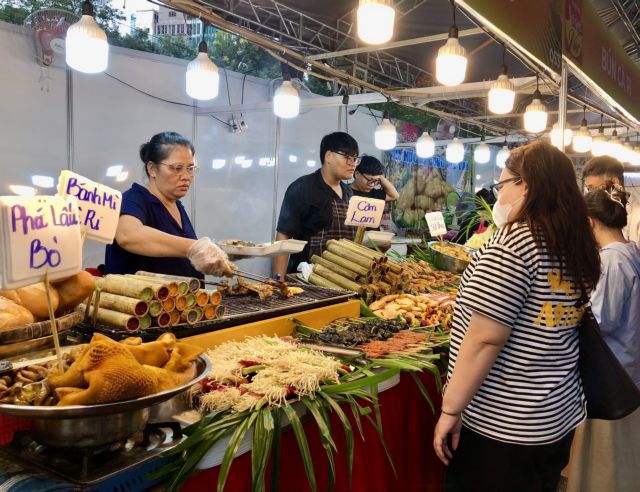
Notably, a branding initiative for the 'Cầu Giấy Food Street' along Khúc Thừa Dụ Street will utilise a mobile vending cart model, featuring a unified design with a colour scheme of green, white, and pale yellow-green.
These mobile carts are required to display prices and use QR codes for food traceability, while prioritising dishes that reflect the culinary identity of Hà Nội and Cau Giấy Ward.
To ensure traffic safety and order while avoiding disruption to the nearby residential area, the city has directed the implementation of a three-tiered traffic routing model including the core zone, buffer zone and remote traffic diversion.
Vehicles will be totally banned in the core zone except special and technical vehicles, while the buffer zone will have restrictions for trucks and passenger buses. Residents in the core zone are issued identification passes for entry and exit via dedicated lanes at speeds below 5km/h. A system of LED electronic signage and static directional signs is installed at major intersections such as Cầu Giấy-Trần Thái Tông and Duy Tân. — VNS
Life & Style
 Life & Style
 Life & Style
 Life & Style
 Life & Style
 Life & Style
 Life & Style
 Life & Style
 Life & Style
 Life & Style
 Life & Style
 Life & Style
 Life & Style
 Life & Style
 Life & Style