 Life & Style
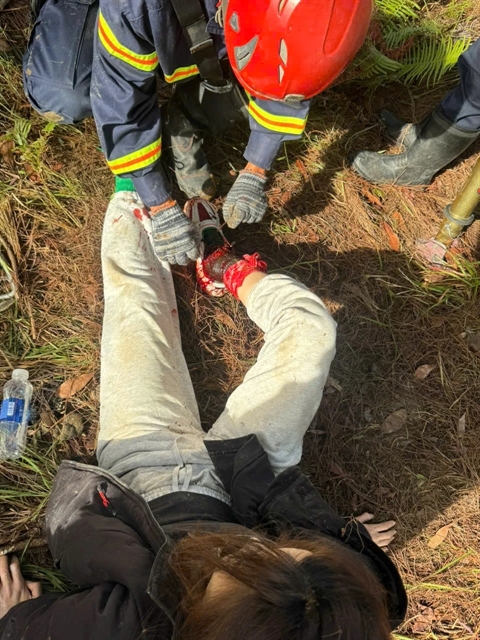
Malaysian tourist rescued after falling into 10-metre-deep hole in Đà Lạt
1.
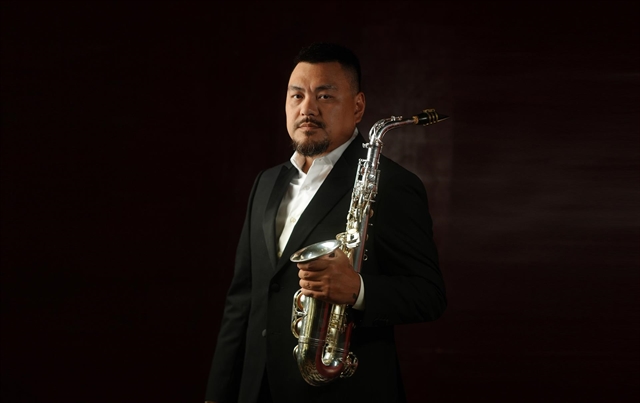 |
| Jazz musican Quyền Thiện Đắc. Photo VNA/VNS |
Quyền Thiện Đắc graduated from the prestigious Berklee College of Music in the US. He and his father, renowned jazz musician Quyền Văn Minh, operate Bình Minh Jazz Club, Việt Nam’s first jazz club.
Đắc’s ambition to contribute to Vietnamese music extends beyond simply popularising jazz in his homeland. He aspires to imbue this specialised genre with a distinctly Vietnamese spirit by incorporating unique elements of Vietnamese folk music to elevate the profile of Vietnamese jazz on the global stage.
He spoke to the media about his musical journey and his efforts to help develop Việt Nam's jazz community.
How did you get into jazz?
I began learning wind instruments at the age of 11. During my first year, I focused solely on breath control before enrolling at the Việt Nam National Academy of Music. My musical foundation is rooted in classical training, and I still regard it as an invaluable asset in my creative journey.
A few years later, I switched to the saxophone, which was when my father began guiding me towards a career in jazz. At the time, there were very few jazz textbooks or training materials available in Việt Nam. The lessons he gave me laid the foundation for this long journey.
I also had the opportunity to perform alongside my father on his debut album, Birth, released in 1999. That experience gradually immersed me in the rich traditions of Vietnamese folk music and traditional musical forms.
Later, I continued my studies in the US and Sweden, where I had the privilege of learning from outstanding mentors who helped shape my musical thinking and artistic identity. The most important lesson I took away from studying abroad was the need to forge my own path and develop a distinctive musical voice.
What motivated you to return to Việt Nam and explore the fusion of jazz and traditional Vietnamese music?
I have found that many of the world's leading jazz musicians have followed a similar path. They begin by mastering the classics, then move on to composing their own works and drawing on a wide range of musical genres before ultimately developing a musical language that is uniquely their own.
Once they have found that voice, audiences can recognise their artistic identity no matter where they perform or whom they play with. That is the path I have chosen to pursue.
After returning to Việt Nam, I chose to take a slower, more deliberate approach, delving deeper into what a distinctly Vietnamese jazz sound could be. I launched projects such as Jazz Duyên and Folk Music in Jazz – Folk Music on Strings, blending the saxophone with traditional Vietnamese instruments.
I have never wanted to simply place jazz alongside traditional music as if assembling separate pieces. Instead, I want the two to complement and elevate each other, each retaining its own identity while sharing a common musical spirit.
To achieve that, you first have to understand the culture behind the music. I have spent many years working with folk artists in the northwest and Central Highlands, as well as performers of tuồng (classical opera), chèo (popular opera) and cải lương (reformed theatre). When I compose, I do not borrow traditional melodies directly. Rather, I draw on the spirit and essence of traditional Vietnamese music.
I also collaborated with international musicians on the album Unlimited Love, which reimagines a number of folk-inspired songs through the language of jazz. It is a project that remains especially close to my heart.
Along with your father, Meritorious Artist Quyền Văn Minh, you have played an important role in building Việt Nam's jazz community. What has that experience meant to you?
I see it as a responsibility that comes with being a musician. My father founded Bình Minh Jazz Club in 1997, and I have been involved with it for many years. In addition to performing, I oversee its musical direction, curating the programme and organising the bands that perform each evening.
We want to create a space where jazz students can gain practical experience and where jazz enthusiasts can come together to enjoy the music. Many accomplished musicians have emerged from this very stage, and the club has long welcomed young artists seeking opportunities to learn, perform and develop their craft.
Bình Minh Jazz Club has started holding performances at Lý Thái Tổ flower garden in Hoàn Kiếm District every Sunday afternoon. In your view, what do open public venues like this contribute to the development of jazz in Việt Nam?
I am delighted that Hà Nội now hosts free live music performances every Sunday afternoon for both residents and visitors. After more than six months, the programme has become a familiar gathering place for a diverse audience.
It does not require an elaborate stage; people can simply stop, listen, chat and interact with the musicians. That sense of closeness makes jazz more accessible and helps Vietnamese jazz reach a wider audience. I hope the jazz community will continue to grow stronger, become more connected and receive even greater support and recognition.
Could you share your plans for the future of your jazz career?
Hà Nội will host the inaugural Hà Nội International Jazz Festival in September under the theme Jazz Hà Nội – Melodies Without Borders.
It is a wonderful platform for both jazz musicians and jazz lovers, and we are delighted to be part of it. I plan to invite the international artists who collaborated with me on the album Unlimited Love to perform at the festival.
They are exceptional musicians, and what makes their participation especially meaningful is that they will not be performing international jazz standards, but rather Vietnamese compositions reinterpreted through the language of jazz.
As for my personal projects, there is one piece that I composed about a decade ago, which my father titled Hướng Tâm (Towards the Heart). I have long hoped to bring it to life with a symphony orchestra, and that remains one of the projects I am most eager to realise. — VNS
Life & Style
 Life & Style
 Life & Style
 Life & Style
 Life & Style
 Life & Style
 Life & Style
 Life & Style
.jpg) Life & Style
Life & Style
 Life & Style
 Life & Style
 Life & Style
 Life & Style
 Life & Style
 Life & Style